Isadore Banks was born on July 15, 1895, in Arkansas, during a period of rising racial violence in the state. He joined the U.S. Army in 1918 and returned to Arkansas after World War I, going on to work for a utility company. Amid race riots in 1919 and the resurgence of the Ku Klux Klan in Arkansas, African Americans in the region organized in response to escalating hostility. Banks became "a prominent and respected leader, a Freemason, and one of the wealthiest African-American landowners" in his part of Arkansas. He supported other black farmers by providing tools and supplies and also supported local black schools.
On June 4, 1954, Banks disappeared at age 58. His body was found on June 8, described as "mutilated and burned beyond all recognition." He was identified through his empty truck found nearby, which still contained his loaded shotgun and coat. Banks had been tied or chained to a tree, doused in fuel, and set alight from the knees up, leaving little of his remains.
Local law enforcement did not pursue an investigation, and the case went unsolved. The Grant Co-Op Gin, a group of prominent Black citizens in the county of which Banks was a member, offered a reward for information, but none was provided. The NAACP also attempted to assist with the investigation, without result. Julian Fogleman, the civil attorney for Marion at the time, said he could not recall whether a coroner's inquiry was ever performed.
Banks's death significantly affected his community. Residents checked on one another and attempted to piece together what had happened. The killing instilled fear among the local Black population, including concerns that white residents might retaliate violently over perceived slights, and worries for the safety of children. Banks's death was also described as a serious setback to Black community organizing in Crittenden County.
Several theories have been put forward regarding a motive, though none have been confirmed. One suggests Banks was targeted after repeatedly refusing to sell his land to white farmers who became angered by his refusals. Another holds that he was renting land from a white woman and was killed by white farmers seeking access to it. A further theory suggests he had been romantically involved with a white woman, a narrative pattern common in lynching cases historically. Another account suggests an altercation arose after white men propositioned his daughter. It has also been suggested he may have been targeted simply for his success as a Black landowner in the segregated South.
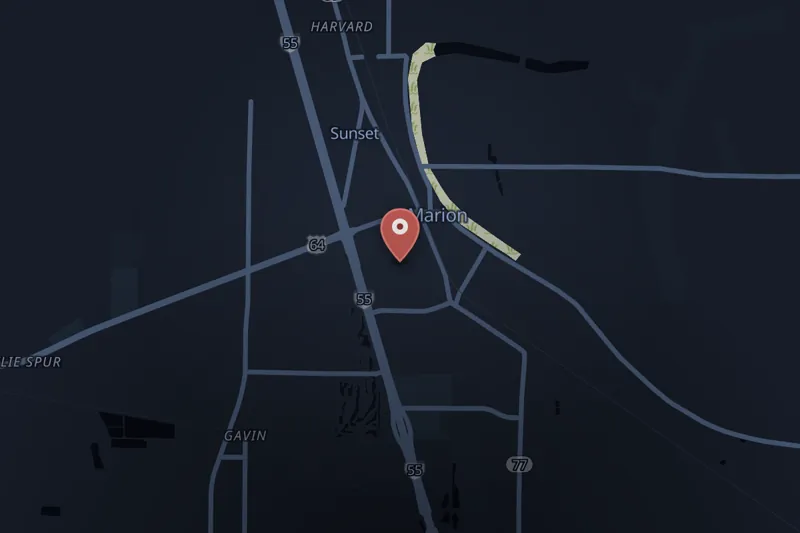
In 2020, a ten-episode podcast titled "Unfinished: Deep South," produced by Taylor Hom and Neil Shea for Market Road Films and Stitcher Radio, examined Banks's death, traveling to Marion, Arkansas, and speaking with surviving family members while exploring the broader context of Jim Crow-era violence.