

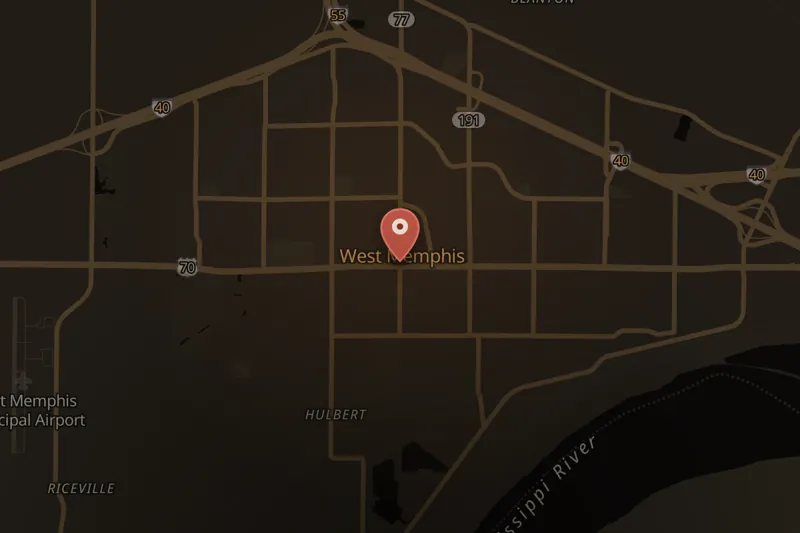
Start here
West Memphis Three: PART TWO: Mystery Monday
Stephanie Harlowe's 73-minute breakdown of the whole case.
Watch on YouTubeBefore you continue
This case involves crimes against children. Casepin presents the record in neutral, non-graphic language. Choose whether to continue.
Overturned conviction · 1990s
Also known as West Memphis Three
The short answer
Three eight-year-old boys were found murdered in West Memphis, Arkansas, in 1993; three teenagers were convicted the following year in a case marked by disputed evidence, allegations of coerced confession, and claims of a Satanic motive, and were released in 2011 after entering Alford pleas.
Start hereWest Memphis Three: PART TWO: Mystery MondayStephanie Harlowe · 1 hr 13 minThe coverage index
14 pieces from 4 creators: ranked, with duplicates removed and short clips set aside.
Start here
Video · YouTube · 1 hr 13 min · 2018
Stephanie Harlowe's 73-minute breakdown of the whole case.
Watch on YouTubeWest Memphis Three: PART ONE (Mystery Monday)
 Stephanie HarloweVideo · YouTube · 1 hr 5 min · 2018
West Memphis Three: PART THREE: Mystery Monday
Stephanie HarloweVideo · YouTube · 1 hr 4 min · 2018
WEST MEMPHIS 3! What Really Happened?
 Kendall RaeVideo · YouTube · 41 min · 2017
West Memphis Three Murder Case | Was Justice Served?
 Dr. Todd GrandeVideo · YouTube · 35 min · 2019
West Memphis Three: Robin Hood Hills (Part 1)
 Crime WeeklyVideo · YouTube · 2 hr 3 min · 2023
West Memphis Three: The Right to Remain Silent (Part 5)
Crime WeeklyVideo · YouTube · 2 hr 44 min · 2023West Memphis Three: Trials and Tribulations (Part 7)
Crime WeeklyVideo · YouTube · 2 hr 16 min · 2023West Memphis Three: Troubled Teenager to Murder Suspect (Part 3)
Crime WeeklyVideo · YouTube · 2 hr 14 min · 2023West Memphis Three: Alternate Suspects (Part 8)
Crime WeeklyVideo · YouTube · 2 hr 10 min · 2023West Memphis Three: Satanic Panic (Part 2)
Crime WeeklyVideo · YouTube · 2 hr 9 min · 2023West Memphis Three: Allegations and Alibis (Part 4)
Crime WeeklyVideo · YouTube · 2 hr 1 min · 2023West Memphis Three: The Trial of Jessie Misskelley (Part 6)
Crime WeeklyVideo · YouTube · 1 hr 37 min · 2023
West Memphis Three: Satanic Panic (Part 2), is now live. A lot to discuss. #westmemphisthree
Crime WeeklyVideo · YouTube · 1 min · 2023Titles and descriptions are the creators’ own and may not reflect current legal status. The sourced facts are in the file below. Players load only when you press play. Suggest coverage we’re missing.
The case file
On May 5, 1993, three eight-year-old second graders — Steve Branch, Christopher Byers, and Michael Moore — were reported missing in West Memphis, Arkansas. Their bodies were found the next day in a drainage canal in an area known as Robin Hood Hills. The boys had been stripped naked and hogtied with their own shoelaces. Christopher Byers had sustained lacerations and mutilation to his genitals. Autopsies performed by forensic pathologist Frank J. Peretti found that Byers died of "multiple injuries" while Moore and Branch died of "multiple injuries with drowning." Police initially suspected the boys had been raped, though later expert testimony disputed this finding.
Investigators focused on Damien Echols, then 18, whose interest in occultism led two officers to view him as a suspect. Jessie Misskelley Jr., 17 and reported to have an IQ of 72, was interrogated alone for roughly 12 hours on June 3, 1993, without a parent present; only 46 minutes of the interrogation were recorded, and Misskelley later recanted, citing coercion and fear of police. Shortly afterward, police arrested Echols and his friend Jason Baldwin, 16. No physical evidence connected any of the three to the crime. At trial, the prosecution presented two green threads and one red fiber as physical evidence, along with testimony from an "expert" in the occult who argued the killings were part of a Satanic ritual. Misskelley was tried separately under the "Bruton rule" because his confession could not be used against co-defendants; he was convicted on February 5, 1994, of one count of first-degree and two counts of second-degree murder and sentenced to life plus 40 years. Echols and Baldwin were tried together and convicted on three counts of murder on March 19, 1994; Echols was sentenced to death and Baldwin to life imprisonment.
The convictions drew sustained criticism over crime-scene handling, the reliability of Misskelley's confession, and the prosecution's Satanic-ritual theory. Documentary filmmakers, journalists, and celebrities publicized doubts about the verdicts over the following years. In July 2007, new DNA testing found that genetic material at the scene did not match the three convicted men; a hair "not inconsistent with" Terry Hobbs, stepfather of victim Steve Branch, was found in the ligatures. Separately, allegations emerged that the jury foreman in the Echols-Baldwin trial had discussed the case and shared knowledge of inadmissible evidence before deliberations began.
On November 4, 2010, the Arkansas Supreme Court ordered a lower court to consider the new DNA evidence and juror-misconduct claims for all three men. Rather than proceed with additional hearings, the parties negotiated a plea agreement. On August 19, 2011, Echols, Baldwin, and Misskelley each entered an Alford plea to lesser charges of first- and second-degree murder, allowing them to maintain their innocence while acknowledging prosecutors had sufficient evidence to convict. Judge David Laser vacated the original convictions, accepted the pleas, and sentenced each man to time served — 18 years and 78 days — with a 10-year suspended sentence. The plea agreement barred the men from pursuing civil action against the state. Prosecutor Scott Ellington stated he still considered the men guilty but cited eroded evidence and shifting witness statements as reasons for the deal. The victims' families remain divided on the men's guilt or innocence, and no other person has been charged in connection with the killings.
12 dated entries · 1993–2011
Steve Branch, Christopher Byers, and Michael Moore, all age eight, are reported missing in West Memphis, Arkansas.
The bodies of the three boys are found hogtied in a drainage canal in Robin Hood Hills.
Police interview Damien Echols; he denies involvement during a polygraph examination.
Jessie Misskelley Jr. is interrogated for roughly 12 hours and gives a confession implicating himself, Echols, and Baldwin; he later recants.
Jessie Misskelley Jr. is convicted of one count of first-degree murder and two counts of second-degree murder and sentenced to life plus 40 years.
Damien Echols and Jason Baldwin are convicted on three counts of murder; Echols is sentenced to death and Baldwin to life imprisonment.
The Arkansas Supreme Court affirms Misskelley's conviction, ruling his confession voluntary.
New DNA test results are jointly reported by the state and defense, finding genetic material at the scene not attributable to the victims or the three convicted men.
Echols's defense lawyers file papers in federal court seeking a retrial or release, citing DNA evidence and new witness statements.
Allegations surface that the jury foreman in the Echols-Baldwin trial discussed the case and shared inadmissible evidence before deliberations.
The Arkansas Supreme Court orders a lower court to consider new DNA evidence and juror-misconduct claims for all three defendants.
Echols, Baldwin, and Misskelley enter Alford pleas to lesser murder charges and are sentenced to time served (18 years, 78 days) with 10-year suspended sentences.
6 named in this file
Victims first. Every legal label is set from public records and court outcomes, not from the prose.
Eight-year-old victim, found murdered May 6, 1993, with additional injuries including genital mutilation.[3]
Eight-year-old victim, found murdered May 6, 1993, in Robin Hood Hills, West Memphis, Arkansas.[3]
Eight-year-old victim, found murdered May 6, 1993, in Robin Hood Hills, West Memphis, Arkansas.[3]
Convicted of three counts of murder in 1994 and sentenced to death; convictions vacated in 2011 after an Alford plea to lesser charges and sentence of time served.[3]
Convicted of three counts of murder in 1994 and sentenced to life imprisonment; convictions vacated in 2011 after an Alford plea to lesser charges and sentence of time served.[3]
Convicted in 1994 of first- and second-degree murder and sentenced to life plus 40 years; conviction vacated in 2011 after an Alford plea to lesser charges and sentence of time served.[3]
From the record
3 cited
Coverage is not a source: every fact in this file rests on the records below.
PressHISTORYAccessed Jul 11, 2026
PressThe New York TimesAccessed Jul 5, 2026
EncyclopedicWikipediaAccessed Jul 5, 2026
Trust
Jul 11, 2026Source review
Removed a source link that no longer carries the cited record.
Jul 11, 2026Source review
Added source: 'West Memphis Three' released from prison after 18 years (HISTORY).
SourceAre you family of someone named in this file? Corrections and removal requests from victims’ families are prioritized.
Near this case
 UNSOLVEDListen
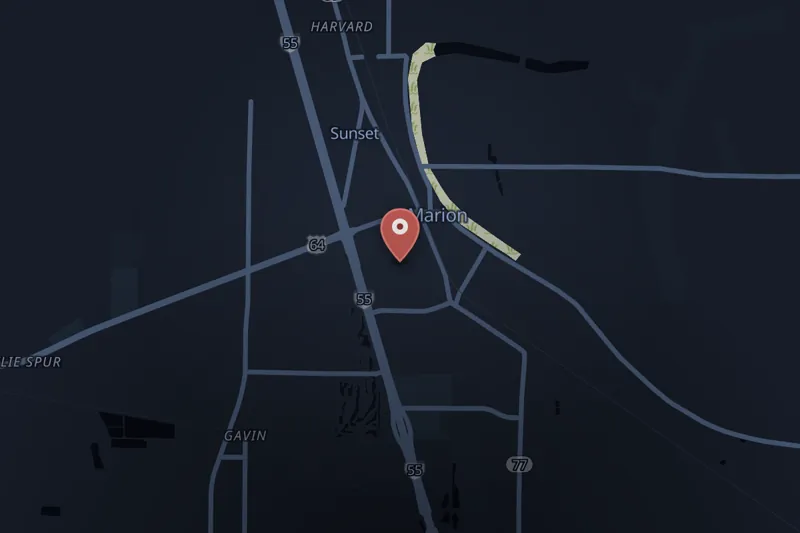
Crittenden County, Arkansas, United States · 1950s
Isadore Banks, a wealthy African-American landowner and World War I veteran, disappeared in Crittenden County, Arkansas, on June 4, 1954, and was found dead four days later, tied to a tree, burned, and mutilated. No one was ever charged, and the case remains unsolved.
 Credit: New York World-Telegram & Sun / Wikimedia Commons·Public domain·SourceSOLVEDListen
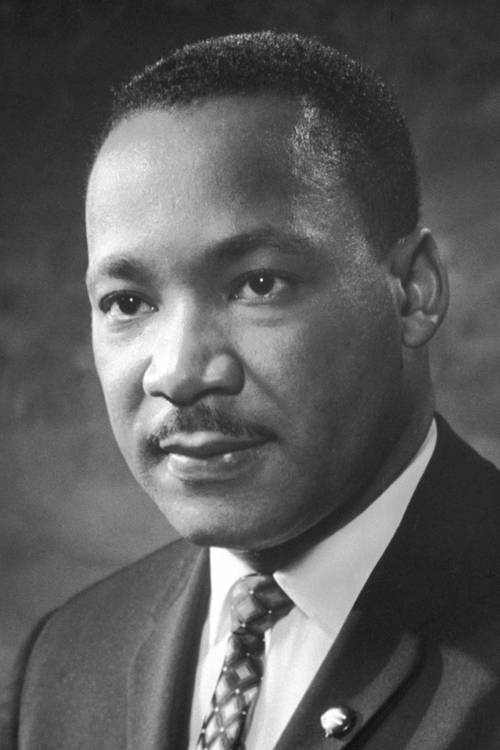
Lorraine Motel, Memphis, Tennessee · 1960s
On April 4, 1968, civil rights leader Martin Luther King Jr. was fatally shot on the balcony of the Lorraine Motel in Memphis, Tennessee. James Earl Ray, an escaped convict, pleaded guilty to the murder in 1969 and was sentenced to 99 years, though he later recanted. A 1999 civil jury found Loyd Jowers and unnamed others civilly liable for a conspiracy, a finding the U.S. Department of Justice disputed in 2000 for lack of evidence.
 SOLVEDListen
Memphis, Tennessee, United States · 2020s
Memphis teacher Eliza Fletcher was abducted while running and killed in September 2022, and Cleotha Abston later pleaded guilty to murder and kidnapping.
 Credit: Photo by Calvin Beale, as an employee of the Economic Research Service, part of the…·Public domain·SourceSOLVEDListen
Madison, Jefferson County, Indiana · 1992
In January 1992, twelve-year-old Shanda Sharer was abducted and killed in southern Indiana by four teenage girls, all charged as adults; each pleaded guilty and received prison sentences.
 Credit: en:User:Paul.h·Public domain·SourceSOLVEDListen
Petaluma, California, United States · 1993
Polly Hannah Klaas, a 12-year-old girl, was abducted at knifepoint from her home in Petaluma, California, on October 1, 1993, and later found murdered. Richard Allen Davis was convicted of first-degree murder in 1996 and sentenced to death.
 Credit: KAIDENBEARD10·CC BY-SA 4.0·SourceSOLVEDListen
New Strand Shopping Centre area, Bootle, Merseyside · 1990s
In February 1993, two-year-old James Bulger was abducted from a Bootle shopping centre by two 10-year-old boys, Robert Thompson and Jon Venables, who tortured and killed him before leaving his body on a railway line. Both were convicted of murder later that year, becoming the youngest convicted murderers in modern British history, and were released on life licence in 2001 after serving eight years.
Also covered by
 Credit: English Wikipedia·Editorial use·SourceSOLVEDListen
Modesto, California · 2002
Laci Peterson, 27 and eight months pregnant, disappeared from her Modesto, California home on December 24, 2002; her body and that of her unborn son Conner were found in San Francisco Bay in April 2003, and her husband Scott Peterson was convicted in 2004 of murdering both.
 Credit: CBS News / Travis Alexander (personal photo)·Editorial use·SourceSOLVEDListen
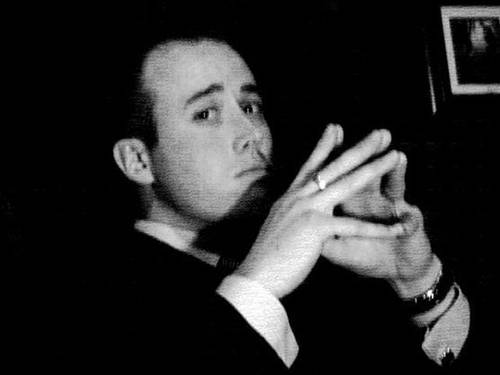
Mesa, Arizona, United States · 2000s
Travis Alexander, 30, was stabbed, slashed, and shot to death in his Mesa, Arizona home on June 4, 2008. His ex-girlfriend, Jodi Arias, was convicted of first-degree murder in 2013 and sentenced to life without parole in 2015 after two juries deadlocked on the death penalty.
 Image record·Editorial use·SourceSOLVEDListen
Austin, Texas · 2022
Moriah Wilson, a 25-year-old professional cyclist, was shot and killed at a friend's residence in Austin, Texas, on May 11, 2022, and Kaitlin Armstrong was later convicted and sentenced to 90 years in prison for the killing.
 Credit: Instagram/@gabspetito, widely distributed in press coverage·Editorial use·SourceSOLVEDListen
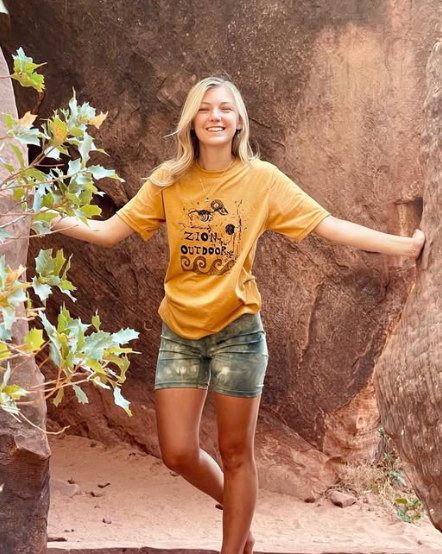
Bridger–Teton National Forest, Wyoming · 2021
Gabby Petito, a 22-year-old travel vlogger, was killed by strangulation and blunt-force trauma in August 2021 while on a cross-country van trip with her fiancé, Brian Laundrie. Laundrie returned to Florida alone, was named a person of interest, and later died by suicide, leaving a note admitting he had killed her.