Start here
The Isdal Woman: Norway's Greatest Unsolved Mystery

Stephanie Harlowe's 87-minute breakdown, the fullest single telling on file.
Watch on YouTubeCold case · 1970s
Also known as Isdal Woman · Isdalskvinna
 SvartediketUlrikenIsdalen23Juni1Credit: AqwisCC BY-SA 3.0Source
The short answer
An unidentified woman was found dead and severely burned in Isdalen ("Ice Valley") near Bergen, Norway, on 29 November 1970. Despite an extensive investigation revealing multiple false identities, her identity and the circumstances of her death remain unresolved more than fifty years later.
The Isdal Woman: Norway's Greatest Unsolved MysteryStephanie Harlowe · 1 hr 27 min1 piece from 1 creator: ranked, with duplicates removed and short clips set aside.
Start here
Stephanie Harlowe's 87-minute breakdown, the fullest single telling on file.
Watch on YouTubeTitles and descriptions are the creators’ own and may not reflect current legal status. The sourced facts are in the file below. Players load only when you press play. Suggest coverage we’re missing.
On the morning of 29 November 1970, a hiker and his two daughters discovered the charred body of a woman among scree in Isdalen, an area near Ulriken in Bergen, Norway, historically nicknamed "Dødsdalen" (Death Valley). Her face was unrecognisable and the front of her body and clothing had been severely burned. Police, who filed the case as "134/70," documented her supine position, clenched hands, and a range of items found near the body — including an empty liqueur bottle, water bottles, a passport holder, clothing, jewelry, and burned paper — all with identifying marks removed.
Three days later, investigators located two suitcases belonging to the woman at Bergen railway station. These contained clothing, wigs, makeup, foreign currency, maps, timetables, and cosmetics, with all identifying information stripped away. An autopsy conducted at the Gades Institutt determined she had died from a combination of phenobarbital incapacitation and carbon monoxide poisoning; soot in her lungs indicated she was alive while burning, and bruising on her neck suggested a possible fall or blow. She had ingested between 50 and 70 sleeping pills, with twelve more found near her body.
Investigators traced her movements through hotel records and a decoded notepad, determining she had used at least eight false identities and traveled around Norway and Europe, consistently claiming Belgian nationality. She had last been seen alive on 23 November 1970, checking out of a Bergen hotel. Composite sketches were circulated internationally via Interpol, but she was never identified, and police concluded she had likely died by suicide — though this verdict has remained contested by others who believe she was murdered.
She was given a Catholic burial in an unmarked grave in Bergen's Møllendal graveyard on 5 February 1971, attended by sixteen police officers, with her remains kept in a zinc coffin to allow for potential future disinterment.
The case has generated extensive speculation over the decades, including theories that she may have been involved in Cold War-era espionage, possibly connected to surveillance of Norwegian military missile testing. Later scientific analysis, including isotope testing of her teeth in 2017, suggested she was born around 1930 near Nuremberg, Germany, and raised in a French-speaking region, potentially Belgium. A 2018 podcast series produced by NRK and the BBC World Service further explored these findings and eyewitness accounts. Genetic testing later identified her mtDNA haplogroup as H24, associated with South East Europe or South West Asia. Additional claims, including a 2019 account from a Forbach resident and a 2023 report suggesting connections to a Swiss banker and Norwegian intelligence interference, have added further speculation without resolving her identity. The case remains unsolved.
Woman checks out of Room 407 of Hotel Hordaheimen in Bergen; last confirmed sighting alive.
Charred body of the woman discovered in Isdalen, Bergen, by a hiker and his two daughters.
Two suitcases belonging to the woman found abandoned at Bergen railway station.
Woman given a Catholic burial in an unmarked grave at Møllendal graveyard, Bergen.
An anonymous taxi driver comes forward stating a second man joined the woman's ride to the railway station.
A Bergen resident reports a 1970 sighting of a woman matching the composite sketch near Fløyen, five days before the body was found.
Case reopened; NRK commissions new forensic sketches from artist Stephen Missal.
Stable isotope analysis of the woman's teeth indicates birth around 1930 near Nuremberg, Germany.
NRK and BBC World Service publish the podcast series 'Death in Ice Valley.'
BBC reports new listener-sourced clues following the podcast series.
A Forbach resident claims a relationship with the woman in 1970, published in Le Républicain Lorrain.
Neue Zürcher Zeitung article suggests possible connections to a Swiss banker and alleged Norwegian intelligence interference in the investigation.
Victims first. Every legal label is set from public records and court outcomes, not from the prose.
Unidentified woman found dead in Isdalen, Bergen, on 29 November 1970; cause of death attributed by police to suicide via sleeping pill ingestion and carbon monoxide poisoning, though this remains disputed.[3]
Coverage is not a source: every fact in this file rests on the records below.
Are you family of someone named in this file? Corrections and removal requests from victims’ families are prioritized.
 Credit: nrkbetaCC BY-SA 2.0SourceSOLVEDListen
Oslo and Utøya, Norway · 2011
On 22 July 2011, Anders Behring Breivik detonated a car bomb in Oslo's government quarter, killing 8, then carried out a mass shooting at a Workers' Youth League (AUF) summer camp on the island of Utøya, killing 69. He was convicted in 2012 and sentenced to 21 years of preventive detention, Norway's maximum sentence.
 Credit: RoghueCC BY-SA 3.0SourceOVERTURNEDListen
Baneheia, Kristiansand, Norway · 2000
Two girls, aged 8 and 10, were raped and murdered in the Baneheia forest area of Kristiansand, Norway on 19 May 2000. Jan Helge Andersen and Viggo Kristiansen were convicted in 2001-2002; decades later Kristiansen's conviction was overturned and he was acquitted in December 2022 in what is widely regarded as one of Norway's biggest miscarriages of justice.
 Credit: Author: Nærings- og fiskeridepartementet (Norwegian Ministry of Trade, Industry and…Public domainSourceSOLVEDListen
Al-Noor Islamic Centre, Bærum, Norway · 2019
On 10 August 2019, Philip Manshaus murdered his 17-year-old adopted sister Johanne Ihle-Hansen at their Bærum home because of her Asian ethnicity, then attacked the Al-Noor Islamic Centre with firearms, hitting no one before being subdued by three elderly worshippers. He was convicted of murder and terrorism in 2020 and, following a 2024 case reopening over psychosis findings, was resentenced in October 2025 to 21 years without extended preventative detention.
 Credit: PremeditatedCC BY-SA 4.0SourceSOLVEDListen
London Pub / Per på hjørnet, Oslo, Norway · 2022
On 25 June 2022, a gunman opened fire outside and inside gay bars in Oslo, Norway, near the site of the planned Oslo Pride parade, killing two men and wounding twenty-one others before being disarmed by civilians.
 Credit: Norbert KissCC BY-SA 4.0SourceSOLVEDListen
Fylkesvei 53, between Øvre Årdal and Tyin, Norway · 2003
On 4 November 2013, a long-distance bus on the Valdresekspressen route in Norway was hijacked near Øvre Årdal; the driver and both passengers aboard were killed with a knife before the suspect surrendered to emergency responders.
 SOLVEDListen
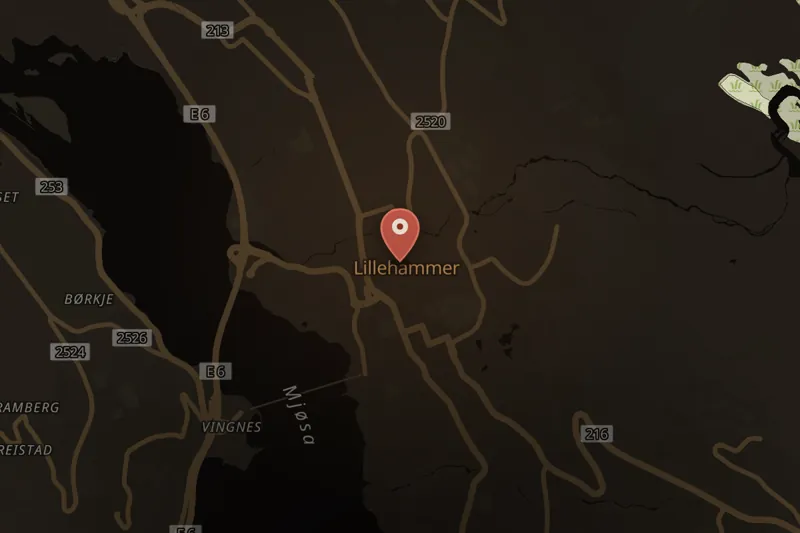
Lillehammer, Norway · 1973
Mossad agents shot dead Moroccan waiter Ahmed Bouchikhi in Lillehammer, Norway, in 1973 after mistaking him for a Black September operative; Norwegian courts convicted five agents of complicity.
 Credit: CBS News / Travis Alexander (personal photo)Editorial useSourceSOLVEDListen
Mesa, Arizona, United States · 2000s
Travis Alexander, 30, was stabbed, slashed, and shot to death in his Mesa, Arizona home on June 4, 2008. His ex-girlfriend, Jodi Arias, was convicted of first-degree murder in 2013 and sentenced to life without parole in 2015 after two juries deadlocked on the death penalty.
 Credit: English WikipediaEditorial useSourceSOLVEDListen
Modesto, California · 2002
Laci Peterson, 27 and eight months pregnant, disappeared from her Modesto, California home on December 24, 2002; her body and that of her unborn son Conner were found in San Francisco Bay in April 2003, and her husband Scott Peterson was convicted in 2004 of murdering both.
 Image recordEditorial useSourceSOLVEDListen
Austin, Texas · 2022
Moriah Wilson, a 25-year-old professional cyclist, was shot and killed at a friend's residence in Austin, Texas, on May 11, 2022, and Kaitlin Armstrong was later convicted and sentenced to 90 years in prison for the killing.
 Credit: Instagram/@gabspetito, widely distributed in press coverageEditorial useSourceSOLVEDListen
Bridger–Teton National Forest, Wyoming · 2021
Gabby Petito, a 22-year-old travel vlogger, was killed by strangulation and blunt-force trauma in August 2021 while on a cross-country van trip with her fiancé, Brian Laundrie. Laundrie returned to Florida alone, was named a person of interest, and later died by suicide, leaving a note admitting he had killed her.