
Start here
JAIL CELL JUSTICE?! Evil Guard Gets More Than He Bargained For | Joan Little

Bailey Sarian's 39-minute breakdown, the fullest single telling on file.
Watch on YouTubeBefore you continue
This case involves sexual violence. Casepin presents the record in neutral, non-graphic language. Choose whether to continue.
Solved case · 1974
Also known as Joanne Little case · State v. Joan Little
The short answer
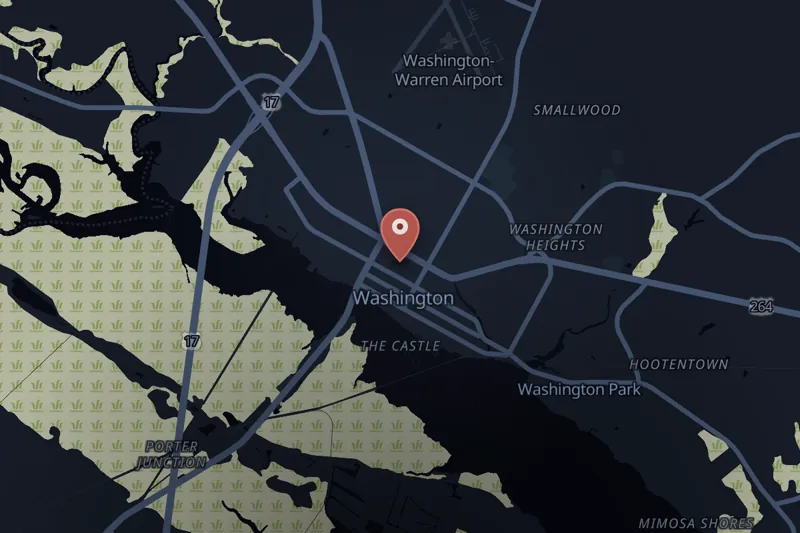
Joan Little, a young Black woman jailed in Washington, North Carolina, killed white jailer Clarence Alligood with an ice pick in August 1974, saying she acted to stop him from sexually assaulting her. Charged with first-degree murder, she was acquitted in 1975 after a trial that became a national civil rights, feminist, and anti-death penalty cause célèbre.
Start hereJAIL CELL JUSTICE?! Evil Guard Gets More Than He Bargained For | Joan LittleBailey Sarian · 39 minThe coverage index
1 piece from 1 creator: ranked, with duplicates removed and short clips set aside.
Start here
Video · YouTube · 39 min · 2025
Bailey Sarian's 39-minute breakdown, the fullest single telling on file.
Watch on YouTubeTitles and descriptions are the creators’ own and may not reflect current legal status. The sourced facts are in the file below. Players load only when you press play. Suggest coverage we’re missing.
The case file
Joan Little (born May 8, 1954) was a Black woman from Washington, North Carolina, who by early 1974, at age 20, had accumulated multiple arrests for theft and breaking and entering. She was convicted on June 4, 1974, of felony breaking and entering and larceny, and asked to serve her sentence in the Beaufort County Jail rather than be transferred to a women's correctional facility in Raleigh, so she could remain close to home while raising bond money.
Before dawn on August 27, 1974, a police officer bringing another prisoner to the jail found the body of jailer Clarence Alligood, 62, on Little's bunk, naked from the waist down, with stab wounds to the temple and heart area inflicted by an ice pick; semen was found on his leg. Little was missing from the jail. Because she had fled custody, she was treated as a fugitive, and police were authorized to kill her on sight. She turned herself in to authorities in Raleigh more than a week later, stating that she had killed Alligood while resisting a sexual assault.
Little was charged with first-degree murder, which under North Carolina law at the time carried a mandatory death sentence. The case drew national attention because North Carolina held more than a third of all pending death-penalty cases in the country, and because Little's defense — that she used deadly force to resist rape — combined racial, gender, and capital-punishment issues that attracted civil rights activists, feminists, and anti-death-penalty advocates. Her attorneys, Jerry Paul and Karen Bethea-Shields (Karen Galloway), built a defense fund that raised more than $350,000 and used newly developed scientific jury-selection methods, including comparative surveys of racial attitudes across North Carolina counties, to successfully petition for a change of venue to Raleigh.
The trial opened on July 14, 1975. Former inmates, including Phyllis Ann Moore and Ida Mae Roberson, testified that Alligood had a history of using his position to obtain sexual favors from female prisoners. Little testified over two days that Alligood had repeatedly come to her cell overnight and ultimately forced her at ice-pick-point to perform oral sex, and that she seized the ice pick and stabbed him after he let his guard down. An autopsy reportedly found that ten of the eleven stab wounds were consistent with a self-defense struggle, with one wound being fatal. Prosecutor William Griffin argued Little had lured Alligood to enable her escape.
On August 15, 1975, a jury of six white and six Black jurors deliberated for one hour and 25 minutes and returned a verdict of not guilty. Little was returned to prison to complete her earlier breaking-and-entering sentence, escaped roughly a month before she would have been eligible for parole, was recaptured and convicted for the escape, and was released in June 1979. In 1981 she was shot in New York and survived; in 1989 she was arrested in New Jersey on charges including driving a stolen car. She has not been in public view since.
8 dated entries · 1974–1989
Joan Little is convicted of felony breaking and entering and larceny and elects to serve her sentence at Beaufort County Jail.
Jailer Clarence Alligood is found stabbed to death on Little's bunk; Little is missing from the jail.
Little turns herself in to authorities in Raleigh, saying she killed Alligood while resisting sexual assault.
Trial for first-degree murder opens in Raleigh, North Carolina.
Jury acquits Joan Little of murder after roughly 85 minutes of deliberation.
Little is released from prison after serving time for a prior escape conviction.
Little is shot in New York and survives.
Little is arrested in New Jersey on charges including driving a stolen car.
2 named in this file
Victims first. Every legal label is set from public records and court outcomes, not from the prose.
62-year-old white Beaufort County Jail guard found stabbed to death; the case centered on Little's claim she killed him while resisting his sexual assault.[3]
Charged with first-degree murder in the death of jailer Clarence Alligood; acquitted by jury verdict on August 15, 1975.[3]
3 cited
Coverage is not a source: every fact in this file rests on the records below.
PressThe New York TimesAccessed Jul 18, 2026
PressTIMEAccessed Jul 18, 2026
EncyclopedicWikipediaAccessed Jul 18, 2026
Trust
Are you family of someone named in this file? Corrections and removal requests from victims’ families are prioritized.
Near this case
 Credit: U.S. Marine Corps·Public domain·SourceSOLVEDListen
Marine Corps Base Camp Lejeune / Jacksonville, North Carolina · 2000s
Pregnant U.S. Marine Lance Corporal Maria Lauterbach disappeared from Camp Lejeune, North Carolina, in December 2007 after reporting she had been raped by a fellow Marine. Her burned remains and those of her unborn child were found in the backyard of Corporal Cesar Laurean, who fled to Mexico, was extradited in 2009, and convicted of her murder in 2010.
Elizabeth City, North Carolina, United States · 2020s
On April 21, 2021, Andrew Brown Jr., a 42-year-old Black man, was fatally shot in the back of the head by Pasquotank County Sheriff's deputies serving a drug-related search and arrest warrant in Elizabeth City, North Carolina. The District Attorney found the deputies' use of deadly force justified and declined to file charges.
 UNSOLVEDListen
Near Rolesville, North Carolina, United States · 1910s
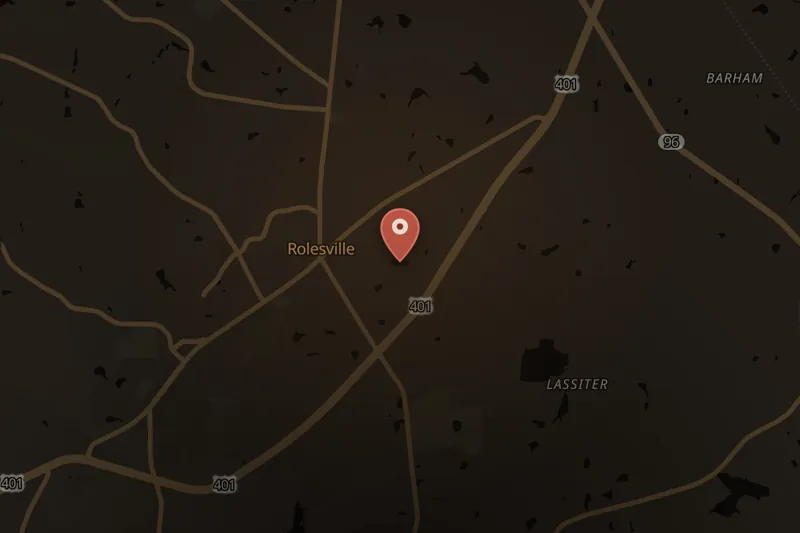
George Taylor, an African-American man accused of raping a white woman near Rolesville, North Carolina, was abducted from police custody and lynched by a masked mob on November 5, 1918 — the only documented lynching in Wake County, North Carolina.
 Credit: Fielding McGehee and Rebecca Moore·CC BY-SA 3.0·SourceSOLVEDListen
Jonestown, Guyana · 1978
On November 18, 1978, 918 people died at the Peoples Temple's Jonestown settlement in Guyana, the nearby Port Kaituma airstrip, and a Temple building in Georgetown, in a mass murder-suicide that also killed U.S. Congressman Leo Ryan and four members of his delegation.
 Credit: English Wikipedia·Editorial use·SourceSOLVEDListen
Westdale Mall parking lot, Cedar Rapids, Iowa · 1979
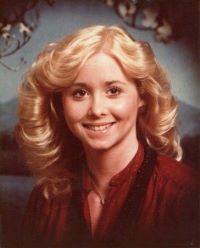
Michelle Martinko, an 18-year-old Cedar Rapids, Iowa high school senior, was stabbed to death in her family's car in a mall parking lot on December 19, 1979. The case went cold for nearly 39 years until familial DNA analysis and genealogy database matching identified Jerry Lynn Burns, who was arrested in 2018 and convicted of first-degree murder in 2020.
 Credit: State of California.·Public domain·SourceSOLVEDListen
Redondo Beach, California · 1979
Lawrence Bittaker and Roy Norris were convicted of kidnapping, raping, torturing, and murdering five teenage girls in Southern California between June and October 1979.
Also covered by
 Credit: English Wikipedia·Editorial use·SourceSOLVEDListen
Modesto, California · 2002
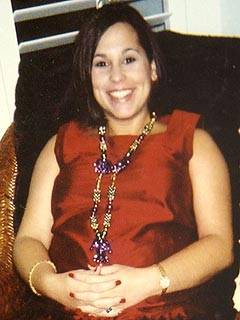
Laci Peterson, 27 and eight months pregnant, disappeared from her Modesto, California home on December 24, 2002; her body and that of her unborn son Conner were found in San Francisco Bay in April 2003, and her husband Scott Peterson was convicted in 2004 of murdering both.
 Credit: CBS News / Travis Alexander (personal photo)·Editorial use·SourceSOLVEDListen
Mesa, Arizona, United States · 2000s
Travis Alexander, 30, was stabbed, slashed, and shot to death in his Mesa, Arizona home on June 4, 2008. His ex-girlfriend, Jodi Arias, was convicted of first-degree murder in 2013 and sentenced to life without parole in 2015 after two juries deadlocked on the death penalty.
 COLDListen
Cumming, Georgia · 2018
Tamla Horsford, a 40-year-old mother of five, died from a fall at a home in Cumming, Georgia, during a gathering on November 3-4, 2018; two separate investigations ruled her death accidental, though her family has disputed that finding and pushed for further inquiry.
 Credit: Los Angeles Police Department·Public domain·SourceUNSOLVEDListen
Leimert Park, Los Angeles, California, USA · 1940s
Elizabeth Short, known posthumously as the Black Dahlia, was found murdered in Los Angeles in January 1947 in a case that remains unsolved.
 Credit: Ted Van Zyl·Editorial use·SourceSOLVEDListen
Albuquerque, New Mexico, United States · 1993
Girly Chew Hossencofft, a Malaysian-born bank teller living in Albuquerque, New Mexico, disappeared on September 9, 1999, shortly after filing for divorce from her husband Diazien Hossencofft. He and his girlfriend Linda Henning were later convicted of her murder. Her body has never been found.
 Credit: Argonne National Laboratory / Wikimedia Commons, c.1922–23·Public domain·SourceSOLVEDListen
Orange, New Jersey · 1917
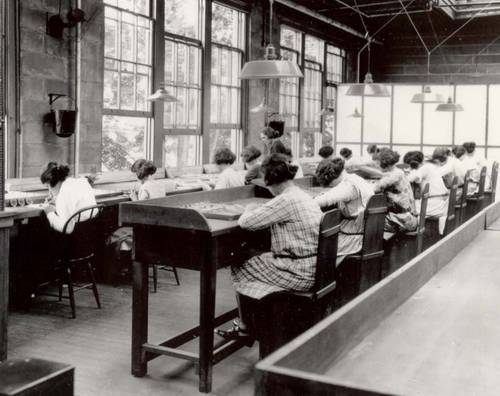
Beginning in 1917, factory workers who came to be known as the Radium Girls were poisoned after being instructed to shape radium-paint brushes with their lips; the resulting illnesses, deaths, and lawsuits against the United States Radium Corporation and the Radium Dial Company reshaped U.S. occupational health and labor law.
