
Start here
Devil In Disguise As A Killer Clown - John Wayne Gacy Was INSANE | Mystery & Makeup Bailey Sarian

Bailey Sarian's 79-minute breakdown, the fullest single telling on file.
Watch on YouTubeBefore you continue
This case involves sexual violence and crimes against children. Casepin presents the record in neutral, non-graphic language. Choose whether to continue.
Solved case · 1975
Also known as Killer Clown · Pogo the Clown
 Robert Jerome Piest (1963-1978) as a high school freshmanCredit: Unknown author·Public domain·Source

The short answer
John Wayne Gacy, a Chicago-area contractor known for performing as a clown at community events, was convicted of raping, torturing, and murdering at least 33 young men and boys between 1972 and 1978, most of whom he buried beneath his house.
Start hereDevil In Disguise As A Killer Clown - John Wayne Gacy Was INSANE | Mystery & Makeup Bailey SarianBailey Sarian · 1 hr 19 minThe coverage index
1 piece from 1 creator: ranked, with duplicates removed and short clips set aside.
Start here
Video · YouTube · 1 hr 19 min · 2021
Bailey Sarian's 79-minute breakdown, the fullest single telling on file.
Watch on YouTubeTitles and descriptions are the creators’ own and may not reflect current legal status. The sourced facts are in the file below. Players load only when you press play. Suggest coverage we’re missing.
The case file
John Wayne Gacy (March 17, 1942 – May 10, 1994) was an American serial killer and sex offender convicted of raping, torturing, and murdering at least thirty-three young men and boys between 1972 and 1978 in Norwood Park Township, a suburb of Chicago, Illinois. He committed all of his known murders inside his ranch-style house at 8213 West Summerdale Avenue. Gacy typically lured victims to his home and tricked them into wearing handcuffs under the pretext of a magic trick, then raped and tortured them before killing them by asphyxiation or strangulation with a garrote. Twenty-six victims were buried in the crawl space of his home, three were buried elsewhere on his property, and four were disposed of in the Des Plaines River.
Before the Chicago-area murders, Gacy had been convicted in 1968 of sodomizing a teenage boy, Donald Voorhees Jr., in Waterloo, Iowa, and was sentenced to ten years' imprisonment but served eighteen months before parole. After returning to Illinois, he established a construction business, PDM Contractors, and became active in local Democratic Party politics and as a volunteer clown performing as "Pogo" and "Patches" at community and charitable events. His first known murder occurred on January 3, 1972, involving 16-year-old Timothy McCoy, described as the "Greyhound Bus Boy" prior to identification. Gacy committed a second, still-unidentified murder around January 1974, followed by the murder of PDM employee John Butkovich in 1975. After his 1976 divorce from his second wife, Carole Hoff, Gacy lived largely alone and murdered at least thirty additional victims between 1976 and 1978, a period he referred to as his "cruising years."
By mid-1978, the crawl space beneath Gacy's house was full, and he began disposing of bodies in the Des Plaines River, including victims Timothy O'Rourke, Frank Landingin, and James Mazzara. The investigation that led to Gacy's arrest began with the December 11, 1978, disappearance of 15-year-old Robert Piest, a part-time pharmacy employee whom Gacy had approached about construction work. Des Plaines police, led by Lieutenant Joseph Kozenczak, identified Gacy as a suspect after learning of his prior Iowa sodomy conviction and an outstanding battery charge. Gacy was arrested on December 21, 1978.
Gacy's conviction for thirty-three murders committed by one individual covered the most homicides in United States legal history at the time. He was sentenced to death on March 13, 1980, and was executed by lethal injection at Stateville Correctional Center on May 10, 1994. Several of his victims remained unidentified for decades; identification efforts using forensic techniques have continued in subsequent years, including cases tracked through missing-persons databases.
11 dated entries · 1942–1994
John Wayne Gacy is born in Chicago, Illinois.
Gacy is convicted of sodomy in Waterloo, Iowa, and sentenced to ten years' imprisonment.
Gacy is granted parole after serving eighteen months of his Iowa sentence.
Gacy commits his first known murder, killing 16-year-old Timothy McCoy.
Gacy commits a second murder; the victim remains unidentified.
PDM employee John Butkovich disappears; Gacy later admits to murdering him.
Gacy's divorce from his second wife, Carole Hoff, is finalized.
15-year-old Robert Piest disappears after speaking with Gacy at the Nisson Pharmacy in Des Plaines.
Gacy is arrested.
Gacy is sentenced to death.
Gacy is executed by lethal injection at Stateville Correctional Center.
8 named in this file
Victims first. Every legal label is set from public records and court outcomes, not from the prose.
15-year-old sexually assaulted by Gacy in Waterloo, Iowa in 1967, leading to Gacy's 1968 sodomy conviction.[3]
26-year-old survivor abducted, drugged, and tortured by Gacy in March 1978; his identification of Gacy's vehicle contributed to later scrutiny of Gacy.[3]
18-year-old PDM employee murdered in July 1975.[3]
19-year-old college student abducted, raped, and tortured by Gacy in December 1977; survived and later testified at trial.[3]
15-year-old victim whose December 1978 disappearance led to Gacy's arrest.[3]
16-year-old victim, Gacy's first known murder in January 1972.[3]
Convicted of the murders of 33 young men and boys; sentenced to death and executed in 1994.[3]
Des Plaines police lieutenant who led the investigation into Robert Piest's disappearance, resulting in Gacy's identification as a suspect.[3]
From the record
3 cited
Coverage is not a source: every fact in this file rests on the records below.
Official / agencynamus.govAccessed Jul 18, 2026
PressThe New York TimesAccessed Jul 18, 2026
EncyclopedicWikipediaAccessed Jul 18, 2026
Trust
Are you family of someone named in this file? Corrections and removal requests from victims’ families are prioritized.
Near this case
 SOLVEDListen
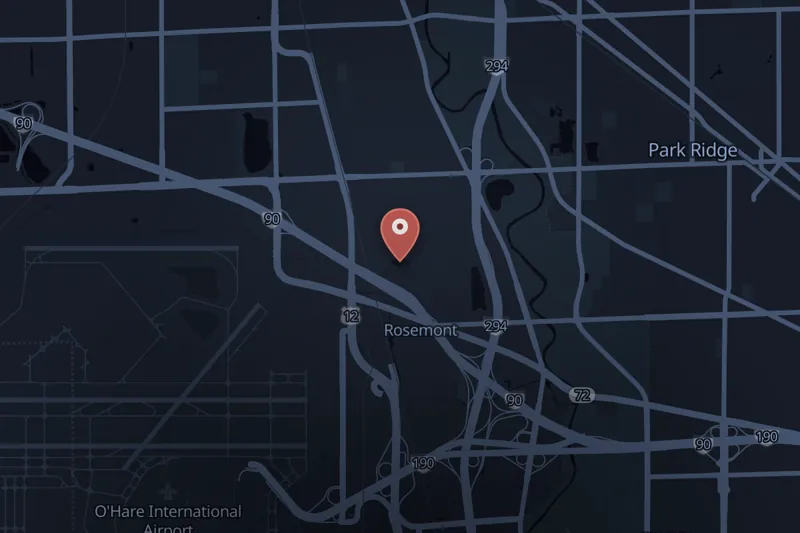
Crowne Plaza Chicago O'Hare hotel, Rosemont, Illinois · 2010s
Kenneka Jenkins, 19, was found dead inside a latched hotel freezer at the Crowne Plaza Chicago O'Hare in Rosemont, Illinois, in September 2017 after attending a party there. Her death was ruled accidental, but her family's lawsuit against the hotel was settled in 2023.
 SOLVEDListen
Laramie Avenue and Eddy Street, Portage Park, Chicago, Illinois · 2020s
On March 31, 2021, 22-year-old Anthony Alvarez was fatally shot in the back by Chicago Police Officer Evan Solano while fleeing on foot during a pursuit that began over a traffic stop. Body camera footage released weeks later showed Alvarez holding a gun as he ran; prosecutors declined to file charges in March 2022.
 Image record·Editorial use·SourceSOLVEDListen
Douglass Park, Chicago, Illinois · 2010s
Rekia Boyd, a 22-year-old Black woman, was fatally shot in the head by off-duty Chicago police detective Dante Servin near Douglass Park in 2012. Servin was later charged with involuntary manslaughter but cleared in a 2015 bench trial after the judge ruled the shooting was intentional rather than reckless.
 Credit: California Department of Corrections·Public domain·SourceSOLVEDListen
San Francisco, California, United States · 1973
Between October 1973 and April 1974, a group calling itself the "Death Angels" killed at least fifteen white people and wounded eight others in racially motivated attacks across San Francisco, prompting a controversial police manhunt known as Operation Zebra and the eventual conviction of four men.
 SOLVEDListen
Pickton family farm, 953 Dominion Avenue, Port Coquitlam, British Columbia · 1978
Robert Pickton, a pig farmer from Port Coquitlam, British Columbia, was convicted in December 2007 of second-degree murder in the deaths of six women from Vancouver's Downtown Eastside. Investigators linked him to the deaths of at least 26 women in total, and 20 further first-degree murder charges against him were stayed in 2010.
 SOLVEDListen
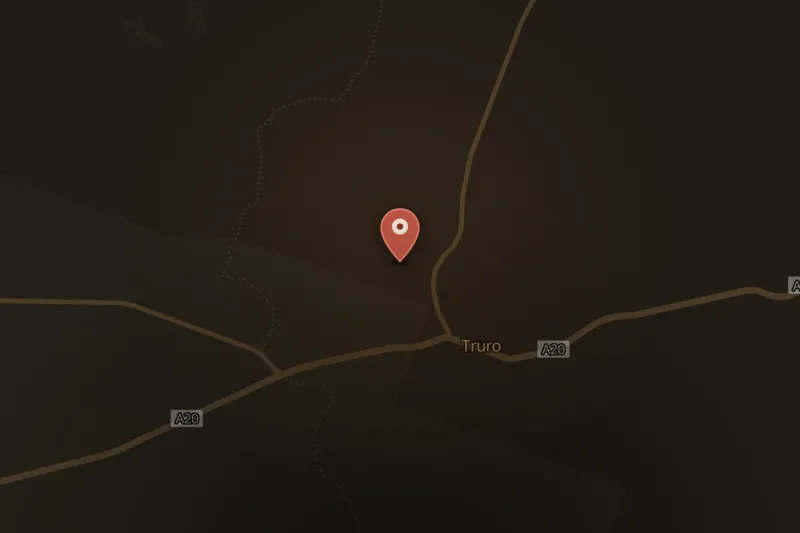
Bushland near Truro, South Australia (principal body-recovery site) · 1976
Seven young women and girls were abducted, sexually assaulted, and murdered in and around Adelaide, South Australia, between December 1976 and February 1977; James Miller was convicted of six of the murders in 1980 on the basis of joint criminal enterprise.
Also covered by
 Credit: English Wikipedia·Editorial use·SourceSOLVEDListen
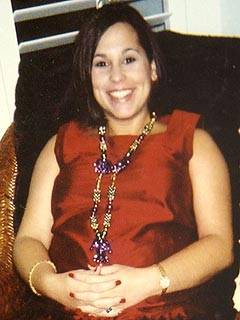
Modesto, California · 2002
Laci Peterson, 27 and eight months pregnant, disappeared from her Modesto, California home on December 24, 2002; her body and that of her unborn son Conner were found in San Francisco Bay in April 2003, and her husband Scott Peterson was convicted in 2004 of murdering both.
 Credit: CBS News / Travis Alexander (personal photo)·Editorial use·SourceSOLVEDListen
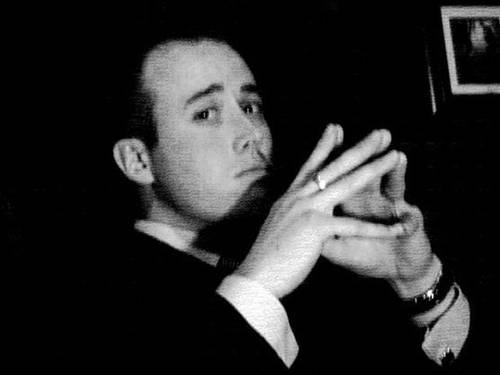
Mesa, Arizona, United States · 2000s
Travis Alexander, 30, was stabbed, slashed, and shot to death in his Mesa, Arizona home on June 4, 2008. His ex-girlfriend, Jodi Arias, was convicted of first-degree murder in 2013 and sentenced to life without parole in 2015 after two juries deadlocked on the death penalty.
 COLDListen
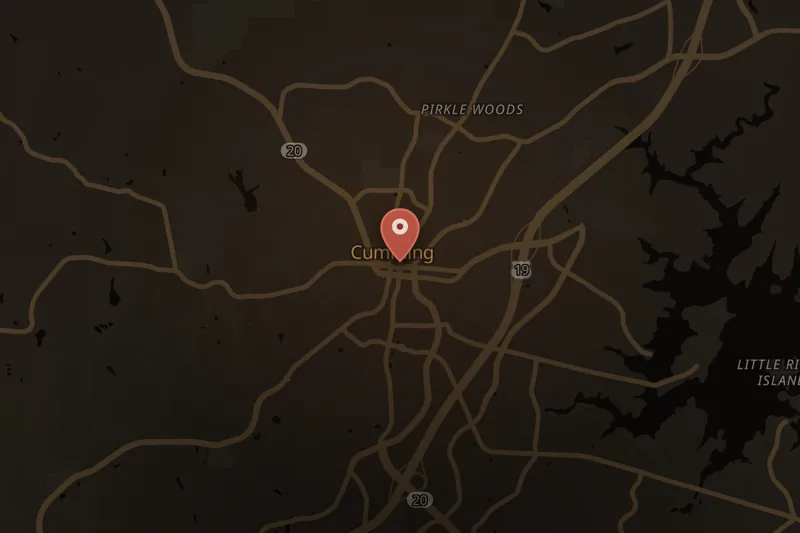
Cumming, Georgia · 2018
Tamla Horsford, a 40-year-old mother of five, died from a fall at a home in Cumming, Georgia, during a gathering on November 3-4, 2018; two separate investigations ruled her death accidental, though her family has disputed that finding and pushed for further inquiry.
 Credit: Los Angeles Police Department·Public domain·SourceUNSOLVEDListen
Leimert Park, Los Angeles, California, USA · 1940s
Elizabeth Short, known posthumously as the Black Dahlia, was found murdered in Los Angeles in January 1947 in a case that remains unsolved.
 Credit: Ted Van Zyl·Editorial use·SourceSOLVEDListen
Albuquerque, New Mexico, United States · 1993
Girly Chew Hossencofft, a Malaysian-born bank teller living in Albuquerque, New Mexico, disappeared on September 9, 1999, shortly after filing for divorce from her husband Diazien Hossencofft. He and his girlfriend Linda Henning were later convicted of her murder. Her body has never been found.
 Credit: Argonne National Laboratory / Wikimedia Commons, c.1922–23·Public domain·SourceSOLVEDListen
Orange, New Jersey · 1917
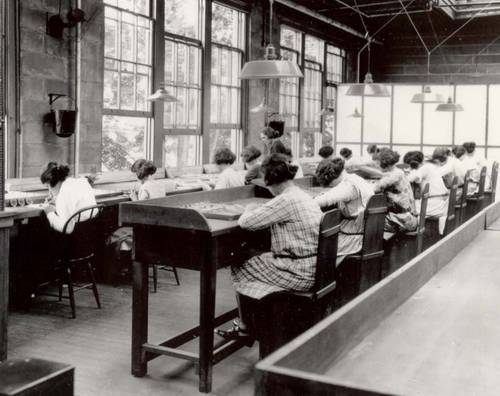
Beginning in 1917, factory workers who came to be known as the Radium Girls were poisoned after being instructed to shape radium-paint brushes with their lips; the resulting illnesses, deaths, and lawsuits against the United States Radium Corporation and the Radium Dial Company reshaped U.S. occupational health and labor law.