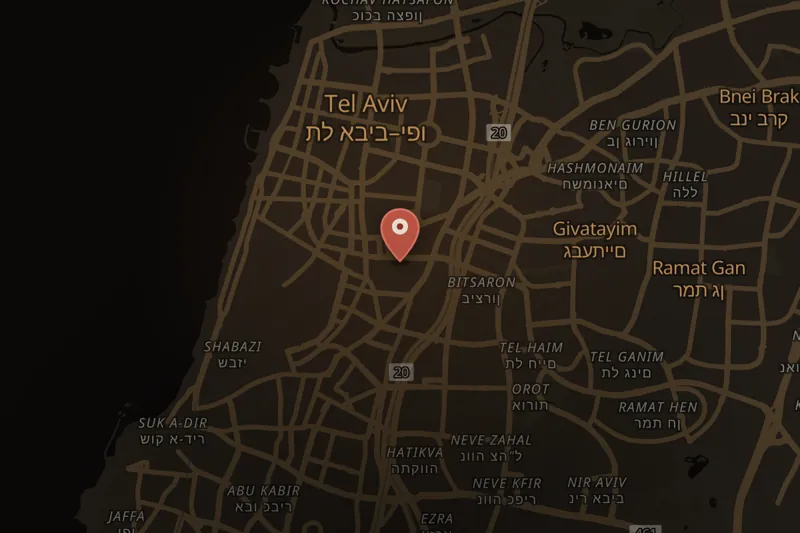
On the evening of 8 June 2016, two gunmen dressed in suits and ties entered the Max Brenner Cafe at the Sarona Market complex in Tel Aviv, Israel. The two men sat outside, ordered desserts, and at 21:27 stood up and opened fire on diners until one of their firearms jammed. They then fled the scene. Four people were killed and seven others were injured; several more people were treated for anxiety-related symptoms at the scene and at hospitals.
The victims killed were named as Ido Ben-Ari, 42, a father of two and former Sayeret Matkal commando who worked at Coca-Cola's Israel branch; Mila Mishayev, 32, who was shot in the leg and died of blood loss after calling her fiancé; Ilana Naveh, 39, a mother of four who died of a heart attack shortly after the attack; and Michael Feige, 58, a professor at Ben-Gurion University of the Negev.
The perpetrators were identified as cousins Khalid al-Muhamra and Muhammad Ahmad Moussa Mahmara, both 21, from the town of Yatta in the Hebron area of the West Bank. Security forces captured both men alive. One was wounded and detained following a gunfight with a civilian guard, while the other was apprehended after an off-duty, plainclothes policeman who had briefly sheltered him in his home realized the man's identity and returned to arrest him. During the arrest, a responding officer's weapon discharged, wounding another policeman with shrapnel.
An Israel Security Agency (Shin Bet) investigation found the two men had been influenced by Islamic State of Iraq and the Levant (ISIL) propaganda videos, though they did not receive direct instruction, aid, or make a formal pledge of allegiance to the group. An official indictment described the perpetrators as "inspired by" the Islamic State, though the report notes the suspects and their associates were also known members of rival factions. Hamas publicly praised the attack and claimed both men as its members, while the Palestinian Authority and Fatah issued statements distancing themselves from targeting civilians, though Fatah also described the attack as a "natural response" to Israeli actions.
In the aftermath, Israeli authorities suspended roughly 83,000 Palestinian entry permits for the Ramadan period, imposed a closure on the West Bank and Gaza, revoked 204 work permits associated with the perpetrators' extended family (the al-Makhamra clan), and demolished one perpetrator's family home. These measures drew criticism from the U.N. High Commissioner for Human Rights as potential collective punishment.
Following legal proceedings, the two perpetrators and an additional man who had aided in the preparations but did not join the attack were convicted and sentenced to four life sentences plus sixty years. A further individual was convicted and sentenced to six months for harboring the perpetrators the night before the attack.


 Credit: Yaakov Saar, Government Press Office (Israel)CC BY-SA 3.0SourceSOLVEDListen


