Start here
Netanyahu, Rabin and the Assassination That Shook History | Netanyahu at War | FRONTLINE
The creator's telling of the case, the strongest entry point on file.
Watch on YouTubeSolved case · 1995
Also known as Yitzhak Rabin assassination · Yitzhak Rabin's assassination
 Yitzhak RabinCredit: Yaakov Saar, Government Press Office (Israel)CC BY-SA 3.0Source
The short answer
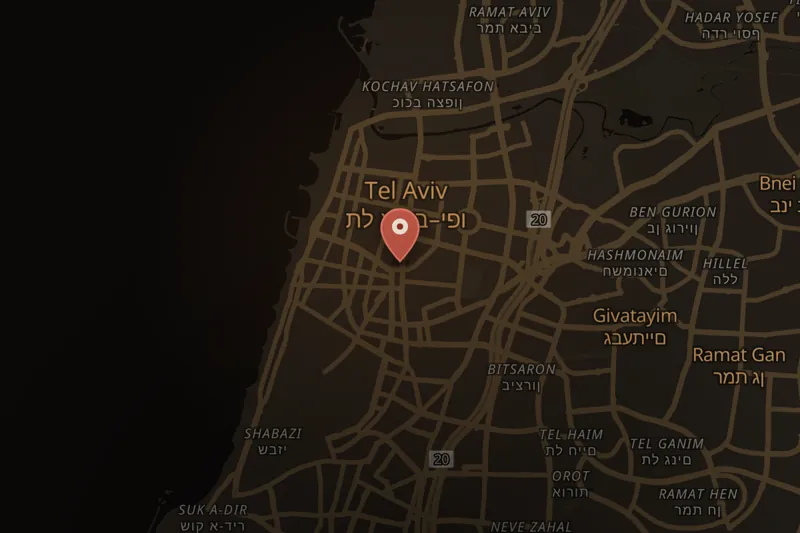
Israeli Prime Minister Yitzhak Rabin was shot and killed on 4 November 1995 in Tel Aviv by Yigal Amir, a far-right law student opposed to the Oslo Accords, as Rabin left a peace rally. Amir was convicted and sentenced to life; two associates were convicted of conspiracy.
Netanyahu, Rabin and the Assassination That Shook History | Netanyahu at War | FRONTLINE1 piece from 1 creator: ranked, with duplicates removed and short clips set aside.
Start here
The creator's telling of the case, the strongest entry point on file.
Watch on YouTubeTitles and descriptions are the creators’ own and may not reflect current legal status. The sourced facts are in the file below. Players load only when you press play. Suggest coverage we’re missing.
On the evening of 4 November 1995, Israeli Prime Minister Yitzhak Rabin was shot at Kings of Israel Square in Tel Aviv immediately after addressing a rally of more than 100,000 people held in support of the Oslo Accords peace process. As Rabin walked to his car, Yigal Amir, a 25-year-old Bar-Ilan University law student and far-right ultranationalist, approached from behind and fired two shots from a Beretta 84F semi-automatic pistol, striking Rabin in the abdomen and chest. Amir also fired a third shot during the ensuing struggle, lightly wounding bodyguard Yoram Rubin. Amir was subdued and arrested at the scene with the murder weapon.
Rabin was driven to Ichilov Hospital at the Tel Aviv Sourasky Medical Center. He arrived without a pulse or breath; doctors briefly stabilized him after draining air from his chest cavity and performed surgery, but his condition deteriorated. He was pronounced dead at 11:02 p.m., roughly ninety minutes after the shooting. An autopsy found that one bullet had ruptured his spleen and punctured his left lung while the other pierced his right lung, and that a resulting air embolism had reached his brain and hindered resuscitation efforts. Chief of Staff Eitan Haber announced Rabin's death to media outside the hospital shortly after 11 p.m.
The assassination followed months of intense right-wing opposition to the Oslo Accords, including rallies where Rabin was depicted in Nazi imagery and protesters chanted for his death. Amir had come to believe Rabin was a "rodef" (pursuer) endangering Jewish lives under a traditional Jewish legal concept, and told associates in advance that the prime minister should be killed; Israel's internal security service, Shin Bet, had information on Amir's extremist activity but not on specific assassination threats he had voiced.
Under interrogation, Amir confessed and reportedly expressed satisfaction on learning Rabin had died. His brother, Hagai Amir, was arrested as an implicated accomplice, along with Dror Adani. Yigal Amir was tried and convicted of Rabin's murder and of injuring Yoram Rubin, receiving a life sentence plus six years; his sentence has not been reduced, and a subsequent law (the "Yigal Amir Law") bars parole-board recommendations for a pardon or sentence reduction for a prime minister's assassin. Hagai Amir was convicted of conspiracy and sentenced to 12 years, later increased to 16 on appeal, with an additional year for a separate threat against a later prime minister; he was released in 2012. Dror Adani was sentenced to seven years and released in 2002. A separate Shin Bet informer, Avishai Raviv, was acquitted of failing to prevent the assassination after a court found no evidence he knew of Amir's specific plot.
Rabin was buried at Mount Herzl cemetery in Jerusalem on 6 November 1995 following a funeral attended by roughly 80 heads of state. Shimon Peres became acting and then confirmed prime minister; a government inquiry, the Shamgar Commission, later criticized Shin Bet for security failures. The assassination is widely viewed as a turning point in Israeli politics and the trajectory of the Oslo peace process.
Anti-Rabin rally led by Likud leader Benjamin Netanyahu features a mock funeral procession with a coffin and hangman's noose; protesters chant "Death to Rabin."
Rabin addresses a pro-Oslo Accords peace rally at Kings of Israel Square, Tel Aviv, attended by over 100,000 people.
As Rabin leaves the rally, Yigal Amir shoots him twice near his car; a third shot wounds bodyguard Yoram Rubin. Amir is arrested at the scene.
Rabin is pronounced dead at Ichilov Hospital at 11:02 p.m., about 90 minutes after the shooting.
Rabin's funeral is held at Mount Herzl cemetery in Jerusalem, attended by about 80 heads of state.
The Labor Party confirms Shimon Peres as its new leader following Rabin's death.
Peres is invited by President Ezer Weizman to form a new government.
Peres signs a coalition agreement between Labor, Meretz and Yiud, formally approved by the Knesset the next day.
Peres announces early elections, moving them to late May 1996.
The Shamgar Commission issues its final report, criticizing Shin Bet for putting Rabin at risk and ignoring threats from Jewish extremists.
The Knesset passes the Yigal Amir Law, barring parole-board recommendations for pardon or sentence reduction for a prime minister's assassin.
Dror Adani is released after serving his sentence for conspiracy.
Hagai Amir is released after serving his sentence for conspiracy.
Victims first. Every legal label is set from public records and court outcomes, not from the prose.
Prime Minister of Israel, shot and killed on 4 November 1995 in Tel Aviv.[3]
Rabin's bodyguard, lightly wounded by a third shot fired by the assailant during the attack.[3]
Convicted of conspiracy to murder Rabin; sentenced to seven years imprisonment and released in 2002.[3]
Convicted as an accomplice in a conspiracy to murder Rabin; sentenced to 12 years, increased to 16 on appeal, plus one additional year for a separate threat against a later prime minister; released in 2012.[3]
Convicted of the murder of Yitzhak Rabin and of injuring bodyguard Yoram Rubin; sentenced to life imprisonment plus six years.[3]
Shin Bet informer acquitted of charges of failing to prevent the assassination; court found no evidence he knew of Amir's specific plot.[3]
From the record
Coverage is not a source: every fact in this file rests on the records below.
Are you family of someone named in this file? Corrections and removal requests from victims’ families are prioritized.
 SOLVEDListen
Site of the Café Apropo bombing, Tel Aviv, Israel · 1990s
On 21 March 1997, a Palestinian suicide bomber detonated an explosive device at the entrance of the Café Apropo coffee shop in Tel Aviv, killing three women and injuring 48 others.
 Credit: IDF Spokesperson's Unit photographerCC BY-SA 3.0SourceSOLVEDListen
Dizengoff Street, Tel Aviv, Israel · 2020s
On 7 April 2022, a gunman opened fire at multiple locations on Dizengoff Street in Tel Aviv, killing three Israeli civilians and injuring six before being killed by security forces the next morning.
 SOLVEDListen
Dizengoff Street, Tel Aviv, Israel · 2010s
On 1 January 2016, a gunman opened fire on businesses along Dizengoff Street in Tel Aviv, killing two civilians and injuring seven others before fatally shooting a taxi driver while fleeing. Police identified the attacker as Nashat Melhem, who was killed by counter-terrorism forces on 8 January 2016 after a week-long manhunt.
 Credit: Bart Molendijk / AnefoCC BY-SA 3.0 NLSourceSOLVEDListen
Sriperumbudur, Tamil Nadu, India · 1991
Former Indian Prime Minister Rajiv Gandhi was killed by a suicide bomber tied to the LTTE at a campaign rally in Sriperumbudur, Tamil Nadu, on 21 May 1991, along with 14 other people. Twenty-six people were convicted at trial; the Supreme Court later reduced death sentences to four, and in 2022 the Supreme Court ordered the release of the last six convicts still imprisoned.
 Credit: User Mario scolas on fr.wikipediaCC BY-SA 2.0SourceSOLVEDListen
Liège, Belgium · 1991
André Cools, a leading Belgian socialist politician and mayor of Flémalle, was shot dead in Liège on 18 July 1991. A 2003 trial in Liège led to the conviction of two men, who were sentenced to twenty years' imprisonment in January 2004.
 SOLVEDListen
Highway A29, near Capaci, Sicily, Italy · 1992
A Sicilian Mafia car bomb killed anti-mafia magistrate Giovanni Falcone, his wife and fellow magistrate Francesca Morvillo, and three police escort officers on Highway A29 near Capaci, Sicily, on 23 May 1992. Mafia boss Salvatore Riina orchestrated the attack; dozens of Mafia members were convicted across trials that concluded with Matteo Messina Denaro's sentence being confirmed in 2023.