
Start here
The Sri Lankan war that killed Rajiv Gandhi: Story of India, Sri Lanka and IPKF | The Hindu Explains
The creator's telling of the case, the strongest entry point on file.
Watch on YouTubeSolved case · 1991
Also known as Rajiv Gandhi assassination · Rajiv Gandhi's assassination
 Rajiv Gandhi (1987)Credit: Bart Molendijk / AnefoCC BY-SA 3.0 NLSource
The short answer
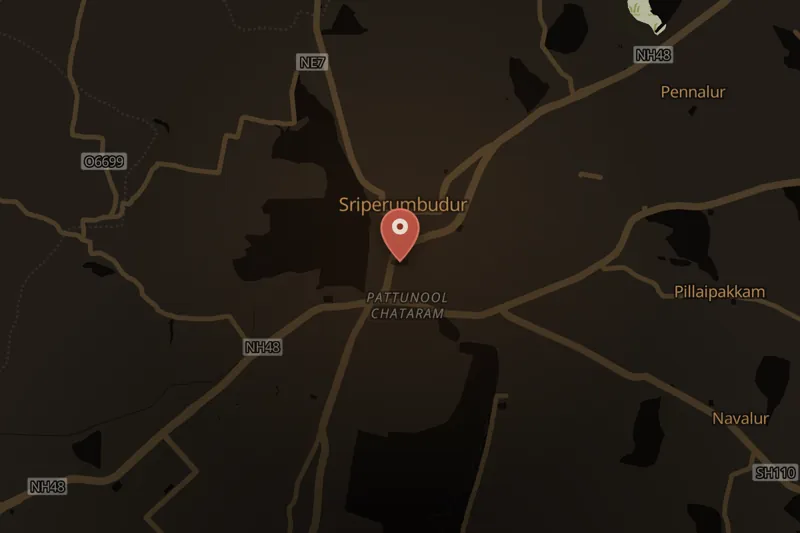
Former Indian Prime Minister Rajiv Gandhi was killed by a suicide bomber tied to the LTTE at a campaign rally in Sriperumbudur, Tamil Nadu, on 21 May 1991, along with 14 other people. Twenty-six people were convicted at trial; the Supreme Court later reduced death sentences to four, and in 2022 the Supreme Court ordered the release of the last six convicts still imprisoned.
The Sri Lankan war that killed Rajiv Gandhi: Story of India, Sri Lanka and IPKF | The Hindu Explains1 piece from 1 creator: ranked, with duplicates removed and short clips set aside.
Start here
The creator's telling of the case, the strongest entry point on file.
Watch on YouTubeTitles and descriptions are the creators’ own and may not reflect current legal status. The sourced facts are in the file below. Players load only when you press play. Suggest coverage we’re missing.
On 21 May 1991, Rajiv Gandhi, former Prime Minister of India, was assassinated in a suicide bombing at an election campaign rally in Sriperumbudur, Tamil Nadu. He was campaigning for the Indian National Congress ahead of the 1991 Indian general election. At approximately 10:10 pm, Gandhi arrived at the rally and began walking toward the dais while being garlanded by well-wishers and party workers. At 10:20 pm, Kalaivani Rajaratnam — a 22-year-old member of the Liberation Tigers of Tamil Eelam (LTTE) known by the assumed names Thenmozhi Rajaratnam and Dhanu — bent to touch his feet and detonated an RDX explosive belt concealed beneath her clothing. The blast killed Gandhi, Rajaratnam, and at least 14 others, and injured 43 bystanders, bringing total casualties to 59. Among those killed were several police officers, Congress party workers, a ten-year-old girl, and a photographer, Haribabu, who was later identified as a co-conspirator; his camera and film, capturing the attack, were recovered intact.
The Indian government transferred the investigation to the Central Bureau of Investigation (CBI) the day after the assassination. A special investigation team led by D. R. Karthikeyan concluded that the LTTE was responsible, a finding upheld by the Supreme Court of India. Investigators and later court findings linked the motive to Gandhi's earlier deployment of the Indian Peace Keeping Force (IPKF) to Sri Lanka and his stated intention, made in an August 1990 interview, to redeploy the IPKF against the LTTE if re-elected.
A separate inquiry, the Justice J. S. Verma Commission, examined security lapses and concluded in its June 1992 report that security arrangements had been adequate in principle but were disrupted by local Congress leaders. The Narasimha Rao government initially rejected the findings before accepting them, though no recommendations were acted upon. A further inquiry, the Jain Commission, named additional individuals and entities as suspected of involvement, including allegations against the cleric Chandraswami and separately against former Tamil Nadu Chief Minister M. Karunanidhi; the leak of this report in November 1998 contributed to the Congress party withdrawing support from the United Front government of I. K. Gujral.
The case was tried under the Terrorist and Disruptive Activities Act (TADA). On 28 January 1998, a designated TADA court in Chennai sentenced all 26 accused to death, a verdict criticized by human rights groups over closed-door proceedings and non-disclosure of witness identities. On appeal, the Supreme Court on 11 May 1999 confirmed death sentences for only four of the convicts, including S. Nalini Sriharan, commuting the rest to prison terms. Nalini's death sentence was later commuted to life imprisonment following a clemency petition from Sonia Gandhi. Three other convicts — V. Sriharan alias Murugan, T. Suthendraraja alias Santhan, and A. G. Perarivalan — had clemency pleas rejected in 2011, and executions scheduled for September 2011 were stayed by the Madras High Court. On 11 November 2022, the Supreme Court of India ordered the release of six remaining convicts — V. Sriharan, S. Nalini Sriharan, T. Suthendraraja, Robert Pious, Jayakumar, and Ravichandran — following a remission recommendation from the Tamil Nadu government in March 2016. A. G. Perarivalan had previously been released.
Rajiv Gandhi gives an interview to Sunday magazine stating he would redeploy the Indian Peace Keeping Force (IPKF) against the LTTE if he returned to power.
An LTTE delegation reportedly meets Rajiv Gandhi, according to Subramanian Swamy's account.
Rajiv Gandhi is killed in a suicide bombing at a campaign rally in Sriperumbudur, Tamil Nadu, along with 14 others; the bomber, Kalaivani Rajaratnam, also dies.
The Chandra Shekhar government hands the assassination investigation to the CBI.
A state funeral is held for Rajiv Gandhi in New Delhi; he is cremated near the Yamuna river.
S. Nalini Sriharan is arrested.
The Justice J. S. Verma Commission submits its final report on security lapses surrounding the assassination.
A designated TADA court in Chennai sentences all 26 accused to death.
The Jain Commission's interim report is leaked, naming M. Karunanidhi; Congress subsequently withdraws support for the I. K. Gujral government.
The Supreme Court of India confirms death sentences for only four of the convicts, commuting the others to prison terms.
Sonia Gandhi petitions for clemency for Nalini Sriharan; her death sentence is commuted to life imprisonment.
Nalini's 'Class A' convict privilege is withdrawn after a mobile phone is allegedly recovered from her cell.
The President of India rejects clemency pleas for Murugan, Santhan, and Perarivalan.
Executions of three convicts are scheduled but stayed for eight weeks by the Madras High Court.
The Tamil Nadu government recommends remission for the convicts.
The Supreme Court of India orders the release of six convicts in the case.
Victims first. Every legal label is set from public records and court outcomes, not from the prose.
Police constable killed in the blast.[3]
Attendee and observer killed in the blast.[3]
Police constable killed in the blast.[3]
Police inspector killed in the blast.[3]
Killed in the blast.[3]
Local photographer who died in the blast; identified as a conspirator whose camera and film were recovered intact.[3]
Police superintendent killed in the blast.[3]
LTTE suicide bomber (also known as Thenmozhi Rajaratnam or Dhanu) who died in the explosion she detonated; identified as the perpetrator.[3]
Ten-year-old daughter of Latha Kannan, killed in the blast after singing a poem to Gandhi.[3]
Mahila Congress worker killed in the blast.[3]
Former member of the Tamil Nadu Legislative Council killed in the blast.[3]
Police constable killed in the blast.[3]
Personal security officer of Rajiv Gandhi, killed in the blast.[3]
Police inspector killed in the blast.[3]
Former Prime Minister of India, killed in the suicide bombing.[3]
Black Cat commando killed in the blast (distinct from the convicted co-conspirator of the same name).[3]
Mahila Congress leader killed in the blast.[3]
Seventeen-year-old college student killed in the blast.[3]
Indian citizen convicted for supplying a 9-volt battery used in the explosive device; sentenced to life imprisonment.[3]
Brother-in-law of Robert Pious, convicted and sentenced to life imprisonment; released by Supreme Court order in November 2022.[3]
Sri Lankan national convicted and sentenced to life imprisonment; released by Supreme Court order in November 2022.[3]
Sri Lankan national convicted and sentenced to life imprisonment; released by Supreme Court order in November 2022.[3]
Convicted and originally sentenced to death; sentence commuted to life imprisonment; released by Supreme Court order in November 2022.[3]
Sri Lankan national convicted and sentenced to life imprisonment; released by Supreme Court order in November 2022.[3]
LTTE operative convicted and sentenced to life imprisonment; among the six convicts whose release was ordered by the Supreme Court in November 2022.[3]
Headed the CBI's Special Investigation Team that investigated the assassination.[3]
From the record
Coverage is not a source: every fact in this file rests on the records below.
Are you family of someone named in this file? Corrections and removal requests from victims’ families are prioritized.
 SOLVEDListen
Indian Institute of Technology Madras, Chennai, Tamil Nadu, India · 2010s
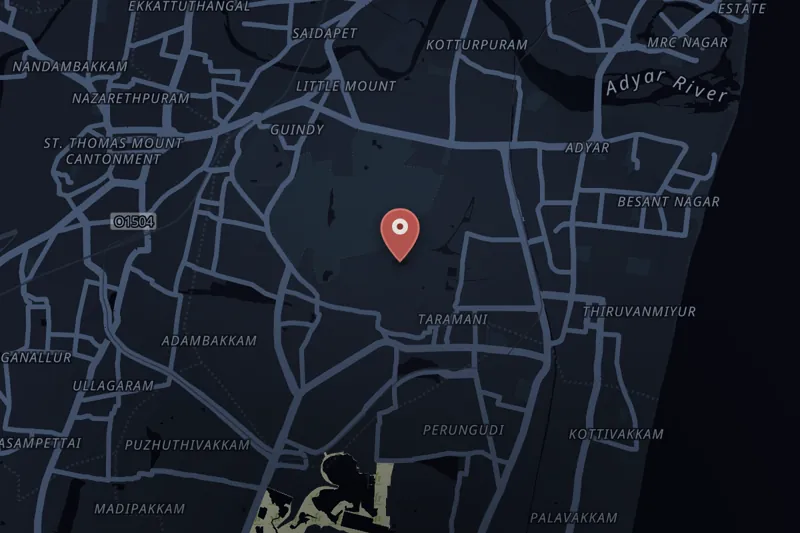
Fathima Latheef, a 19-year-old first-year humanities student at IIT Madras, was found dead in her hostel room on 9 November 2019. Her family alleged she was driven to suicide by religious discrimination and harassment by named professors; investigations by Chennai police, the Central Crime Branch, and later the CBI found no evidence against the professors, with the CBI closing the case attributing her death to homesickness and psychological issues.
 UNSOLVEDListen
Chennai Central railway station, Chennai, Tamil Nadu, India · 2010s
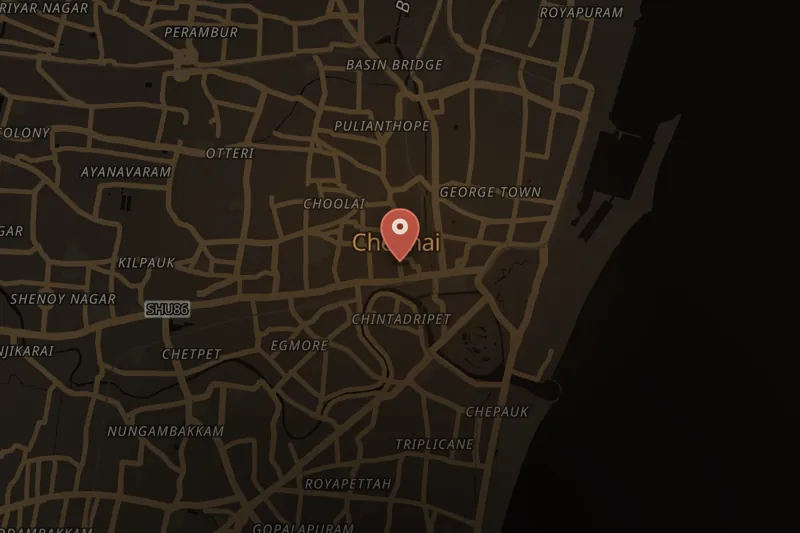
Two low-intensity bombs exploded aboard the Bangalore–Guwahati Kaziranga Superfast Express at Chennai Central railway station on 1 May 2014, killing one female passenger and injuring at least fourteen others; the Students' Islamic Movement of India claimed responsibility.
 Credit: நான் தூங்கCC BY-SA 3.0SourceUNSOLVEDListen
Vepery, Madras (now Chennai), Madras Presidency, British India · 1940s
Tamil film journalist C. N. Lakshmikanthan was fatally stabbed in Madras in November 1944. Film stars M. K. Thyagaraja Bhagavathar and N. S. Krishnan were convicted of his murder, but the Privy Council later ordered a retrial that acquitted them. The killing remains unsolved.
 Credit: Yaakov Saar, Government Press Office (Israel)CC BY-SA 3.0SourceSOLVEDListen
Kings of Israel Square (now Rabin Square), Tel Aviv · 1995
Israeli Prime Minister Yitzhak Rabin was shot and killed on 4 November 1995 in Tel Aviv by Yigal Amir, a far-right law student opposed to the Oslo Accords, as Rabin left a peace rally. Amir was convicted and sentenced to life; two associates were convicted of conspiracy.
 Credit: User Mario scolas on fr.wikipediaCC BY-SA 2.0SourceSOLVEDListen
Liège, Belgium · 1991
André Cools, a leading Belgian socialist politician and mayor of Flémalle, was shot dead in Liège on 18 July 1991. A 2003 trial in Liège led to the conviction of two men, who were sentenced to twenty years' imprisonment in January 2004.
 SOLVEDListen
Highway A29, near Capaci, Sicily, Italy · 1992
A Sicilian Mafia car bomb killed anti-mafia magistrate Giovanni Falcone, his wife and fellow magistrate Francesca Morvillo, and three police escort officers on Highway A29 near Capaci, Sicily, on 23 May 1992. Mafia boss Salvatore Riina orchestrated the attack; dozens of Mafia members were convicted across trials that concluded with Matteo Messina Denaro's sentence being confirmed in 2023.
 Bombings and their aftermathBombings across public places, transit systems, campaigns, and conflicts — recorded through the people they were aimed at and the aftermath that followed.Read the collection
  The assassinations that redirected historyThe killings of presidents, prime ministers, dissidents, and reformers — each one a hinge a nation's history turned on.Read the collection