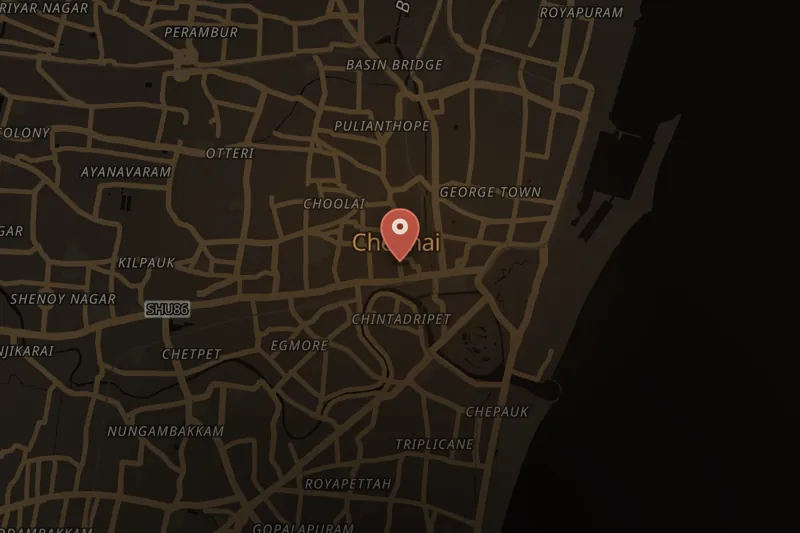
On the morning of 1 May 2014, two low-intensity bombs exploded aboard the 12509 Guwahati–Bangalore Kaziranga Superfast Express while it stood at Platform 9 of Chennai Central railway station in Tamil Nadu, India. The train, traveling from Bangalore, Karnataka, to Guwahati, Assam, had arrived late, around 7:05 a.m. IST, and the blasts occurred at approximately 7:15 a.m. IST in coaches S4 and S5, detonating at the buffer areas between them.
The explosions killed one passenger, a 24-year-old woman employed with Tata Consultancy Services in Bangalore who was traveling to her hometown of Guntur in Andhra Pradesh. One of the bombs reportedly exploded beneath the seat where she was sitting. At least fourteen other passengers were injured, with five admitted in serious condition to Rajiv Gandhi Government Multi-speciality Hospital.
The Students' Islamic Movement of India (SIMI) claimed responsibility for the attack, stating it was carried out in revenge for the removal of some Muslims from the train in 2012. Its affiliate organization, the Indian Mujahideen (IM), was also suspected of involvement in the bombing.
In the aftermath, the damaged train bogies were detached and examined by a bomb-disposal squad before the train was permitted to continue its journey. Tamil Nadu Police mounted a broad search operation across trains in the state. A person initially detained by Tamil Nadu Police as a suspect was later determined to be innocent. A Special Investigation Team (SIT) was ordered to investigate, and a National Investigation Agency team was dispatched to Chennai to assist. Tamil Nadu Chief Minister Jayalalithaa additionally ordered a CB-CID probe. Early investigation suggested the bombs may have been planted five to six hours before detonation, and that the devices resembled those used in a bombing at a Patna political rally attributed to the Indian Mujahideen roughly six months earlier.
Security was tightened across crowded areas of Tamil Nadu following the blasts, with alerts issued in neighboring Andhra Pradesh and a high-security red alert declared in New Delhi.
Regarding compensation, Union Railway Minister Mallikarjun Kharge announced an ex-gratia payment of ₹1 lakh to the family of the deceased woman, ₹25,000 for those with grievous injuries, and ₹5,000 for those with minor injuries. Tamil Nadu Chief Minister Jayalalithaa separately announced a solatium of ₹100,000 to the deceased's family, ₹50,000 for those seriously injured, and ₹25,000 for others with injuries.
The day after the bombing, an anonymous bomb threat call targeting the Express Avenue mall in Chennai prompted its temporary closure on 2 May before being declared a hoax after a search. Similar hoax bomb threats were made against an educational institution and a suburban railway station in Chennai, prompting police warnings against such calls and continued heightened alert.

 Credit: நான் தூங்கCC BY-SA 3.0SourceUNSOLVEDListen