Start here
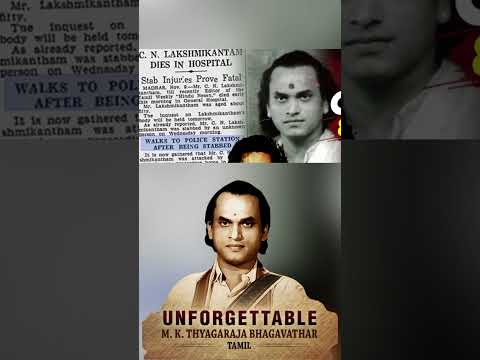
கொலை வழக்கில் சிக்கிய சூப்பர் ஸ்டார்! C.N.Lakshmikanthan | Valakum Varalarum | N.S. Krishnan
The creator's telling of the case, the strongest entry point on file.
Watch on YouTubeUnsolved case · 1943
Also known as Lakshmikanthan Kolai Vazhakku
 General collins RoadCredit: நான் தூங்கCC BY-SA 3.0Source
The short answer
Tamil film journalist C. N. Lakshmikanthan was fatally stabbed in Madras in November 1944. Film stars M.
கொலை வழக்கில் சிக்கிய சூப்பர் ஸ்டார்! C.N.Lakshmikanthan | Valakum Varalarum | N.S. Krishnan6 pieces from 6 creators: ranked, with duplicates removed and short clips set aside.
Start here
The creator's telling of the case, the strongest entry point on file.
Watch on YouTubeTitles and descriptions are the creators’ own and may not reflect current legal status. The sourced facts are in the file below. Players load only when you press play. Suggest coverage we’re missing.
C. N. Lakshmikanthan was a Tamil film journalist who ran the magazines Cinema Thoothu and later Hindu Nesan, publications known for scandalous coverage of the personal lives of leading actors and actresses of the Madras film industry. According to film historian Randor Guy, Lakshmikanthan had a prior criminal record involving forgery, imprisonment at Rajahmundry jail, and deportation to the Andaman Islands, from which he returned to India and took up journalism after the islands came under Japanese occupation during the Second World War. His reporting reportedly led some prominent film figures to pay him to avoid unfavorable coverage. Tensions escalated when actors M. K. Thyagaraja Bhagavathar and N. S. Krishnan, along with director S. M. Sriramulu Naidu, petitioned the Governor of Madras, Arthur Oswald James Hope, to revoke the license of Cinema Thoothu, which was granted; Lakshmikanthan subsequently started Hindu Nesan and continued similar coverage.
On the morning of 8 November 1944, Lakshmikanthan visited his friend and lawyer J. Nargunam in Vepery, Madras. While returning home by hand-rickshaw at around 10:00 a.m., he was attacked by a group of unidentified assailants in General Collins Road, one of whom stabbed him. He walked, bleeding, to Nargunam's house, and was then sent toward General Hospital, Madras, accompanied by a friend identified as Brew. En route, he stopped at the Vepery police station to dictate a description of the attack to Inspector Krishnan Nambiyar. At the hospital, he was treated by Dr. P. R. Balakrishnan, but his condition worsened, and he died at 4:15 a.m. on 9 November 1944 due to secondary shock from kidney damage. The Indian Express reported he was "aged about fifty" at the time of his death.
Police arrested a man on the day of the attack, and five more suspects in the following days, including Bhagavathar, Krishnan, and Naidu. All three were tried for the murder. Naidu was acquitted, while Bhagavathar and Krishnan were convicted and sentenced by the Madras High Court to transportation for life. Their appeal to the Madras High Court was rejected. The two remained imprisoned until an appeal to the Judicial Committee of the Privy Council succeeded roughly 30 months after their arrest; the Privy Council directed a retrial, at which both were found innocent and acquitted. The real perpetrators of the killing were never identified, and the case remains unsolved.
The prosecution and imprisonment had lasting personal and professional consequences for both men. Bhagavathar, previously the highest-paid Tamil film actor at the peak of his career, lost his fortune and reputation, and died in 1959 in poverty. Krishnan, a prominent comedian and playback singer, continued to work in films after his release, though with only intermittent success, and the legal battle left him financially depleted as well.
C. N. Lakshmikanthan launches the film weekly Cinema Thoothu.
Lakshmikanthan is stabbed by unidentified assailants in Vepery, Madras.
Lakshmikanthan visits lawyer J. Nargunam in Vepery; is attacked while returning home and is later admitted to General Hospital, Madras.
Lakshmikanthan dies at 4:15 a.m. at General Hospital, Madras, due to secondary shock from kidney damage.
Verdict issued in the trial of M. K. Thiagaraja Bhagavathar and others.
The Judicial Committee of the Privy Council directs a retrial; Bhagavathar and Krishnan are acquitted.
M. K. Thyagaraja Bhagavathar dies in poverty.
Victims first. Every legal label is set from public records and court outcomes, not from the prose.
Tamil film journalist stabbed on 7 November 1944; died of his injuries on 9 November 1944.[3]
Tamil film actor initially convicted of the murder and sentenced to transportation for life; acquitted after a Privy Council-ordered retrial in 1947.[3]
Tamil film comedian and playback singer initially convicted of the murder and sentenced to transportation for life; acquitted after a Privy Council-ordered retrial in 1947.[3]
Tamil film director tried alongside Bhagavathar and Krishnan; acquitted at the original trial.[3]
Police inspector who recorded Lakshmikanthan's dictated description of the attack at Vepery police station.[3]
Coverage is not a source: every fact in this file rests on the records below.
Are you family of someone named in this file? Corrections and removal requests from victims’ families are prioritized.
 UNSOLVEDListen
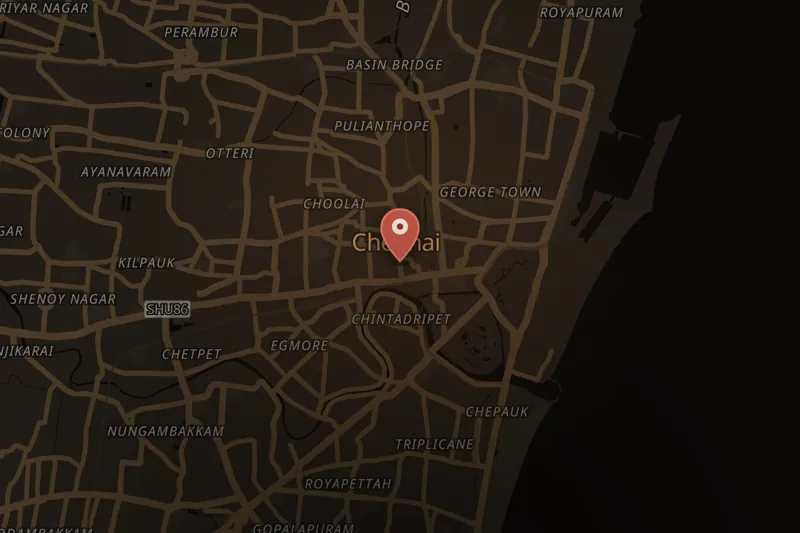
Chennai Central railway station, Chennai, Tamil Nadu, India · 2010s
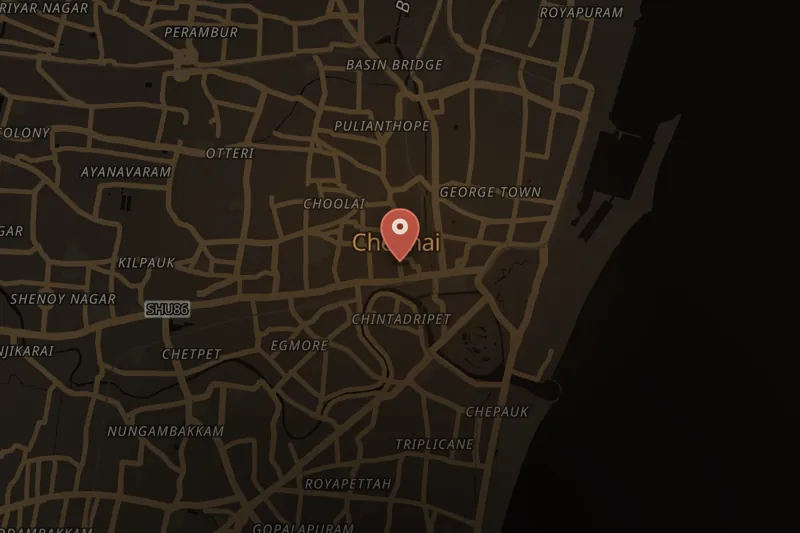
Two low-intensity bombs exploded aboard the Bangalore–Guwahati Kaziranga Superfast Express at Chennai Central railway station on 1 May 2014, killing one female passenger and injuring at least fourteen others; the Students' Islamic Movement of India claimed responsibility.
 SOLVEDListen
Indian Institute of Technology Madras, Chennai, Tamil Nadu, India · 2010s
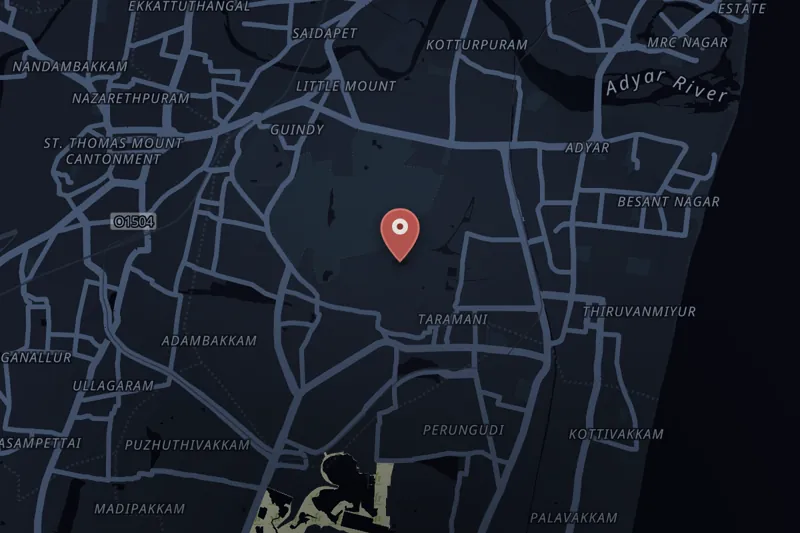
Fathima Latheef, a 19-year-old first-year humanities student at IIT Madras, was found dead in her hostel room on 9 November 2019. Her family alleged she was driven to suicide by religious discrimination and harassment by named professors; investigations by Chennai police, the Central Crime Branch, and later the CBI found no evidence against the professors, with the CBI closing the case attributing her death to homesickness and psychological issues.
 Credit: Bart Molendijk / AnefoCC BY-SA 3.0 NLSourceSOLVEDListen
Sriperumbudur, Tamil Nadu, India · 1990s
Former Indian Prime Minister Rajiv Gandhi was killed by a suicide bomber tied to the LTTE at a campaign rally in Sriperumbudur, Tamil Nadu, on 21 May 1991, along with 14 other people. Twenty-six people were convicted at trial; the Supreme Court later reduced death sentences to four, and in 2022 the Supreme Court ordered the release of the last six convicts still imprisoned.
 Credit: Professional photographer, commissioned by the subject herself, 1946Public domainSourceSOLVEDListen
Southampton, England, United Kingdom (voyage originated Cape Town; incident occurred at sea off the coast of Portuguese Guinea, now Guinea-Bissau) · 1947
British actress Gay Gibson disappeared during an October 1947 voyage from Cape Town to Southampton aboard the MV Durban Castle. Steward James Camb admitted pushing her body through her cabin porthole and was convicted of her murder, though her body was never found.
 SOLVEDListen
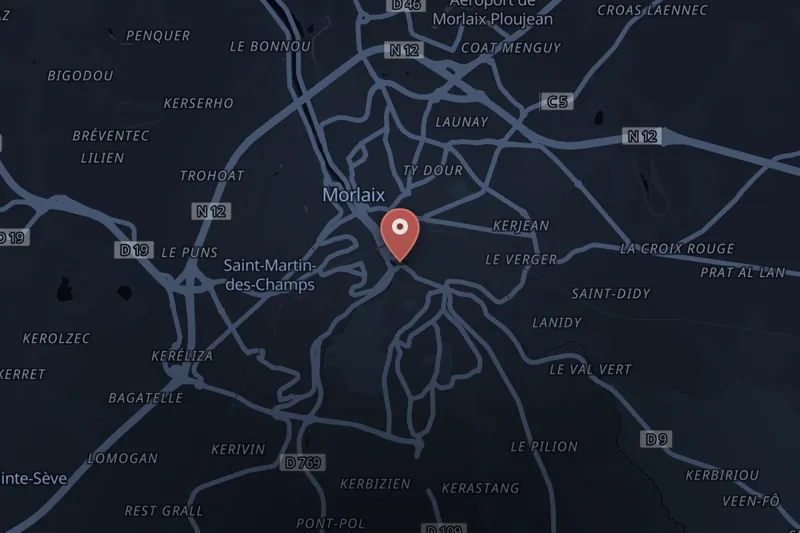
Morlaix, Brittany, France · 1923
Breton wood merchant and politician Pierre Quéméneur vanished on a 1923 business trip from Brittany to Paris and was never found. His travelling companion, Guillaume Seznec, was convicted of his murder in 1924 despite the absence of a body, in a case that remains disputed a century later.
 SOLVEDListen
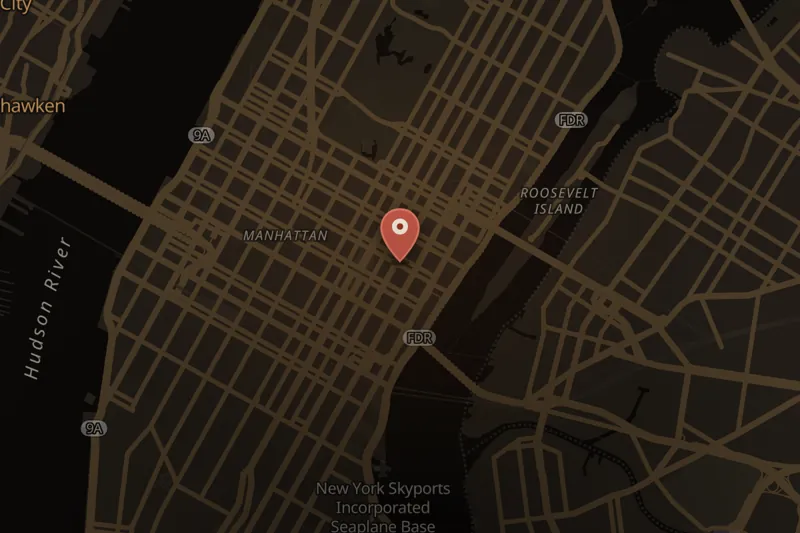
313 East 51st Street, Turtle Bay-Beekman Place, New York City · 1943
Patricia Lonergan, heiress to the Lion Brewery fortune, was beaten and strangled in her New York City apartment in October 1943. Her estranged husband, Royal Canadian Air Force pilot Wayne Lonergan, was arrested in Toronto, extradited, and convicted of second-degree murder in a highly publicized 1944 trial.