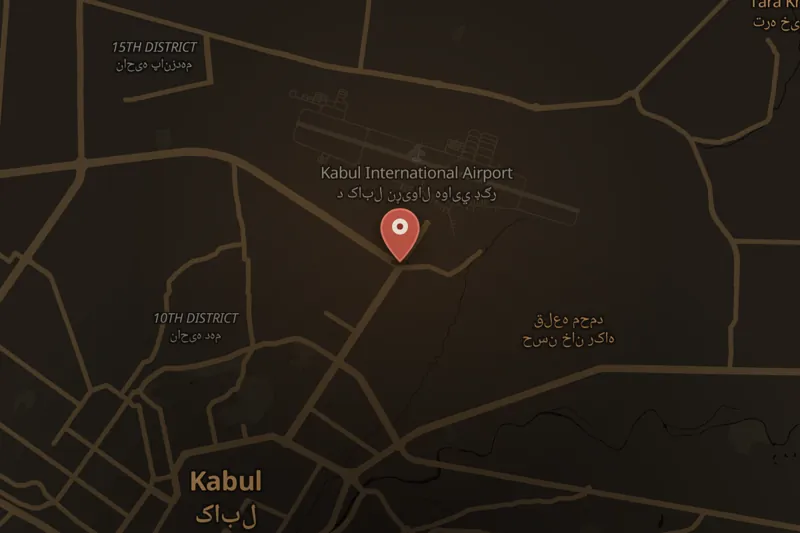
On the morning of June 20, 2016, at around 0600 Afghanistan time, a suicide bomber attacked a minibus carrying private security contractors traveling to the Canadian embassy in Kabul, Afghanistan. The attack occurred in the ninth police district, in the Benayi area of the city, during the holy month of Ramadan. The bomber was inside a compound, put on a suicide vest, and approached the minibus on foot as it passed through a market area where civilians were shopping, before detonating the device.
The blast killed 13 Nepalese and two Indian contractors, all employed as security guards for the Canadian embassy through the private security firm Sabre International. The death toll rose from an initial count of 12 Nepalese and two Indian nationals to 15 after a wounded Nepalese guard later died of his injuries. Nine other people were injured, including several Afghan civilians who were at the nearby market. No one at the embassy itself was harmed.
Both the Taliban and the Islamic State in Khorasan Province (IS-KP) claimed responsibility for the attack, each naming the bomber differently ("Irfanullah Ahmad" and "Erfanullah Ahmed," respectively). A Taliban spokesman said the attack was retaliation for the execution of six Taliban prisoners a month earlier. The bombing occurred alongside other violence in Afghanistan that day, including a separate Taliban bombing targeting a politician in Kabul and a bombing in Badakhshan province.
The attack prompted condemnation from Afghan Chief Executive Abdullah Abdullah, Canadian Minister of Foreign Affairs Stéphane Dion, and Canadian Prime Minister Justin Trudeau. It also triggered significant political fallout in Nepal, where officials, including Prime Minister Khadga Prasad Oli, criticized the Canadian government for what they characterized as negligence in transporting the guards in an unprotected minibus rather than an armored vehicle. Nepalese diplomats traveled to Ottawa to raise concerns with Canadian officials, and Global Affairs Canada confirmed the contractors were hired through Sabre International. Canadian Forces spokeswoman Major Isabelle Bresse said only a limited number of Canadian military personnel provide embassy security.
In the aftermath, Nepal funded the return of the dead and injured to Nepal via a Nepal Airlines flight, and the prime minister pledged financial support to victims' families. Approximately 40 Nepalese workers in Afghanistan subsequently quit their jobs and returned home. Nepal later banned its citizens from migrating for work to Afghanistan, Iraq, Libya, and Syria. A monument was unveiled at the Canadian embassy in Kabul on July 8, 2016, though no Nepalese government representative attended the ceremony, and Nepal separately sent a team to assess embassy security days later. A returning Nepali contractor alleged the attack stemmed from a Taliban extortion demand made to Sabre International, though this account is described as unverified.


 UNSOLVEDListen