Skip to content
Casepin

Solved case · 1970

Kent State shootings

Also known as May 4 massacre · Kent State massacre

SOLVEDCHARGEDACQUITTED
Updated
Updated Jul 7, 2026
May 4th Strike PosterMay 4th Strike PosterCredit: Unknown authorPublic domainSource

The short answer

Kent State shootings in brief

On May 4, 1970, Ohio National Guard soldiers fired about 67 rounds in 13 seconds at unarmed Kent State University students protesting the Vietnam War, killing four and wounding nine, one permanently.

Key facts

Year
1970
Place
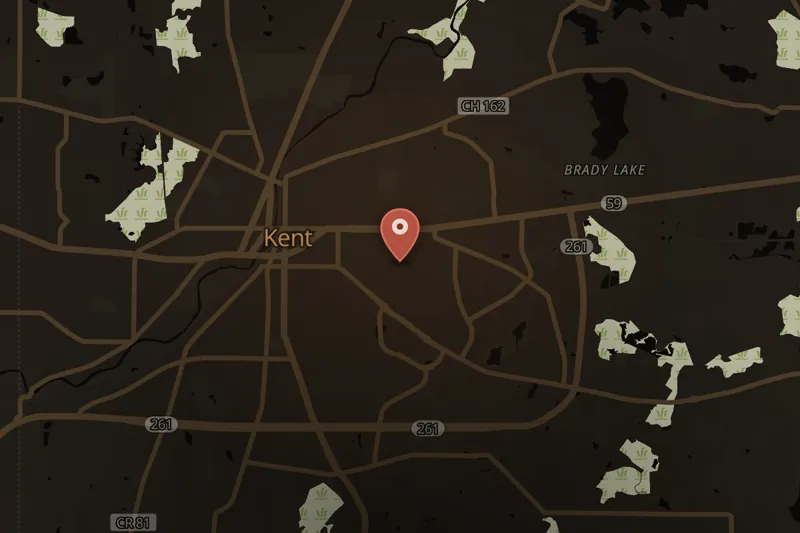
Kent State University, Kent, Ohio
Status
SOLVEDSolved
Victims
Dean R. Kahler, James Dennis Russell, Thomas Mark Grace, Allison Beth Krause and John R. Cleary and 8 more
Outcome
Charged: Leon Smith, Matthew McManus, James Pierce, William Perkins, Barry Morris, James McGee and Ralph Zoller; Acquitted: Lawrence Shafer

The coverage index

Where to watch & listen

No one's coverage is attached to this file yet.

Know great coverage of this case?

A documentary, a podcast episode, a careful long-form video. Suggest it and an editor will review it before it appears here.

Suggest coverage for Kent State shootings

The case file

What happened

On May 4, 1970, members of the Ohio National Guard opened fire on unarmed college students at Kent State University in Kent, Ohio, killing four and wounding nine others, one of whom was permanently paralyzed. The shootings occurred during a rally opposing the expansion of the Vietnam War into Cambodia, which President Richard Nixon had announced on April 30, as well as the National Guard's presence on campus and the draft. Twenty-eight guardsmen fired approximately 67 rounds over about 13 seconds.

Students Jeffrey Glenn Miller, 20, Allison Beth Krause, 19, and Sandra Lee Scheuer, 20, died at the scene; William Knox Schroeder, 19, a member of the campus ROTC battalion, was pronounced dead at Robinson Memorial Hospital in Ravenna shortly afterward. Scheuer and Schroeder had been observing the protest from a distance during a break between classes rather than actively participating. Nine others were wounded, including Dean R. Kahler, who sustained a back wound that left him permanently paralyzed from the waist down. None of those shot was closer than 71 feet to the guardsmen, and the four who died were, on average, 345 feet away.

The events followed several days of escalating tension in Kent, including the burning of the campus ROTC building on the night of May 2 and a May 3 press conference at which Ohio Governor Jim Rhodes described protesters as "the worst type of people that we harbor in America." On May 4, an estimated 2,000 people gathered on the Commons despite university efforts to cancel the rally. After tear gas failed to disperse the crowd, roughly 96 guardsmen advanced with bayonet-fixed rifles, becoming boxed in near an athletic field before retracing their steps up Blanket Hill. As they reached the crest, several guardsmen turned and fired into the crowd of students, some of whom were fleeing. A subsequent FBI investigation concluded that the Guard had not been under fire and that guardsmen fired the first shots; the FBI also found reason to believe some guardsmen's stated fears for their lives were fabricated after the fact.

The shootings triggered nationwide protests and a student strike involving more than 4 million students at hundreds of institutions, and are credited with intensifying public debate over the Vietnam War and the Cambodian incursion.

Legal proceedings followed on multiple fronts. A grand jury indicted five guardsmen on felony charges and three others on misdemeanor charges; the guardsmen maintained they had fired in self-defense. In 1974, eight guardsmen were tried on federal charges of depriving students of their civil rights but were acquitted in a bench trial. U.S. District Judge Frank J. Battisti, who dismissed the charges, wrote that the government had not shown the defendants shot students "with an intent to deprive them of specific civil rights," while stating that such use of force "is, and was, deplorable." Civil wrongful-death and injury actions against Governor Rhodes, the Kent State president, and the guardsmen initially resulted in verdicts for the defendants. The President's Commission on Campus Unrest (the Scranton Commission) later concluded in its September 1970 report that the shootings were "unnecessary, unwarranted, and inexcusable."

8 dated entries · 1970–1974

Timeline

  1. President Richard Nixon announces the expansion of U.S. combat operations into Cambodia.

  2. Roughly 500 students rally on the Kent State Commons; unrest later erupts downtown, prompting a state of emergency declaration by Kent Mayor LeRoy Satrom.

  3. The campus ROTC building is set on fire; Ohio National Guard troops arrive in Kent that evening.

  4. Governor Jim Rhodes holds a press conference condemning protesters; a curfew is enforced and some students are bayoneted by guardsmen.

  5. Ohio National Guard troops fire on protesters on Blanket Hill, killing four students and wounding nine others.

  6. Twenty-four students and one faculty member (the 'Kent 25') are indicted on charges related to the May 4 rally and the ROTC fire; separately, five guardsmen are indicted on felony charges and three on misdemeanor charges.

  7. Remaining charges against twenty of the 'Kent 25' are dismissed for lack of evidence.

  8. U.S. District Judge Frank J. Battisti dismisses federal civil rights charges against the guardsmen following their acquittal in a bench trial.

22 named in this file

People

Victims first. Every legal label is set from public records and court outcomes, not from the prose.

  • Alan Michael Canfora

    VICTIM

    Student wounded in the right wrist.[3]

  • Allison Beth Krause

    VICTIM

    Student who died at the scene from a fatal chest wound, approximately 343 feet from the National Guard.[3]

  • Dean R. Kahler

    VICTIM

    Student wounded by a back injury that fractured his vertebrae, leaving him permanently paralyzed from the waist down.[3]

  • Donald Scott MacKenzie

    VICTIM

    Student wounded with a neck injury.[3]

  • Douglas Alan Wrentmore

    VICTIM

    Student wounded in the right knee.[3]

  • James Dennis Russell

    VICTIM

    Student wounded in the right thigh and grazed on the forehead.[3]

  • Jeffrey Glenn Miller

    VICTIM

    Student killed instantly by a gunshot; died at the scene, approximately 265 feet from the National Guard.[3]

  • John R. Cleary

    VICTIM

    Student wounded with an upper left chest wound.[3]

  • Joseph Lewis Jr.

    VICTIM

    Student wounded twice, in the right abdomen and lower left leg.[3]

  • Robert Follis Stamps

    VICTIM

    Student wounded in the right buttock.[3]

  • Sandra Lee Scheuer

    VICTIM

    Student who died at the scene from a fatal neck wound, approximately 390 feet from the National Guard.[3]

  • Thomas Mark Grace

    VICTIM

    Student wounded in the left ankle.[3]

  • William Knox Schroeder

    VICTIM

    Student and ROTC battalion member who died at Robinson Memorial Hospital from a chest wound roughly an hour after the shooting.[3]

  • Barry Morris

    CHARGED

    Ohio National Guardsman indicted on misdemeanor charges in connection with the shootings.[3]

  • James McGee

    CHARGED

    Ohio National Guardsman indicted on felony charges in connection with the shootings.[3]

  • James Pierce

    CHARGED

    Ohio National Guardsman indicted on felony charges in connection with the shootings.[3]

  • Leon Smith

    CHARGED

    Ohio National Guardsman indicted on misdemeanor charges in connection with the shootings.[3]

  • Matthew McManus

    CHARGED

    Ohio National Guardsman indicted on misdemeanor charges in connection with the shootings.[3]

  • Ralph Zoller

    CHARGED

    Ohio National Guardsman indicted on felony charges in connection with the shootings.[3]

  • William Perkins

    CHARGED

    Ohio National Guardsman indicted on felony charges in connection with the shootings.[3]

  • Lawrence Shafer

    ACQUITTED

    Ohio National Guard sergeant, one of five guardsmen (with James McGee, James Pierce, William Perkins, and Ralph Zoller) indicted by a federal grand jury on felony civil-rights charges over the 4 May 1970 Kent State shootings, accused of shooting student Joseph Lewis. On 8 November 1974, presiding Judge Frank Battisti granted the defendants' motion for a judgment of acquittal under Federal Rule of Criminal Procedure 29(a), ruling the government's evidence was insufficient to prove the specific intent to deprive the students of their civil rights. He was formally acquitted and never convicted.[3]

  • Frank J. Battisti

    LAW ENFORCEMENT

    U.S. District Judge who presided over the 1974 federal civil rights trial and dismissed charges against the acquitted guardsmen.[3]

3 cited

Sources

Coverage is not a source: every fact in this file rests on the records below.

  • 1 Official / agency
  • 1 Press
  • 1 Encyclopedic
  1. Contemporaneous coverage — nps.gov

    Official / agencynps.govAccessed Jul 7, 2026

  2. Contemporaneous coverage — The New York Times

    PressThe New York TimesAccessed Jul 7, 2026

  3. Kent State shootings

    EncyclopedicWikipediaAccessed Jul 7, 2026

Trust

Record history

First published
Jul 7, 2026
Last verified against sources
Jul 7, 2026
Corrections
None

Are you family of someone named in this file? Corrections and removal requests from victims’ families are prioritized.