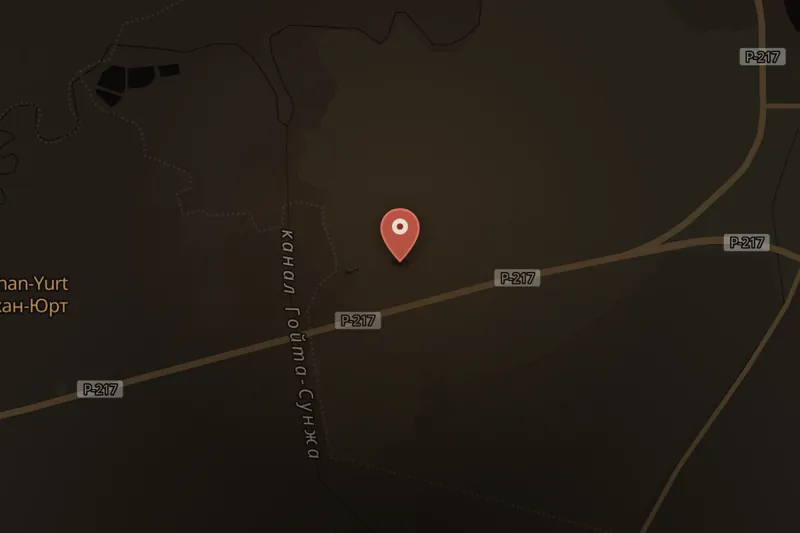
The Khaibakh massacre refers to the alleged mass killing of Chechen civilians from the aul (village) of Khaibakh, located in the mountainous part of Chechnya, on 27 February 1944. The killings are said to have occurred during Operation Lentil, the Soviet NKVD's mass deportation of the Chechen population to prison camps in Central Asia, ordered under Lavrentiy Beria.
According to historical accounts, poor weather made it impossible to transport Chechen deportees from Khaibakh to railway stations within the deadline set by Beria. As a result, more than 700 villagers — described as "non-transportable," including elderly residents, pregnant women, and small children — were allegedly locked inside a stable that had been fortified with dry hay and set on fire. Those who tried to escape the burning building were reportedly shot. A witness attached to the military unit, interpreter Ziautdin Malsagov, recalled that NKVD commander Gvishiani referred to two newborn children inside the stable as "bandits" before ordering that the 704 people be burned alive. Gvishiani was reportedly congratulated by Beria afterward and promised a medal.
The existence of Khaibakh came to wider attention decades later after archaeologists in Ukraine, searching for the remains of North Caucasian scouts killed in World War II operations behind German lines, found letters in the soldiers' pockets addressed to relatives in Khaibakh. One of the archaeologists, Stepan Kashurko, together with a former Soviet general, attempted to locate the soldiers' families and discovered that the village no longer existed, leading to further inquiry into what had happened there.
A document often cited in connection with the massacre is a telegram attributed to State Security Commissioner Mikhail Gvishiani, addressed to Beria, describing the "elimination" of more than 700 Khaibakh residents due to their inability to be transported in time for "Operation Gory." Russian historian Pavel Polyan has expressed doubt about the telegram's authenticity, noting anomalies in its language and Gvishiani's stated rank, and in a 2011 publication characterized the Khaibakh story as unproven, despite having earlier acknowledged the massacre in prior work.
The event remains contested. In refusing to permit release of the 2014 film "Ordered to Forget," which depicts the massacre, the Russian Ministry of Culture stated that a search of three state archives found no documents proving a mass burning occurred, and characterized the event as historical falsification. However, a special commission that investigated the massacre concluded on 20 August 1990 that it had indeed taken place. The case remains a subject of historical dispute between those affirming the massacre occurred and official Russian sources questioning the evidence.


 SOLVEDListen