Skip to content
Casepin

Solved case · 1999

Killing of Amadou Diallo

Also known as shooting of Amadou Diallo · murder of Amadou Diallo

SOLVEDACQUITTED
Updated
Updated Jul 7, 2026
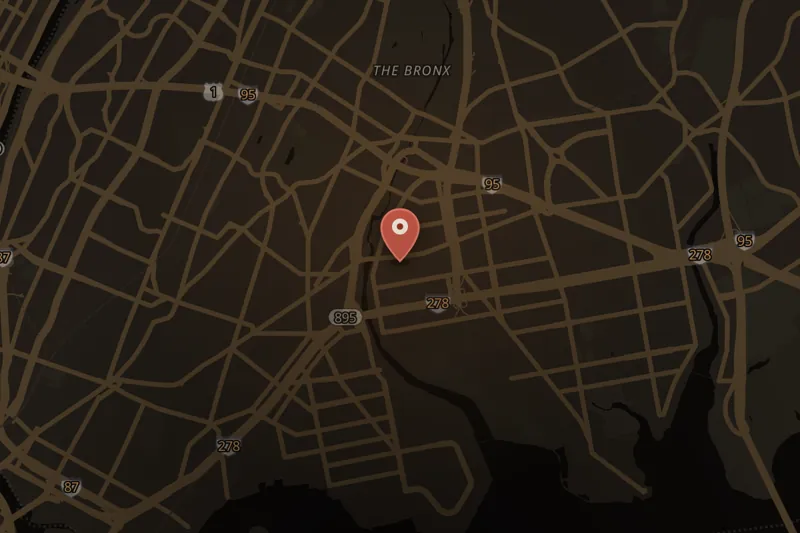
Wheeler Avenue, Soundview, Bronx, New York CityView on the map

The short answer

Killing of Amadou Diallo in brief

On February 4, 1999, 23-year-old unarmed Guinean immigrant Amadou Diallo was shot 19 times by four plainclothes NYPD officers in the Bronx. The officers were charged with second-degree murder and acquitted at trial in 2000, sparking major protests over police brutality and racial profiling.

Key facts

Year
1999
Place
Wheeler Avenue, Soundview, Bronx, New York City
Status
SOLVEDSolved
Victim
Amadou Diallo
Outcome
Acquitted: Richard Murphy, Edward McMellon, Kenneth Boss and Sean Carroll

The coverage index

Where to watch & listen

No one's coverage is attached to this file yet.

Know great coverage of this case?

A documentary, a podcast episode, a careful long-form video. Suggest it and an editor will review it before it appears here.

Suggest coverage for Killing of Amadou Diallo

The case file

What happened

In the early hours of February 4, 1999, Amadou Diallo, a 23-year-old unarmed Guinean immigrant and street vendor, was fatally shot outside his residence in the Soundview section of the Bronx, New York. Four plainclothes New York City Police Department officers — Sean Carroll, Richard Murphy, Edward McMellon, and Kenneth Boss, all members of the Street Crime Unit — had been searching the area for a serial rape suspect. According to the account of events, the officers observed Diallo standing in his building's doorway and stopped to question him. When ordered to show his hands, Diallo reached into his jacket pocket, producing what turned out to be his wallet. One officer, believing Diallo was drawing a firearm, opened fire; the recoil caused him to fall, and the other three officers, believing their colleague had been shot, also fired. In total, the officers fired 41 rounds, striking Diallo 19 times. An eyewitness, Sherrie Elliott, stated that officers continued firing after Diallo had already fallen. No weapon was found on or near Diallo.

An internal NYPD investigation concluded the officers had acted within policy. However, on March 25, 1999, a Bronx grand jury indicted the four officers on charges of second-degree murder and reckless endangerment. Citing pretrial publicity, a court ordered a change of venue to Albany, New York. On February 25, 2000, following three days of deliberation, a jury composed of four Black and eight white jurors acquitted all four officers of all charges.

The shooting provoked widespread protest in New York City and beyond, resulting in approximately 1,200 arrests of demonstrators, and drew involvement from figures including Rep. John Lewis and Rev. Al Sharpton. In March 2000, the U.S. Department of Justice found that the NYPD's Street Crime Unit had engaged in racial profiling. In April 2000, Diallo's parents filed a $61 million wrongful death lawsuit against the city and the officers; in March 2004 they accepted a $3 million settlement, one of the largest such settlements in New York City for a single man without dependents. The Street Crime Unit was disbanded in April 2002 following the Diallo case and other controversies. Diallo's mother, Kadiatou Diallo, published a memoir about her son's death in 2003.

Officer Kenneth Boss, the only one of the four officers to remain with the NYPD long-term, was reassigned to desk duty after the trial, had his firearm privileges restored in 2012, was promoted to sergeant in 2015, and retired from law enforcement in 2019. The case remained a reference point in subsequent public discussions of police accountability, including remarks by Diallo's mother following the 2021 conviction of former Minneapolis police officer Derek Chauvin.

14 dated entries · 1975–2019

Timeline

  1. Amadou Diallo is born to Saikou and Kadiatou Diallo.

  2. Diallo moves to New York City and starts a business with a cousin.

  3. Diallo is shot 19 times by four NYPD plainclothes officers in the Bronx and dies at the scene.

  4. A Bronx grand jury indicts the four officers on charges of second-degree murder and reckless endangerment.

  5. A court orders a change of venue for the trial to Albany, New York, citing pretrial publicity.

  6. A jury acquits all four officers of all charges after three days of deliberation.

  7. The U.S. Department of Justice finds that the NYPD Street Crime Unit engaged in racial profiling.

  8. Diallo's parents file a $61 million wrongful death lawsuit against New York City and the officers.

  9. The NYPD Street Crime Unit is disbanded.

  10. Diallo's mother publishes a memoir about her son's death.

  11. Diallo's parents accept a $3 million settlement in the wrongful death lawsuit.

  12. NYPD Commissioner Raymond W. Kelly restores Officer Kenneth Boss's ability to carry a firearm.

  13. Kenneth Boss is promoted to sergeant.

  14. Kenneth Boss retires from law enforcement.

5 named in this file

People

Victims first. Every legal label is set from public records and court outcomes, not from the prose.

  • Amadou Diallo

    VICTIM

    23-year-old unarmed Guinean immigrant and street vendor fatally shot by NYPD officers on February 4, 1999.[3]

  • Edward McMellon

    ACQUITTED

    NYPD Street Crime Unit officer charged with second-degree murder and reckless endangerment; acquitted at trial in Albany, New York, on February 25, 2000.[3]

  • Kenneth Boss

    ACQUITTED

    NYPD Street Crime Unit officer charged with second-degree murder and reckless endangerment; acquitted at trial in Albany, New York, on February 25, 2000. Remained with the NYPD, was promoted to sergeant in 2015, and retired in 2019.[3]

  • Richard Murphy

    ACQUITTED

    NYPD Street Crime Unit officer charged with second-degree murder and reckless endangerment; acquitted at trial in Albany, New York, on February 25, 2000.[3]

  • Sean Carroll

    ACQUITTED

    NYPD Street Crime Unit officer charged with second-degree murder and reckless endangerment; acquitted at trial in Albany, New York, on February 25, 2000.[3]

3 cited

Sources

Coverage is not a source: every fact in this file rests on the records below.

  • 2 Press
  • 1 Encyclopedic
  1. Portrait of Slain Immigrant: Big Dreams and a Big Heart

    PressThe New York TimesAccessed Jul 7, 2026

  2. Contemporaneous coverage of the Amadou Diallo case

    PressLos Angeles TimesAccessed Jul 7, 2026

  3. Killing of Amadou Diallo

    EncyclopedicWikipediaAccessed Jul 7, 2026

Trust

Record history

First published
Jul 7, 2026
Corrections
None

Are you family of someone named in this file? Corrections and removal requests from victims’ families are prioritized.