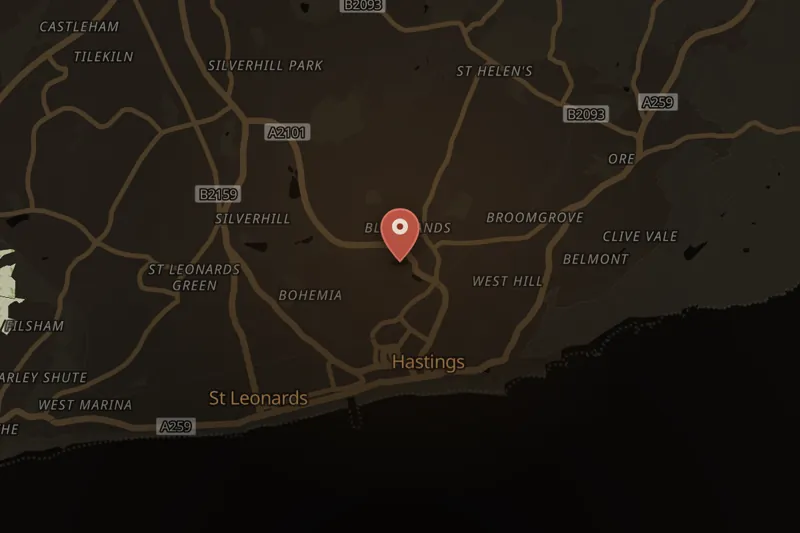
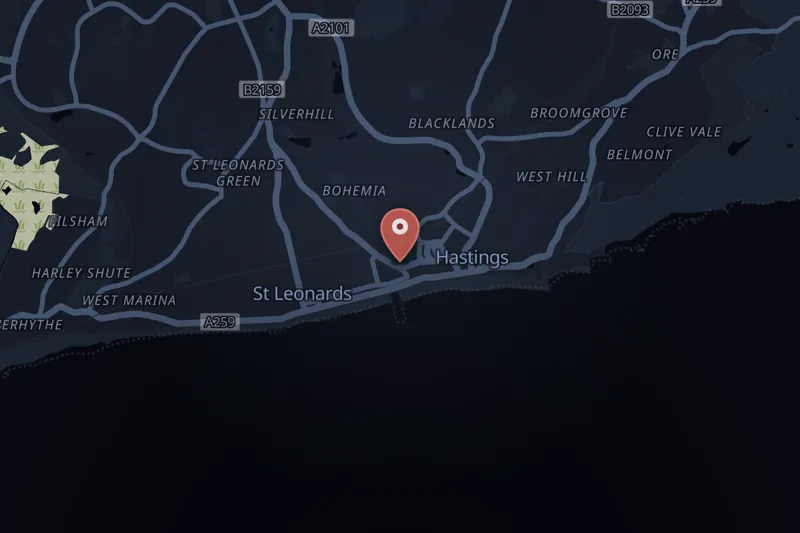
James Ashley, a 39-year-old man from Liverpool, was shot dead by police in his flat in St Leonards-on-Sea, East Sussex, on 15 January 1998. Sussex Police had raided the converted house where Ashley lived, suspecting he kept a firearm and cocaine there, and seeking to arrest him and another man, Thomas "Tosh" McCrudden, in connection with a stabbing outside a Hastings pub a week earlier. Ashley's only involvement in the stabbing had been to pull McCrudden away from the victim. No firearm or significant quantity of drugs was found in the raid, McCrudden was not present, and it later emerged Ashley was wrongly said to have a firearms-related conviction.
The raid used a high-risk rapid-entry technique called "Bermuda". Woken by noise from the raid, Ashley moved toward his bedroom door and was confronted by an armed officer, PC Christopher Sherwood. Ashley raised an arm; Sherwood fired a single shot, killing him almost immediately. Hours later, Sussex Police chief constable Paul Whitehouse held a press conference praising the operation and stating Ashley had been wanted for attempted murder, a claim later found to be false.
Two inquiries under the Police Complaints Authority followed. The first, led by Kent Police assistant chief constable Barbara Wilding, found the raid breached national firearms guidelines, that officers were inadequately trained, and that intelligence used to justify the operation had been misrepresented. A second inquiry, chaired by Sir John Hoddinott, examined whether Sussex's chief officers had obstructed the first inquiry and suggested Whitehouse had knowingly given false statements at his press conference; it recommended consideration of criminal charges against three of the four senior officers involved.
Sherwood was charged with murder and tried at the Old Bailey in 2001 but was acquitted after the trial judge directed the jury to find him not guilty, accepting his claim of self-defence. Three other officers charged with misconduct in public office over the planning and execution of the raid were also acquitted at Wolverhampton Crown Court after the prosecution offered no evidence. The Crown Prosecution Service later declined to charge Sussex's chief officers. Deputy Chief Constable Mark Jordan was suspended and allowed to retire in 2001; Whitehouse resigned the same year after pressure from Home Secretary David Blunkett. Whitehouse's successor, Ken Jones, apologised to Ashley's family in person in 2003.
Ashley's father and son sued Sussex Police for negligence, battery, false imprisonment, and misfeasance in public office in Ashley v Chief Constable of Sussex Police. The police admitted negligence in planning and offered to pay damages, but the case proceeded on the battery claim after the family appealed. The House of Lords ultimately ruled in the family's favour, holding that a self-defence claim in civil law required both an honest and objectively reasonable belief of danger, a higher bar than in criminal law. The police and family agreed damages in 2009, with Sussex Police describing Ashley's death as "a tragedy which should never have occurred" caused by "a series of failures" within the force.


 SOLVEDListen