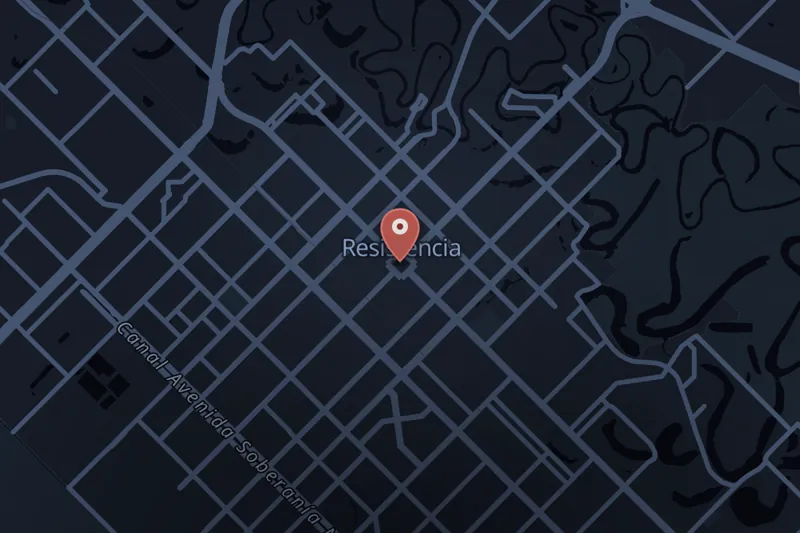
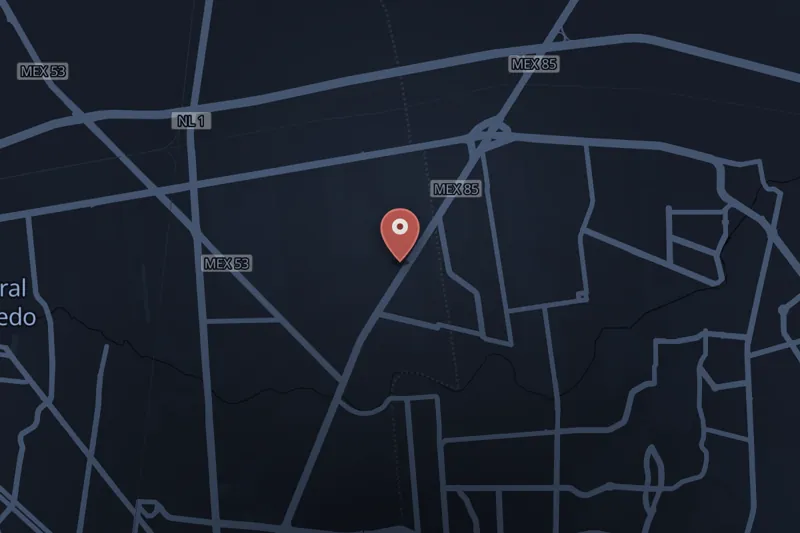
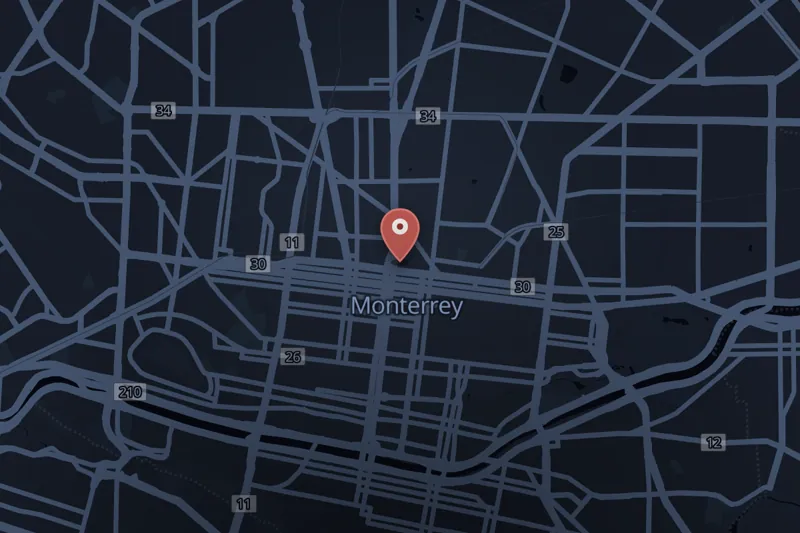
On 8–9 April 2022, Debanhi Susana Escobar Bazaldúa, an 18-year-old law student, attended a party at the Quinta Diamante estate in General Escobedo, Nuevo León, Mexico, with two friends. During the night her behavior became erratic and she was involved in an altercation. After 1:20 a.m., her friends arranged for a ride-share (DiDi) driver to take her home. Security footage showed Escobar and the driver arguing in the car. The driver later stated he had been trying to obtain her home address or a guardian's phone number, while he had allegedly groped her and she refused to give the information. At 4:25 a.m., on a highway in the Nueva Castilla neighborhood of General Escobedo, Escobar left the vehicle. A photograph — later widely shared and central to the case's public visibility — showed her standing alone on the empty road; it is the last known photograph of her. Security footage subsequently showed her seeking help, unsuccessfully, at nearby transportation offices before walking toward the Nueva Castilla Motel.
Escobar's father, Mario Escobar, reported her disappearance to the Nuevo León State Attorney General's Office (FGJENL). The case, and the highway photograph, spread widely on social media and in the press. Thirteen days later, on 22 April 2022, her decomposing body was discovered in the water of the motel's cistern.
An initial government autopsy concluded she had fallen into the cistern, struck her head, and drowned. Escobar's father disputed this finding and commissioned a second, independent autopsy, which found evidence of sexual and physical abuse prior to her death; the cause of death was ultimately determined to be a "deep cranial contusion." No perpetrator of the homicide had been identified, and it remains unclear whether the discrepancy between the two autopsies stemmed from incompetence or corruption. The reason for Escobar's erratic behavior earlier that night — potentially alcohol or drug intoxication, voluntary or involuntary — has also not been established.
The case, investigated by Nuevo León authorities as a femicide, occurred amid what has been described as a broader crisis of missing and murdered women in Nuevo León and across Mexico, with official figures cited in reporting indicating 1,790 women reported missing over 50 years and 52 female homicide victims in Nuevo León in 2022 alone. Escobar's case triggered large protests in Mexico City and other cities, with demonstrators carrying signs referencing harassment and mass disappearances. Leticia Hidalgo, founder of the organization FUNDENL, described the case as "the tip of the iceberg" of the humanitarian situation in Nuevo León.

 UNSOLVEDListen