Skip to content
Casepin

Solved case · 1970

Killing of Henry Marrow

Also known as Murder of Henry Marrow · Henry Marrow's murder

SOLVEDACQUITTED
Updated
Updated Jul 7, 2026
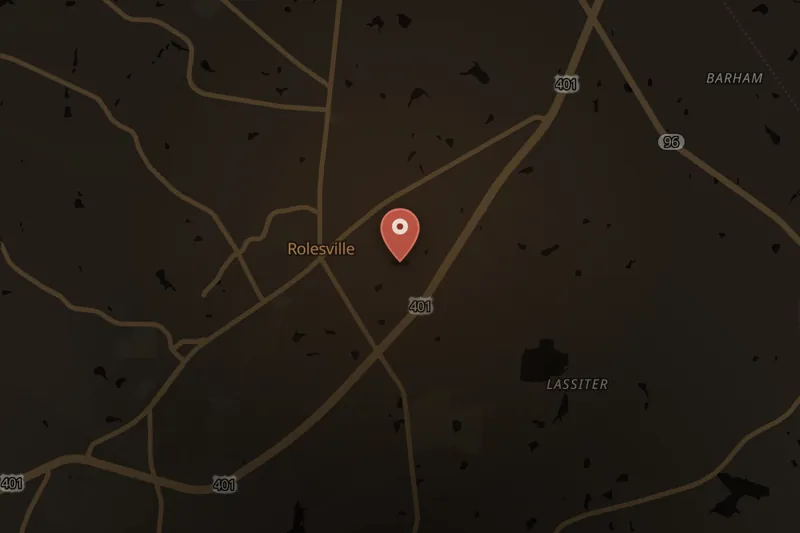
Oxford, North Carolina, United StatesView on the map

The short answer

Killing of Henry Marrow in brief

Henry "Dickie" Marrow, a 23-year-old Black Army veteran, was beaten and fatally shot outside a shop in Oxford, North Carolina, in May 1970. An all-white jury acquitted the three men charged with his murder, sparking protests, arson, a curfew, and an 18-month boycott of white businesses that led to desegregation of the town's public facilities.

Key facts

Year
1970
Place
Oxford, North Carolina, United States
Status
SOLVEDSolved
Victim
Henry Dortress "Dickie" Marrow Jr.
Outcome
Acquitted: Larry Teel, Roger Oakley and Robert Teel

The coverage index

Where to watch & listen

No one's coverage is attached to this file yet.

Know great coverage of this case?

A documentary, a podcast episode, a careful long-form video. Suggest it and an editor will review it before it appears here.

Suggest coverage for Killing of Henry Marrow

The case file

What happened

Henry Dortress "Dickie" Marrow Jr. was born January 7, 1947, in Oxford, North Carolina, and raised largely by his maternal grandparents after his father died and his mother moved north for work. He attended Mary Potter High School and Kittrell College before joining the Army and being stationed at Fort Bragg. After his service, he returned to Oxford, worked at Umstead Hospital in Butner, and had two daughters with Willie Mae Sidney, who was pregnant with a third child at the time of his death.

On the evening of May 11, 1970, Marrow was playing cards with friends at the Tidewater Seafood Market in Oxford. He left to visit a nearby shop owned by Robert Teel, reportedly to buy a soft drink for a friend. An altercation began after Marrow made a remark to Teel's daughter-in-law, Judy Teel, and her husband Larry Teel objected. Robert Teel and his stepson Roger Oakley retrieved firearms from the shop. According to witness accounts, Robert Teel first tried to strike Marrow, who drew a knife and then fled; Teel and Oakley pursued him with shotguns and a rifle. Teel shot Marrow, and Oakley shot him twice more; all three defendants were later acquitted. While Marrow lay wounded on the ground, witnesses said the three men, all later acquitted, beat and kicked him as Robert Teel shouted for him to be shot. A single rifle shot was then fired into Marrow's head; accounts differ on who fired it, with Oakley testifying it discharged accidentally and another witness testifying that Larry Teel fired it. Friends took the wounded Marrow to Granville County Hospital; he died en route to Duke University Medical Center after being transferred for further treatment.

Marrow's killing occurred amid ongoing racial segregation in Oxford despite the passage of federal civil rights legislation years earlier. His death triggered marches, protests, and arson against white-owned businesses causing an estimated $1 million in damage, prompting a four-day curfew. Robert Teel, Larry Teel, and Roger Oakley were indicted on murder charges, but an all-white jury acquitted all three. Marrow's widow later filed a wrongful death civil suit against the Teels. Following the acquittal, civil rights organizer Benjamin Chavis led a protest march to the state capital and helped organize an 18-month boycott of white businesses in Oxford, which ended after the town agreed to desegregate public facilities.

The case was later chronicled in historian Timothy Tyson's 2004 book "Blood Done Sign My Name," which was adapted into a 2010 film of the same name directed by Jeb Stuart, and a 2008 stage play that premiered at Duke University.

7 dated entries · 1947–2010

Timeline

  1. Henry Dortress "Dickie" Marrow Jr. is born in Oxford, North Carolina.

  2. Marrow is confronted outside Robert Teel's shop in Oxford, North Carolina; according to witness accounts he is shot and beaten during the altercation. Robert Teel, Larry Teel, and Roger Oakley were indicted in his killing and later acquitted by an all-white jury.

  3. Henry Marrow dies from his injuries en route to Duke University Medical Center.

  4. Herald-Journal reports a witness claim that Benjamin Chavis had allegedly offered payment for the death of one of the Teels.

  5. Timothy Tyson publishes "Blood Done Sign My Name," a history of the killing and its aftermath.

  6. A stage play adaptation of "Blood Done Sign My Name" premieres at Duke University.

  7. A film adaptation of "Blood Done Sign My Name," directed by Jeb Stuart, is released.

4 named in this file

People

Victims first. Every legal label is set from public records and court outcomes, not from the prose.

  • Henry Dortress "Dickie" Marrow Jr.

    VICTIM

    African-American Army veteran fatally shot and beaten in Oxford, North Carolina, on May 11-12, 1970.[4]

  • Larry Teel

    ACQUITTED

    Indicted on murder charges in Marrow's killing; acquitted by an all-white jury.[4]

  • Robert Teel

    ACQUITTED

    Indicted on murder charges in Marrow's killing; acquitted by an all-white jury.[4]

  • Roger Oakley

    ACQUITTED

    Indicted on murder charges in Marrow's killing; acquitted by an all-white jury.[4]

4 cited

Sources

Coverage is not a source: every fact in this file rests on the records below.

  • 3 Press
  • 1 Encyclopedic
  1. Henry Marrow — Un(re)solved

    PressPBS FrontlineAccessed Jul 11, 2026

  2. Contemporaneous coverage — The New York Times

    PressThe New York TimesAccessed Jul 10, 2026

  3. Killing of Henry Marrow

    EncyclopedicWikipediaAccessed Jul 10, 2026

Trust

Record history

Corrections
None

Are you family of someone named in this file? Corrections and removal requests from victims’ families are prioritized.