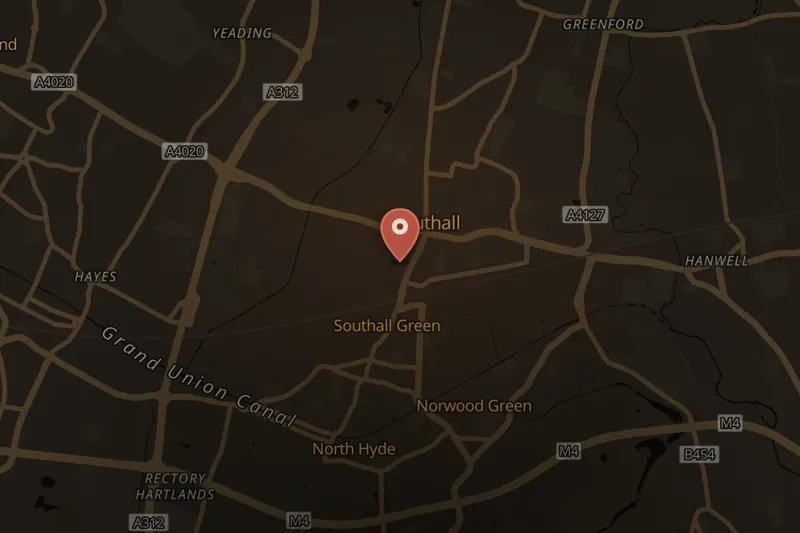
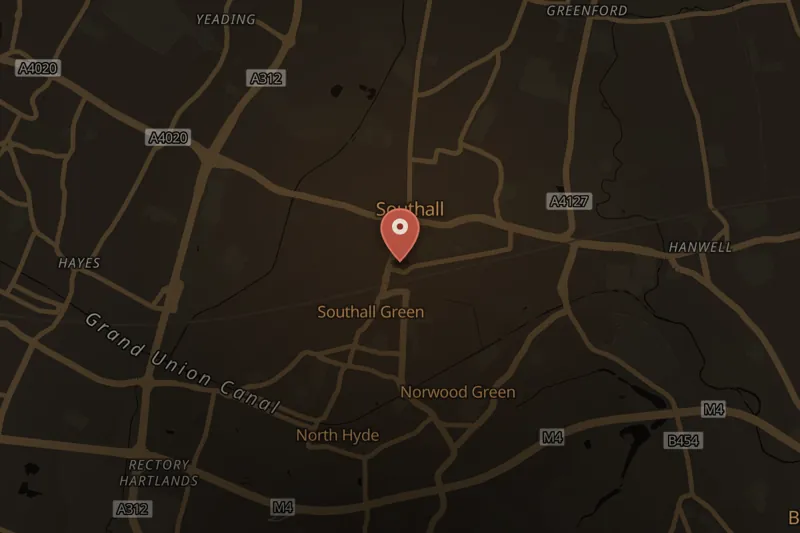
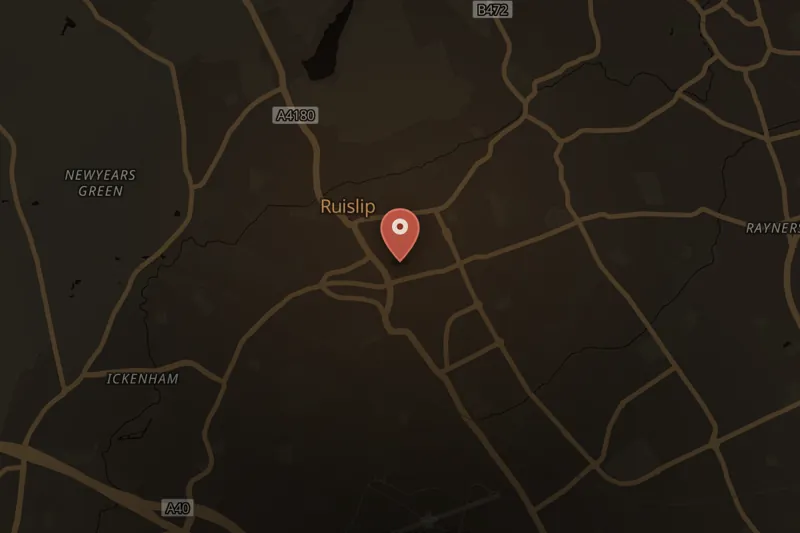
Jean Mary Townsend, born 13 March 1933, lived with her parents in Bempton Drive, South Ruislip, Middlesex, and worked as a theatrical costumier in London's West End. On the evening of 14 September 1954, she attended a social function in the West End and returned to South Ruislip on the last Central line train. She was seen leaving South Ruislip station at around 11:45 pm, walking alone along Victoria Road. Her body was found the following morning on waste ground near the junction of Victoria Road and Angus Drive, an area later occupied by St Gregory the Great Catholic Church. An autopsy determined she had been strangled with her own scarf; although several items of her clothing had been removed, no signs of sexual assault were reported at the time.
The investigation focused early suspicion on American servicemen stationed at the nearby South Ruislip Air Station, fuelled by a resident's report of hearing a woman cry for help followed by an argument involving what sounded like an American-accented voice, and by rumours that USAF authorities were reluctant to cooperate with the Metropolitan Police. In the aftermath, several women reported being approached or attacked by strange men in the area, including Jacqueline Cliff and Joan Gala, both of whom described an assailant with a "high forehead." Investigators also examined possible links to a series of unsolved murders of women in West Germany, the recent killing of Ellen Carlin in London, an attack on Doris Vennell near North Harrow station weeks later, and the 1957 murder of Muriel Maitland in Cranford Woods, though no confirmed connections were established. In 1971, the murder of Gloria Booth in South Ruislip—also by strangulation, reportedly with a scarf—prompted press comparisons to the Townsend case and references to "Ruislip's Murder Mile."
In October 1982, the Metropolitan Police reviewed the case following anonymous phone calls of undisclosed content; police stated they were now confident no American servicemen were involved and that there were no links to other crimes, but no arrests followed. In 2005, Reg Hargrave, a family friend of the Townsends, sought access to the police case files under the Freedom of Information Act. The request was denied, and an Information Tribunal in November 2007 upheld the decision to withhold the files until 2031. During closed session, a senior Metropolitan Police detective presented case-specific information; the Tribunal concluded that identification of the killer, while not imminent, remained a possibility. A 1990s forensic re-examination of Townsend's clothing by the Forensic Science Service produced no new DNA evidence. The Tribunal also considered and dismissed as "highly speculative" a theory implicating an Italian nobleman living in London at the time, citing a lack of supporting evidence.
Unofficial research has continued, including a 2019 book, Dead Fashion Girl: A Situationist Detective Story, by Fred Vermorel, which proposed a previously unnamed suspect and suggested the original investigation had been marred by incompetence. As of the available record, the murder of Jean Townsend, along with the killings of Ellen Carlin, Muriel Maitland, and Gloria Booth, remains unsolved.

 SOLVEDListen