

Start here
The Murder of Martha Moxley (Part 2)
A 56-minute listen from Morbid, the deepest on file. Good for a drive or a walk.
Listen on RssOverturned conviction · 1998
Also known as Martha Moxley · Murder of Martha Moxley
The short answer
Martha Moxley, 15, was found bludgeoned and stabbed with a golf club in her family's Greenwich, Connecticut backyard on October 31, 1975. Michael Skakel was convicted of her murder in 2002, but after multiple appeals his conviction was overturned in 2018, and in 2020 prosecutors announced they would not retry him.
The Murder of Martha Moxley (Part 2)Morbid · 56 min3 pieces from 2 creators: ranked, with duplicates removed and short clips set aside.
Start here
A 56-minute listen from Morbid, the deepest on file. Good for a drive or a walk.
Listen on RssMartha Moxley Case Analysis | Did Kennedy Connection Lead to Overturned Guilty Verdict?
 Dr. Todd GrandeVideo · YouTube · 16 min · 2021
Titles and descriptions are the creators’ own and may not reflect current legal status. The sourced facts are in the file below. Players load only when you press play. Suggest coverage we’re missing.
Martha Elizabeth Moxley, a 15-year-old high school student, was killed on the night of October 30, 1975, in the affluent Belle Haven neighborhood of Greenwich, Connecticut. She had spent the evening participating in "mischief night" activities with neighborhood friends, including Thomas Skakel, and was last seen with him near the pool of the Skakel family home, located across the street from her own. The next day, her body was discovered beneath a tree in her family's backyard. Her pants and underwear had been pulled down, though no evidence of sexual assault was found. An autopsy determined she had been both bludgeoned and stabbed with a six-iron golf club, fragments of which were traced back to a set owned by the Skakel household.
Thomas Skakel, the last person known to have been with Moxley, became an initial suspect, but his father restricted investigators' access to his school and mental health records. Kenneth Littleton, who had begun working as a live-in tutor for the Skakel family hours before the murder, was also considered a suspect. No charges were filed for decades, and the case went cold. During this period, both Thomas and Michael Skakel gave differing accounts of their whereabouts that night. Michael Skakel eventually stated he had been outside near the Moxley property, in a tree, between roughly 11:30 p.m. and 12:30 a.m.
Interest in the case was renewed in the early 1990s, spurred in part by an unfounded rumor connected to an unrelated 1991 trial. A private investigative firm hired by the Skakel family conducted its own review, and journalists and authors — including former detective Mark Fuhrman — later examined the case and named Michael Skakel as the person responsible for the killing. Two former students at Élan School, a youth treatment facility, testified that they had heard Michael Skakel admit to the killing.
In 2000, following a lengthy grand jury investigation, Michael Skakel was arrested and charged with Moxley's murder. He was tried as an adult, and on June 7, 2002, a jury found him guilty; he was sentenced to 20 years to life in prison. Skakel pursued appeals over the following decade, arguing issues including inadequate representation by his trial attorney, Michael Sherman. In 2013, a Connecticut judge granted him a new trial on ineffective-assistance grounds, and Skakel was released on bail. In 2016, the Connecticut Supreme Court reinstated his conviction by a 4–3 vote. In 2018, the same court reversed course, vacating the conviction and ordering a new trial, finding that his trial counsel had failed to contact an alibi witness.
On October 30, 2020, the 45th anniversary of Moxley's death, Connecticut's chief state's attorney informed the court that the state would not retry Michael Skakel, stating that prosecutors would not be able to prove the case beyond a reasonable doubt. The case has since remained without a conviction.
Martha Moxley participates in 'mischief night' activities and is last seen with Thomas Skakel near the Skakel family pool around 9:30 p.m.
Moxley's body is found beneath a tree in her family's backyard, bludgeoned and stabbed with a golf club traced to the Skakel residence.
Rumors connected to an unrelated trial prompt renewed investigative interest; the Skakel family hires a private detective agency to investigate.
Mark Fuhrman publishes 'Murder in Greenwich,' naming Michael Skakel as the killer.
A one-man grand jury is convened to review evidence in the case.
An arrest warrant is issued for an unnamed juvenile; Michael Skakel surrenders to authorities.
A judge rules that Skakel will be tried as an adult.
Skakel's murder trial begins in Norwalk, Connecticut.
Skakel is found guilty of murdering Moxley and sentenced to 20 years to life in prison.
The Connecticut Supreme Court rejects Skakel's appeal and affirms his conviction.
Judge Thomas A. Bishop grants Skakel a new trial, citing inadequate trial representation.
Skakel is released on $1.2 million bond.
The Connecticut Supreme Court reinstates Skakel's conviction in a 4–3 decision.
The Connecticut Supreme Court vacates Skakel's conviction and orders a new trial.
Connecticut's chief state's attorney announces the state will not retry Skakel for Moxley's murder.
Victims first. Every legal label is set from public records and court outcomes, not from the prose.
From the record
Coverage is not a source: every fact in this file rests on the records below.
Are you family of someone named in this file? Corrections and removal requests from victims’ families are prioritized.
 SOLVEDListen
Greenwich, Connecticut · 2000s
Andrew Kissel, a real estate developer accused of defrauding a Manhattan co-op board of millions of dollars, was found stabbed to death, bound hand and foot, in the basement of his rented Greenwich, Connecticut estate in April 2006. His chauffeur and the chauffeur's cousin were later convicted in connection with the killing.
 UNSOLVEDListen
Stamford, Connecticut (Merritt Parkway area)
Five women, most of them Black sex workers, were strangled in Stamford, Connecticut between 1967 and 1971, several with their own bras. A local preacher was charged and gave a confession he later recanted; he was acquitted by reason of insanity, later won a new trial, and ultimately had all charges dropped. A second suspect was never charged, and the killings remain officially unsolved.
 Image recordEditorial useSourceSOLVEDListen
Valhalla, New York, United States · 2010s
Five-year-old Garnett-Paul Thompson Spears died in January 2014 at a hospital near Valhalla, New York, after his mother, Lacey Spears, administered high levels of sodium through his feeding tube, causing fatal encephalitis. She was convicted of second-degree murder in 2015 and sentenced to 20 years to life.
 Credit: Woodlawn High SchoolEditorial useSourceSOLVEDListen
Leakin Park, Baltimore, Maryland · 1999
Hae Min Lee, an 18-year-old Baltimore County high school student, was strangled and found buried in Leakin Park in February 1999. Her ex-boyfriend Adnan Syed was convicted of first-degree murder in 2000; the case gained international attention after the 2014 podcast Serial, and Syed's conviction underwent multiple vacaturs, appeals, and reinstatements through 2025.
 Image recordEditorial useSourceSOLVEDListen
California Polytechnic State University (Cal Poly), San Luis Obispo, California · 1996
Kristin Smart, a 19-year-old Cal Poly San Luis Obispo student, disappeared in the early hours of May 25, 1996, after leaving an off-campus party with fellow student Paul Flores, the last person known to have seen her. Flores was convicted of her murder in 2022 and his conviction was upheld on appeal; Smart's remains have never been recovered.
 Credit: Via WikipediaEditorial useSourceUNSOLVEDListen
Fulham, London · 1990s
English television presenter Jill Dando was shot dead outside her London home in 1999, and the case remains unsolved.
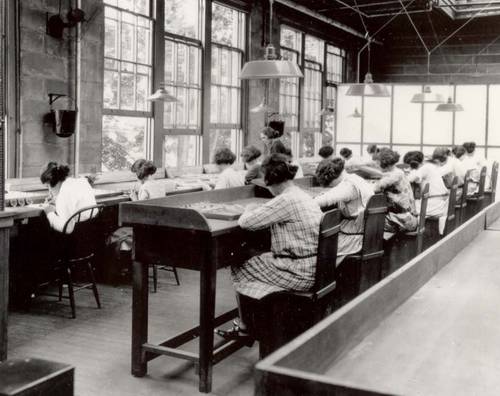 Credit: Argonne National Laboratory / Wikimedia Commons, c.1922–23Public domainSourceSOLVEDListen
Orange, New Jersey · 1917
Beginning in 1917, factory workers who came to be known as the Radium Girls were poisoned after being instructed to shape radium-paint brushes with their lips; the resulting illnesses, deaths, and lawsuits against the United States Radium Corporation and the Radium Dial Company reshaped U.S. occupational health and labor law.
