

Start here
Who Killed Richard Oland

That Chapter's 26-minute breakdown, the fullest single telling on file.
Watch on YouTubeThe short answer
Richard Oland, a 69-year-old Saint John businessman, was bludgeoned to death in his office in July 2011; his son Dennis Oland was convicted of the killing in 2015, had that conviction overturned on appeal in 2016, and was found not guilty at retrial in 2019.
Who Killed Richard OlandThat Chapter · 26 min2 pieces from 2 creators: ranked, with duplicates removed and short clips set aside.
Start here
That Chapter's 26-minute breakdown, the fullest single telling on file.
Watch on YouTubeDid Father/Son Dynamic Lead to Millionaire's Murder? | Richard Oland Case Analysis
 Dr. Todd GrandeVideo · YouTube · 15 min · 2022
Titles and descriptions are the creators’ own and may not reflect current legal status. The sourced facts are in the file below. Players load only when you press play. Suggest coverage we’re missing.
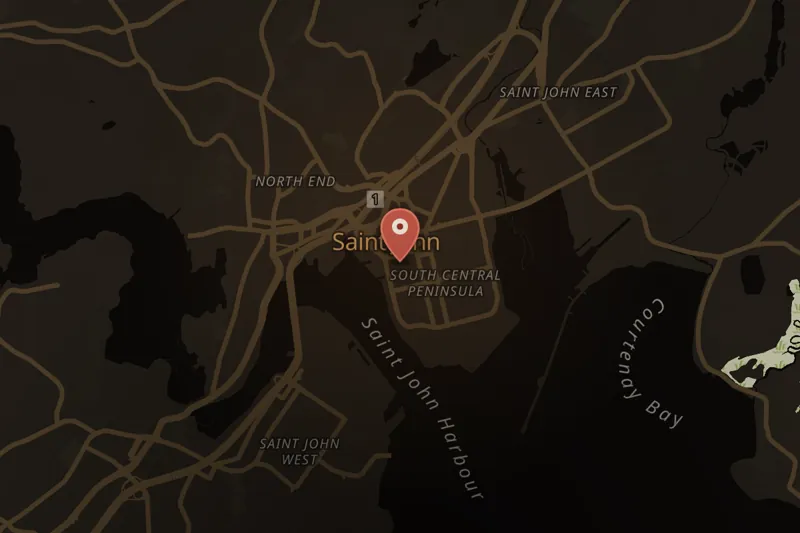
Richard Henry Oland, a 69-year-old businessman from Saint John, New Brunswick, was bludgeoned to death in his second-floor office at 52 Canterbury Street between July 6 and July 7, 2011. Oland had been a vice-president of Moosehead Breweries until 1981, when a leadership dispute with his brother, Derek Oland, led their father to choose Derek to run the company; Richard went on to build several New Brunswick businesses, including Kinghurst Estates Limited, Brookville Transport Limited, and the investment firm Far End Corporation, and he served as president of the 1985 Canada Summer Games Society. He was last seen alive in his office on the evening of July 6, 2011, by his son, Dennis Oland, who told police he left at about 6:30 p.m. The next morning, Oland's personal assistant, Maureen Adamson, found his body face down in a pool of blood. A forensic pathologist counted 45 wounds to his hands, neck, and head, and a police sergeant testified the office was one of the bloodiest crime scenes of his career. No weapon was ever recovered or entered into evidence at trial.
Dennis Oland was interviewed by police for more than five hours on the day the body was found and was told partway through by the interviewing officer that he was the primary suspect. In November 2013 he was charged with second-degree murder; police said no one else would be charged. At a 37-day preliminary inquiry, Judge Ronald LeBlanc reviewed forensic evidence, including bloodstains matching Richard Oland's DNA found on a brown jacket Dennis had worn to the office, alongside cell-phone and financial records. LeBlanc concluded the Crown had not established a clear motive and said police had presumed Dennis's guilt too quickly based on an unsubstantiated hunch, but he nonetheless committed Dennis Oland to stand trial.
Dennis Oland's trial began September 16, 2015, and at 65 days became the longest in New Brunswick history. On December 19, 2015, he was convicted of second-degree murder and was later sentenced to life in prison with no chance of parole for at least ten years. The trial also exposed failures by the Saint John Police Force to protect the crime scene from contamination, including using the office bathroom for two days before it was tested for evidence and allowing officers to walk through the scene without protective equipment. Deputy Chief Glen McCloskey, who was among those who entered the scene, was later accused of asking colleagues to misrepresent his presence there under oath; he was investigated by the New Brunswick Police Commission and by Halifax police but was cleared and was not criminally charged.
On October 24, 2016, the New Brunswick Court of Appeal overturned Dennis Oland's conviction, finding the trial judge had erred in his jury instructions, and ordered a new trial. Before the retrial could proceed as a jury trial, a mistrial was declared after it emerged that a police computer had been used to research the prospective jury pool, and the retrial instead went ahead before a judge alone. Testimony and video evidence about the timing of events near Oland's office on the night of the killing led the defence to argue that Dennis could not have been present when the fatal attack occurred. On July 19, 2019, Dennis Oland was found not guilty. Following the case, the Provincial Police Commission investigated the Saint John Police Force's handling of the original homicide investigation.
Richard Oland was last seen alive by his son, Dennis Oland, who told police he left his father's office at about 6:30 p.m.
Richard Oland's body was found bludgeoned to death in his Canterbury Street office by his personal assistant, Maureen Adamson.
Dennis Oland was charged with second-degree murder in his father's death.
A preliminary inquiry before Judge Ronald LeBlanc began, ultimately spanning 37 days before Dennis Oland was committed to stand trial.
Dennis Oland's trial began; at 65 days it became the longest trial in New Brunswick history.
Dennis Oland was convicted of second-degree murder and later sentenced to life in prison with no chance of parole for at least ten years.
The New Brunswick Court of Appeal overturned Dennis Oland's conviction and ordered a new trial.
Dennis Oland was found not guilty at his retrial, which was decided by a judge alone after a mistrial was declared.
The CBC documentary series The Oland Murder, centred on Dennis Oland's appeal and retrial, premiered.
Victims first. Every legal label is set from public records and court outcomes, not from the prose.
69-year-old Saint John businessman and former Moosehead Breweries vice-president; bludgeoned to death in his office on July 6-7, 2011.[3]
Richard Oland's son; charged with second-degree murder in November 2013, convicted in December 2015, had that conviction overturned on appeal in October 2016, and was found not guilty at retrial on July 19, 2019.[3]
Saint John Police Force deputy chief who entered the crime scene without protective equipment; later accused of asking colleagues to misrepresent his presence there under oath and investigated by the New Brunswick Police Commission and Halifax police, but cleared and not criminally charged.[3]
Coverage is not a source: every fact in this file rests on the records below.
Are you family of someone named in this file? Corrections and removal requests from victims’ families are prioritized.
 SOLVEDListen
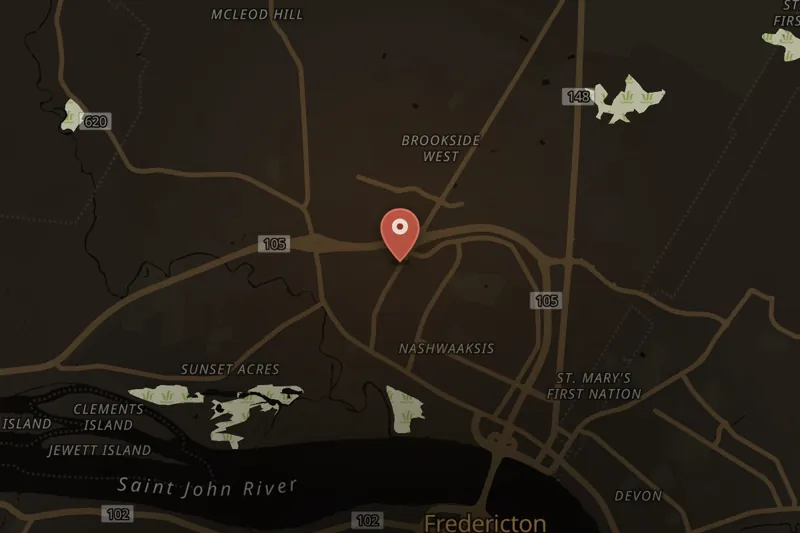
Brookside Drive, Fredericton, New Brunswick, Canada · 2010s
On the morning of 10 August 2018, a gunman opened fire on Brookside Drive in Fredericton, New Brunswick, killing two civilians and two responding police officers. The accused, Matthew Raymond, was found not criminally responsible in 2020.
 Credit: RaptacCC BY-SA 4.0SourceSOLVEDListen
Bardstown, Kentucky · 2015
Crystal Rogers, a 35-year-old Bardstown, Kentucky, mother of five, disappeared in July 2015 and has never been found; in 2025, her former boyfriend, Brooks Houck, was found guilty of her murder, and two other men were convicted of related conspiracy and evidence-tampering charges.
 Credit: Wisconsin Department Of JusticePublic domainSourceSOLVEDListen
Barron, Wisconsin · 2018
A 13-year-old Wisconsin girl was abducted from her home after her parents were fatally shot in October 2018 and was found safe 88 days later after escaping her captor's rural cabin in January 2019.
 Credit: NCMEC / Manchester (NH) Police DepartmentLaw-enforcement releaseSourceOVERTURNEDListen
Manchester, New Hampshire, United States · 2019
Harmony Montgomery, a five-year-old girl in Manchester, New Hampshire, was reported missing in 2021 and was later found to have been killed by her father in 2019; his 2024 murder conviction was reversed on appeal in 2026.
 UNSOLVEDListen
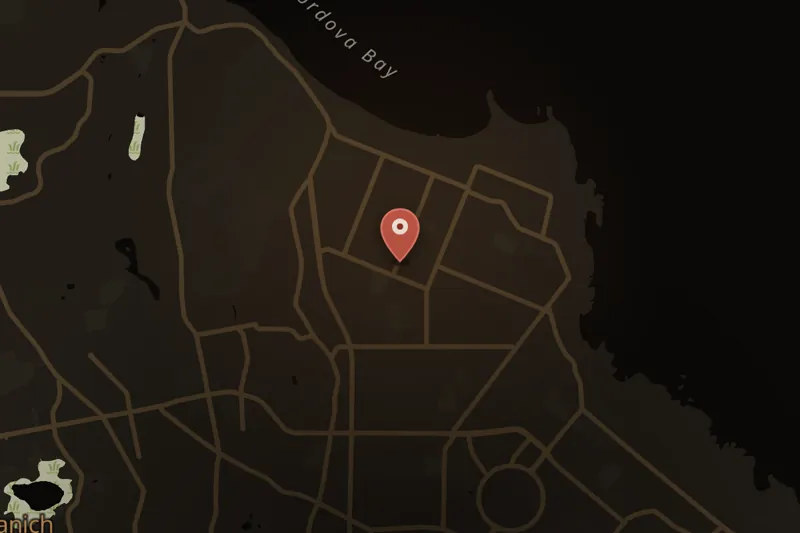
Saanich, British Columbia, Canada · 2008
A 24-year-old Victoria, British Columbia, real estate agent was fatally stabbed in February 2008 during a staged home showing, and the killing remains unsolved.
 SOLVEDListen
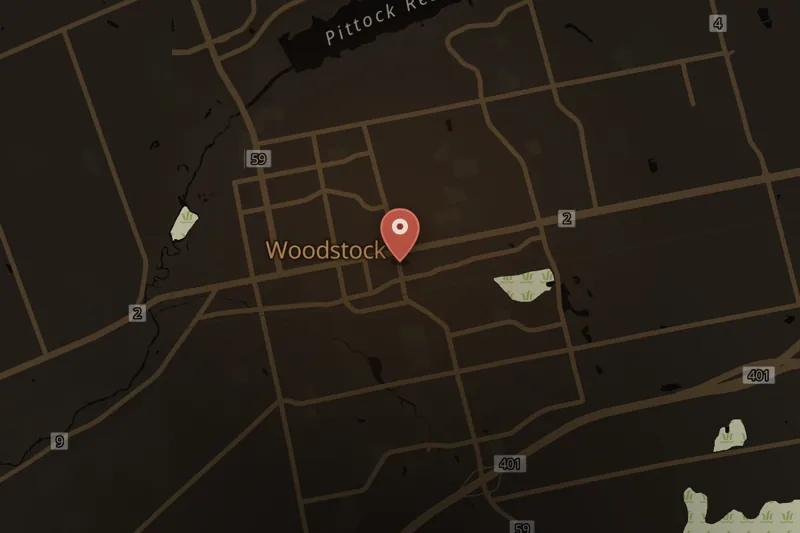
Woodstock, Ontario, Canada (abduction site) · 2009
Eight-year-old Victoria "Tori" Stafford of Woodstock, Ontario was abducted and killed in April 2009; Terri-Lynne McClintic and Michael Rafferty were both convicted of first-degree murder.
 Credit: English WikipediaEditorial useSourceSOLVEDListen
Modesto, California · 2002
Laci Peterson, 27 and eight months pregnant, disappeared from her Modesto, California home on December 24, 2002; her body and that of her unborn son Conner were found in San Francisco Bay in April 2003, and her husband Scott Peterson was convicted in 2004 of murdering both.
 Credit: CBS News / Travis Alexander (personal photo)Editorial useSourceSOLVEDListen
Mesa, Arizona, United States · 2000s
Travis Alexander, 30, was stabbed, slashed, and shot to death in his Mesa, Arizona home on June 4, 2008. His ex-girlfriend, Jodi Arias, was convicted of first-degree murder in 2013 and sentenced to life without parole in 2015 after two juries deadlocked on the death penalty.
 Credit: Family/Instagram photograph, widely distributed in press coverageEditorial useSourceSOLVEDListen
Moscow, Idaho · 2022
Four University of Idaho students—Madison Mogen, Kaylee Goncalves, Ethan Chapin, and Xana Kernodle—were fatally stabbed inside an off-campus house in Moscow, Idaho, in the early morning hours of November 13, 2022. Bryan Kohberger, a criminology PhD student at nearby Washington State University, was arrested that December and pleaded guilty in 2025, receiving four consecutive life sentences.
 Image recordEditorial useSourceSOLVEDListen
Austin, Texas · 2022
Moriah Wilson, a 25-year-old professional cyclist, was shot and killed at a friend's residence in Austin, Texas, on May 11, 2022, and Kaitlin Armstrong was later convicted and sentenced to 90 years in prison for the killing.
 Image recordEditorial useSourceSOLVEDListen
New Canaan, Connecticut, United States · 2019
Jennifer Dulos, a mother of five in New Canaan, Connecticut, disappeared on May 24, 2019, after being attacked at her home; her body has never been found, and she was declared legally dead in 2023. Her estranged husband, Fotis Dulos, was charged with her murder but died by suicide in January 2020 before trial, while his girlfriend, Michelle Troconis, was convicted in 2024 of related charges.
 Credit: English WikipediaEditorial useSourceSOLVEDListen
Star City, West Virginia (disappearance site); body found in Wayne Township, Greene County, Pennsylvania · 2012
Sixteen-year-old Skylar Neese disappeared from her Star City, West Virginia home in July 2012 and was found murdered months later. Two of her high school best friends, Rachel Shoaf and Shelia Eddy, pleaded guilty to killing her in a premeditated stabbing attack.
