
Start here
The Tragic Tale of Satomi Mitarai: A Schoolyard Horror #crime
The creator's telling of the case, the strongest entry point on file.
Watch on YouTubeBefore you continue
This case involves crimes against children. Casepin presents the record in neutral, non-graphic language. Choose whether to continue.
Solved case · 2004
Also known as Sasebo slashing · Sasebo elementary school killing
 Okubo es Sasebo 2011Credit: ja:User:Sanjo·CC BY-SA 3.0·Source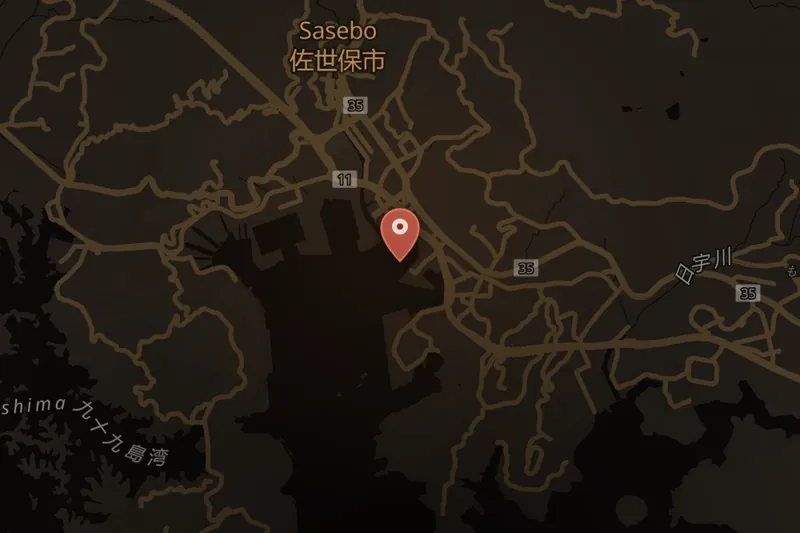
The short answer
On June 1, 2004, 12-year-old Satomi Mitarai was killed by an 11-year-old classmate at an elementary school in Sasebo, Japan, sparking national debate over the age of criminal responsibility and juvenile justice.
Start hereThe Tragic Tale of Satomi Mitarai: A Schoolyard Horror #crimeThe coverage index
5 pieces from 5 creators: ranked, with duplicates removed and short clips set aside.
Start here
Video · YouTube · 2025
The creator's telling of the case, the strongest entry point on file.
Watch on YouTubeCyberbullying's Dark Turn: The Tragic Tale of Natsumi and Satomi

In 2004, 11-year-old Natsumi Tsuji killed her 12-year-old friend, Satomi Mitari, by slitting

She Was 11 When She Killed Her Classmate in Cold Blood #SatomiMitarai #TrueCrime #JapanCrime


Titles and descriptions are the creators’ own and may not reflect current legal status. The sourced facts are in the file below. Players load only when you press play. Suggest coverage we’re missing.
The case file
On June 1, 2004, at Okubo Elementary School in Sasebo, Nagasaki Prefecture, Japan, 12-year-old Satomi Mitarai was killed by an 11-year-old female classmate, referred to publicly at the time as "Girl A" due to Japanese laws prohibiting identification of juvenile offenders. During a school break between 12:15 and 12:35 PM, the classmate called Mitarai to an empty classroom approximately 50 meters from their regular classroom, reportedly telling her "Your attitude is insolent" and "Come here for a moment." Once inside, the classmate closed the curtains, had Mitarai sit in a chair, covered her eyes, and slit her throat and arms with a box cutter from behind. Mitarai attempted to resist but was slashed repeatedly.
The perpetrator returned to her own classroom with blood on her clothing. A teacher, checking her for wounds, found none and pressed her for an explanation; she reportedly said "It's not my blood. It's not me." The teacher then discovered Mitarai's body. After being taken into custody, the classmate reportedly confessed to police, repeatedly apologizing. She told investigators that she and Mitarai had once been close friends, but their relationship deteriorated after exchanges on an online chatroom site, during which she said Mitarai had commented on her weight and called her a "goody-goody."
On September 15, 2004, a Japanese Family Court ordered the girl institutionalized in a reformatory facility in Tochigi Prefecture, citing the severity of the crime despite her young age. Her original two-year commitment was extended by two years in September 2006 following a psychological evaluation. On May 29, 2008, authorities announced no further sentence would be sought. She was later reported to have been diagnosed with Asperger syndrome following the killing.
The case prompted a national debate in Japan about whether the age of criminal responsibility, which had been lowered from 16 to 14 in 2000 following the 1997 Kobe child murders, should be lowered further. Public commentary intensified because the perpetrator had reportedly been considered a normal, well-adjusted child prior to the incident. Two members of the Japanese Diet faced public criticism for remarks made about the case. Online, the perpetrator became the subject of an internet meme after a class photograph purportedly showing her in a University of Nevada, Reno sweatshirt led to the nickname "Nevada-tan" circulating on Japanese web forums. The case was also cited, controversially, in support of a discredited theory linking video game use to violent behavior. In 2019, an audio drama referencing the case and titled after the online nickname was released on Audible.
6 dated entries · 2004–2008
Satomi Mitarai, 12, is killed by an 11-year-old classmate at Okubo Elementary School in Sasebo, Nagasaki Prefecture, Japan.
Members of the Japanese internet community 2channel publicize a name believed to belong to the juvenile perpetrator, based on a classroom drawing.
A Japanese Family Court rules to institutionalize the perpetrator, sentencing her to two years in a reformatory facility in Tochigi Prefecture.
Okubo Elementary School holds its graduation ceremony, posthumously awarding Mitarai a certificate and including a memorial page in the yearbook.
The perpetrator's institutional commitment is extended by two years following a psychological evaluation.
Local authorities announce they will not seek an additional sentence for the perpetrator.
1 named in this file
Victims first. Every legal label is set from public records and court outcomes, not from the prose.
12-year-old schoolgirl killed at Okubo Elementary School in Sasebo, Japan, on June 1, 2004.[3]
3 cited
Coverage is not a source: every fact in this file rests on the records below.
PressBBC NewsAccessed Jul 7, 2026
PressThe AgeAccessed Jul 7, 2026
EncyclopedicWikipediaAccessed Jul 7, 2026
Trust
Are you family of someone named in this file? Corrections and removal requests from victims’ families are prioritized.
Near this case
 SOLVEDListen
Sasebo, Nagasaki Prefecture, Japan · 2010s
In July 2014, 15-year-old Japanese high school student Aiwa Matsuo was killed by a 15-year-old female classmate in Sasebo, Nagasaki Prefecture, in an attack that included beating, strangulation, and partial dismemberment.
 SOLVEDListen
Ōmuta, Fukuoka, Japan · 2000s
In September 2004, four members of the Kitamura-gumi, a yakuza gang in Ōmuta, Fukuoka, Japan, killed four people, including a woman to whom the family owed money and her three sons, in a case tied to a debt dispute.
 SOLVEDListen
Higashi-ku, Fukuoka, Japan · 2000s
In June 2003, a family of four in Fukuoka, Japan, was murdered and their bound bodies dumped in Hakata Bay; three Chinese international students were later convicted, two in China and one, Wei Wei, in Japan, where he was executed in 2019.
 Credit: Mona Eshaiker·CC BY-SA 3.0·SourceSOLVEDListen
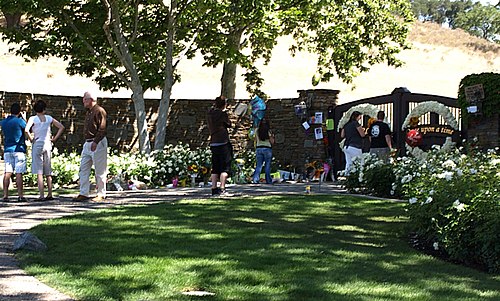
Holmby Hills, Los Angeles, California · 2009
Singer Michael Jackson died on June 25, 2009, in Los Angeles from acute propofol intoxication administered by his personal physician, Conrad Murray. The Los Angeles County coroner ruled the death a homicide, and Murray was convicted of involuntary manslaughter in November 2011.
 Credit: CBS News / Travis Alexander (personal photo)·Editorial use·SourceSOLVEDListen
Mesa, Arizona, United States · 2000s
Travis Alexander, 30, was stabbed, slashed, and shot to death in his Mesa, Arizona home on June 4, 2008. His ex-girlfriend, Jodi Arias, was convicted of first-degree murder in 2013 and sentenced to life without parole in 2015 after two juries deadlocked on the death penalty.
 Credit: AuburnPilot at English Wikipedia·Public domain·SourceUNSOLVEDListen
Oranjestad, Aruba · 2005
Natalee Holloway, an 18-year-old Alabama high school graduate, disappeared during a graduation trip to Aruba on May 30, 2005, and has never been found; Joran van der Sloot, last seen with her that night, was never charged over her disappearance in Aruba but later pleaded guilty to related U.S. extortion and wire-fraud charges and confessed to killing her.