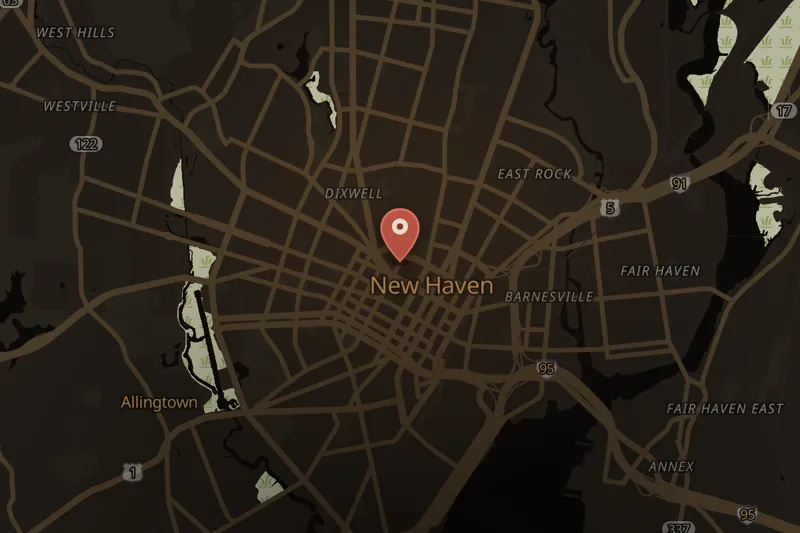
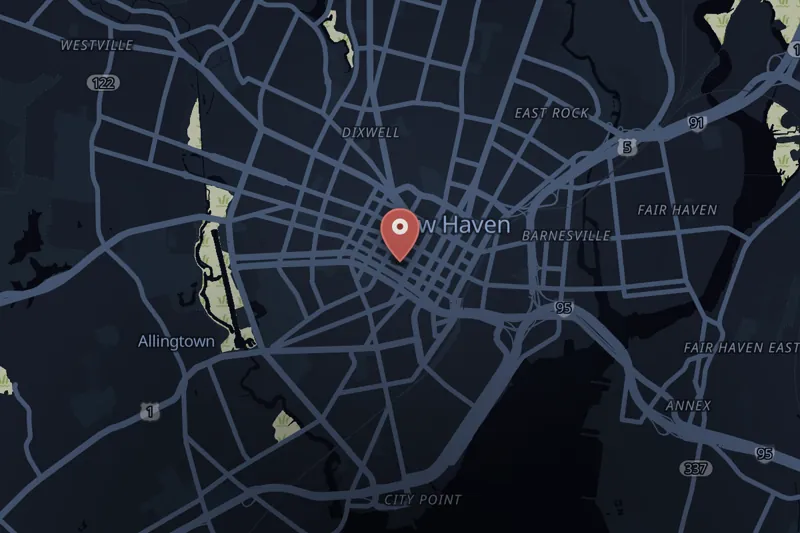
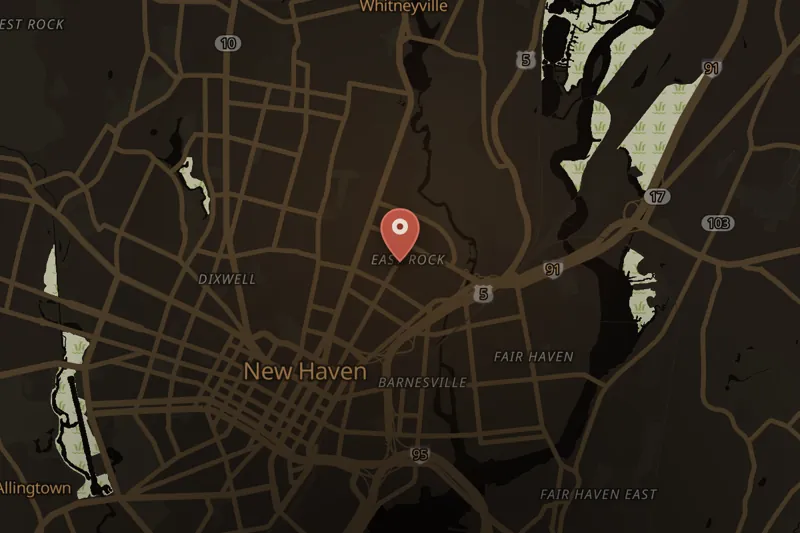
On the evening of December 4, 1998, Suzanne Nahuela Jovin, a 21-year-old Yale University senior majoring in international studies and political science, was found stabbed 17 times in the back of her head and neck, with her throat slit, at the corner of Edgehill Road and East Rock Road in New Haven, Connecticut — nearly two miles from the Yale campus where she was last seen alive. A 911 call reporting a bleeding woman came in at 9:55 p.m.; police arrived at 9:58 p.m. She was pronounced dead at Yale New Haven Hospital at 10:26 p.m. She was found fully clothed, still wearing her watch and earrings, with a crumpled dollar bill in her pocket; her wallet was later found in her room.
Earlier that evening, Jovin had helped run a pizza-making party for the local chapter of Best Buddies, dropped off a draft of her senior essay, returned a borrowed university car, and sent a final email to a friend about lending GRE study materials to an unidentified person. She was last confirmed seen by a classmate around 9:22 p.m. near Yale's Old Campus, and possibly seen again minutes later walking on College Street. How she came to be nearly two miles away within roughly half an hour has never been explained, and no witness has been reported seeing her enter a vehicle.
Physical evidence includes DNA recovered from scrapings under Jovin's fingernails, an unidentified partial palmprint on a Fresca bottle found near the body, and the tip of the knife used in the attack, which was lodged in her skull. Investigators also gathered witness accounts of a tan or brown van stopped near the scene and a man seen running from the area shortly after the killing, later referred to in coverage as "the running man" or "Billy."
Four days after the murder, the name of Jovin's thesis adviser, James Van de Velde, was leaked to a local newspaper as a suspect. A New Haven Police Department sergeant later stated there was no physical evidence tying him to the crime. Yale canceled Van de Velde's classes, and he was never charged. Private investigators hired by Yale, and testing of the fingernail DNA and palmprint, found no match to Van de Velde. In 2013, the City of New Haven and Yale reached a monetary settlement with Van de Velde over his federal civil-rights lawsuit, and a state's attorney publicly confirmed he was no longer a suspect.
The investigation was formally classified a cold case in 2006 and has since moved between New Haven police and Connecticut's Cold Case Unit. In 2009, DNA under Jovin's fingernail was matched to a state forensics lab technician, indicating contamination rather than a suspect lead. A 2017 Freedom of Information Commission ruling denied release of investigative records, citing an ongoing prospective prosecution and noting that touch DNA testing, renewed FBI involvement, and witness re-interviews were underway. As of the available reporting, the killing of Suzanne Jovin remains unsolved, and New Haven and Yale have jointly offered $150,000 for information leading to an arrest and conviction.

 Credit: Yale News (news.yale.edu)Editorial useSourceSOLVEDListen