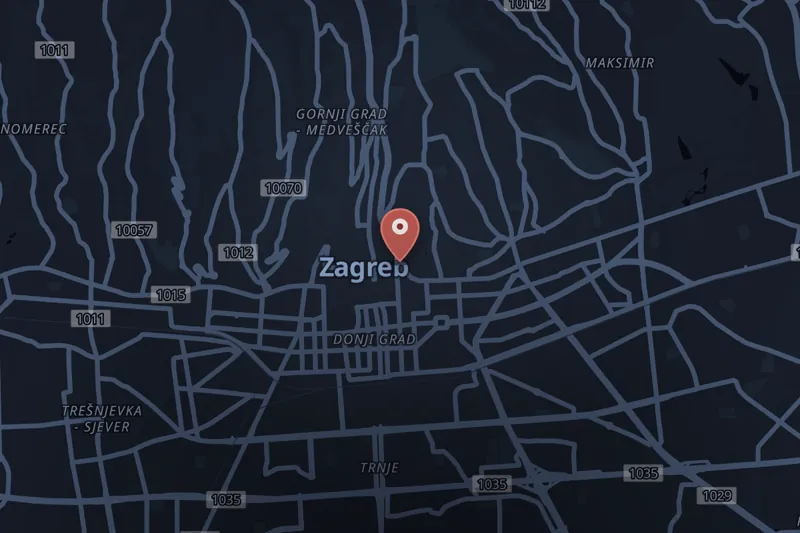
On the night of 7 December 1991, during the Croatian War of Independence, three members of a Serb family were killed in and near Zagreb, Croatia. At around 11:00 p.m., five people surrounded the Zec family home. Four of them — Siniša Rimac, Munib Suljić, Igor Mikola and Nebojša Hodak — belonged to a paramilitary unit that formed part of the reserve units of the Croatian Ministry of Internal Affairs. According to the source account, the group entered the property purportedly to arrest Mihajlo Zec, a butcher, over alleged links to rebel Krajina Serbs.
Mihajlo Zec ran into the street and tried to escape but was fatally shot from about thirty meters away. His wife, Marija, and their 12-year-old daughter, Aleksandra, were tied up, placed in a van with no license plates, and driven to the Medvednica mountain area, where both were killed and left in a garbage pit. Two other Zec children, Gordana and Dušan, hid during the attack and fled to their grandmother's home in Banja Luka.
Within days, police arrested the group, and during early questioning the suspects described the killings in detail. Because these statements were taken without lawyers present, they could not be used as valid evidence. Witnesses testified that they saw Siniša Rimac shoot Mihajlo Zec, and forensic analysis linked seized weapons and the van to the crime. The County Court in Zagreb nonetheless returned a not-guilty verdict. On 19 February 1992, the Supreme Court of Croatia remanded the case, but on 9 July 1992 the County Court again returned a not-guilty verdict, a decision widely criticized by legal experts.
The Zec family killings were never resolved through the Croatian legal system. After their release, Siniša Rimac served in the Croatian Army and, on 30 May 1995, received a state honor awarded by then-President Franjo Tuđman. In 2005, Rimac, Suljić and Mikola were convicted in a separate case, the 'Pakračka poljana' proceedings, receiving sentences of eight, ten and five years respectively for crimes unrelated to the Zec verdict. Nebojša Hodak was sentenced in June 2005 to one year in a separate attempted-extortion case. Munib Suljić surrendered to the International Criminal Tribunal for the former Yugoslavia in June 2006, was returned to Croatia, and died in a Zagreb prison hospital on 25 August 2006.
The surviving siblings, Dušan and Gordana, sued the Republic of Croatia with the assistance of attorneys Ante Nobilo and Mara Mihočević. In the spring of 2004, the government of Ivo Sanader agreed to a settlement, compensating the family 1,500,000 Croatian kuna. The killings later inspired a novel, a film, and a stage play.

 SOLVEDListen