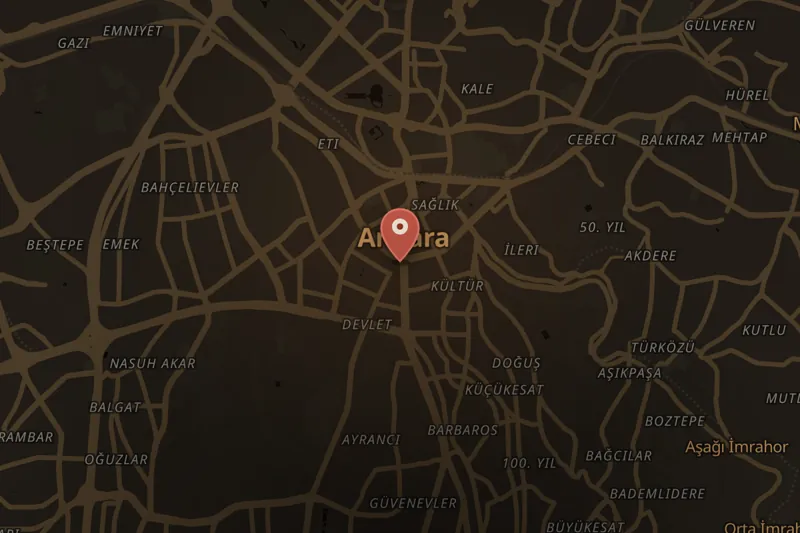
On 13 March 2016, a car bomb exploded on Atatürk Boulevard near Güvenpark, close to Kızılay Square in central Ankara, at a location where multiple bus stops and public transit lines converge. The explosion killed at least 37 people and injured 125, 19 of them seriously. A bus and numerous cars were destroyed and nearby buildings damaged. The bomb was reportedly packed with nails and pellets to increase casualties, and the blast was audible from kilometers away. Turkish authorities evacuated the area following the attack as a precaution against further violence.
The attack occurred amid heightened security concerns in Turkey, which was engaged in the coalition against the Islamic State of Iraq and the Levant and in an ongoing conflict with the Kurdistan Workers' Party (PKK) following the collapse of a 2015 ceasefire. It was the third major attack in Ankara within six months, following a bombing on 17 February 2016 that killed 30 people and was also claimed by TAK. Prior to the March attack, Turkish intelligence had been searching for bomb-laden vehicles believed prepared by the PKK, and the U.S. Embassy in Ankara had issued a warning on 11 March about a possible attack in the city, though it named a different district as the likely target.
The vehicle used was reportedly a 1995 BMW stolen in Viranşehir on 10 January 2016 and later moved to Diyarbakır before arriving in Ankara on 26 February. Turkish Prime Minister Ahmet Davutoğlu stated there was "very serious evidence" implicating the PKK. The Ministry of the Interior identified Seher Çağla Demir, described as a PKK-affiliated student, as the assailant; this identification was first reported by the newspaper Sözcü. On 17 March 2016, TAK claimed responsibility for the bombing and also named Demir as the bomber, stating that security forces had been the intended target and apologizing for civilian casualties while warning further civilian deaths were likely. Eleven people were arrested in connection with the attack, and warrants were issued for ten others.
The attack prompted domestic political reactions, including condemnation from President Recep Tayyip Erdoğan and CHP leader Kemal Kılıçdaroğlu, and a statement of condolence from the pro-Kurdish HDP. Protesters attempting to hold a commemoration in Istanbul's Taksim Square were dispersed by police. Numerous foreign governments, including the United States, United Kingdom, Russia, and European Union bodies, issued statements condemning the bombing. In the aftermath, Turkish Air Force jets conducted strikes on PKK positions in Iraqi Kurdistan, and dozens of people were detained nationwide in operations targeting the PKK and affiliated groups. The bombing also had economic effects locally, with reported declines in shopping and tourism activity in Ankara in the following weeks.
Turkish authorities restricted media coverage of the attack following the bombing, including a ban issued by the broadcasting authority RTÜK on covering certain aspects of the explosion, and reports of slowed or blocked access to social media platforms in Turkey.


 Credit: PivoxCC BY-SA 4.0SourceSOLVEDListen