Case file
2013 United States Embassy Bombing in Ankara
Documents violence · ongoing investigation — written to inform, not to shock.

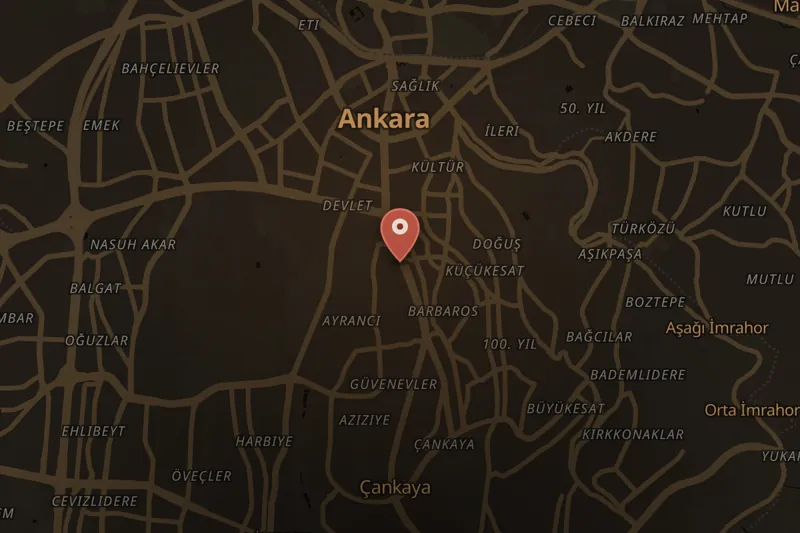
On 1 February 2013, at approximately 13:15 local time (11:15 UTC), a suicide bomber detonated an explosive device at a side entrance to the United States embassy in the Kavaklıdere area of Ankara, Turkey. The device consisted of 6 kilograms (13 lb) of trinitrotoluene (TNT) and a hand grenade. The blast killed a Turkish security guard and wounded three other people.
The security guard killed in the attack was identified as Mustafa Akarsu. Journalist Didem Tuncay was seriously wounded in the explosion and was rushed to hospital. Francis J. Ricciardone, Jr., the United States ambassador to Turkey at the time, visited Tuncay in hospital afterward and described her as "one of the best," adding that she had been due to have tea with him at the embassy. Ricciardone also paid tribute to Akarsu, calling him "a hero who [had] lost his life to protect the embassy staff."
The bombing was denounced as an act of terrorism by both the Turkish and United States governments. The Revolutionary People's Liberation Party–Front (DHKP/C), a Marxist–Leninist organization designated as a terrorist group by both the Turkish and United States governments, claimed responsibility for the attack in a statement published on its website the following day, 2 February 2013. In its statement, the group cited Turkish support for the opposition in the Syrian civil war as a motivation for the attack.
Turkish officials identified the bomber as Ecevit Şanlı, a 30-year-old member of the group, and the organization's statement confirmed that Şanlı had carried out the attack and had "sacrificed himself." Şanlı had previously been imprisoned from 1997 to 2000 for his involvement in an attack against a military guest house in Istanbul using a flamethrower. Following the embassy bombing, three additional people were arrested in Istanbul and Ankara in connection with their alleged roles in the attack.

This dossier is based on the Wikipedia article covering the incident, which is itself supported by contemporaneous news coverage from BBC News and Reuters at the time of the bombing.
Key facts
- Victims
- Mustafa Akarsu, Didem Tuncay
- Date
- 2013
- Location
- United States Embassy, Kavaklıdere, Ankara, Turkey
- Case status
- solved
Case timeline
1997
Ecevit Şanlı, later identified as the embassy bomber, was imprisoned for his involvement in an attack against a military guest house in Istanbul using a flamethrower.
2000
Şanlı was released from prison after serving his sentence for the 1997 attack.
2013-02-01
A suicide bomber detonated explosives at a side entrance to the United States embassy in Ankara, killing a security guard and wounding three others, including a journalist.
2013-02-02
The Revolutionary People's Liberation Party–Front (DHKP/C) claimed responsibility for the bombing in a statement published on its website, identifying Ecevit Şanlı as the bomber.
Best coverage
No approved coverage links are attached yet.
People
Ecevit Şanlı
CHARGEDIdentified by Turkish officials as the suicide bomber; named by the Revolutionary People's Liberation Party–Front as the perpetrator who died carrying out the attack
citation on file
Mustafa Akarsu
VICTIMTurkish security guard killed in the bombing while on duty at the embassy
citation on file
Didem Tuncay
VICTIMJournalist seriously wounded in the explosion
citation on file
Places
Common questions
- What happened to the victim?
- On 1 February 2013, a suicide bomber attacked the United States embassy in Ankara, Turkey, killing a Turkish security guard and wounding three others, including a journalist.
- Where did the bombing happen?
- United States Embassy, Kavaklıdere, Ankara, Turkey.
- What is the current status of the case?
- Status: solved.
Sources
- 2013 United States embassy bombing in Ankarawikipedia · Wikipedia · 2026-07-07
- Contemporaneous coverage — BBC Newsnews · BBC News · 2026-07-07
- Contemporaneous coverage — Reutersnews · Reuters · 2026-07-07