Background
The Charrúa were an indigenous people who predominated in the lands between the Paraná and Uruguay rivers and later in the Banda Oriental, the territory that today comprises Uruguay and parts of southern Brazil. Following European contact and centuries of conflict, displacement, and disease, the Charrúa population had been severely diminished by the early 19th century. Although Charrúa fighters played a role in Uruguay's independence movement, including service under José Gervasio Artigas, post-independence political currents increasingly viewed the Charrúa's semi-nomadic way of life as incompatible with the organization of the new state. Settlers in northern Uruguay accused Charrúa communities of banditry and violence, and in February 1830 Fructuoso Rivera's rival Juan Antonio Lavalleja petitioned him to confront the Charrúa on settlers' behalf. Rivera, who had previously maintained friendly relations with Charrúa communities, agreed to lead what became known as the Campaña de Salsipuedes.
The Massacre
In early 1831, Rivera summoned Charrúa chiefs — Venado, Polidoro, Rondeau, and Juan Pedro — along with their families to a meeting on the banks of the Great Salsipuedes Creek, telling them the army needed their help protecting the border region. Hundreds of Charrúa arrived on 11 April 1831. As a show of good faith, an army general released his horses, and the Charrúa chiefs reciprocated. As the gathering progressed and the Charrúa became intoxicated, the army — reportedly 1,200 soldiers under the command of Bernabé Rivera, the president's nephew — surrounded and attacked them. According to official reporting, 40 Charrúa were killed and 300 taken prisoner, with an uncertain number escaping; 9 soldiers were wounded and 1 killed.
Aftermath
Survivors were forcibly marched roughly 260 km to Montevideo and sold into slavery. Follow-up military operations pursued Charrúa who had escaped or been absent from the initial massacre, including an attack near the Queguay Grande River and an ambush at Mataojo on 17 August 1831 that killed 15 and captured 80. In 1832, Bernabé Rivera and several soldiers were killed in a failed ambush by Charrúa survivors at the Yacaré Cururú Creek. Separately, four captured Charrúa — Senacua Sénaqué, Vaimaca-Pirú Sira, Laureano Tacuavé Martínez, and María Micaela Guyunusa — were purchased by French ex-general François Curel and transported to Paris, arriving in 1833, where they were exhibited in a human zoo. Guyunusa gave birth to a daughter in Paris; she, Sénaqué, and Sira died within their first year in France, and the infant girl died the following year. The eventual fate of Tacuavé, the last of the four, remains undocumented.
Legacy
Historians have described the massacre as a decisive event in the destruction of the Charrúa as a cohesive people with a shared identity, territory, and collective memory, and it contributed to their erasure from Uruguayan public memory for generations. The Charrúa language is considered extinct. However, communities of Charrúa descendants survived in Uruguay, Argentina, and Brazil, with estimated numbers of descendants ranging from 160,000 to 300,000. Organizations such as ADENCH (founded 1989) and CONACHA (founded 2005) have worked to promote recognition of Charrúa identity and heritage.

Key facts
- Victims
- Polidoro, Vaimaca-Pirú Sira, Venado, Rondeau, María Micaela Guyunusa, Laureano Tacuavé Martínez, Senacua Sénaqué, Juan Pedro
- Date
- 1831
- Location
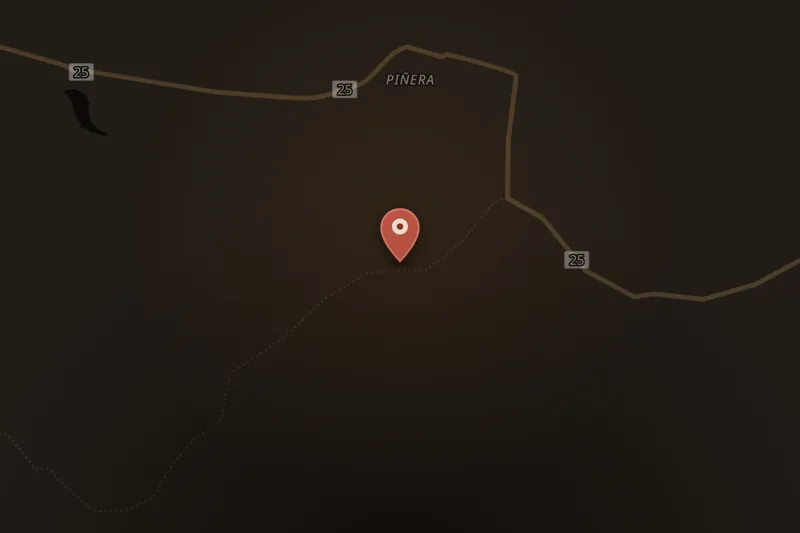
- Great Salsipuedes Creek, Uruguay
- Case status
- solved
Case timeline
1732-03-22
Peace treaty signed between the Charrúa and Spanish colonists, mutually recognizing laws and sovereignty.
1830-02
Juan Antonio Lavalleja petitions Fructuoso Rivera to confront the Charrúa on behalf of settlers.
1831-04-11
Uruguayan Army forces under Bernabé Rivera attack Charrúa gathered at the Great Salsipuedes Creek; official reports state 40 killed and 300 taken prisoner.
1831-08-17
Follow-up ambush at Mataojo kills 15 Charrúa and captures 80; some escape including chief Polidoro.
1832-06-17
Charrúa survivors ambush and kill Bernabé Rivera along with 2 officers and 9 soldiers at the Yacaré Cururú Creek.
1833-02-25
Four captured Charrúa disembark with François Curel en route to being exhibited in a human zoo in Paris.
1833-05-07
The four Charrúa arrive in Saint-Malo before being transported to Paris.
1833-09-20
María Micaela Guyunusa gives birth to a daughter in Paris.
1989-08
Asociación de Descendientes de la Nación Charrúa (ADENCH) founded to preserve Charrúa history and culture.
2005
Consejo de la Nación Charrúa (CONACHA) founded by 10 communities and organizations.
Best coverage
No approved coverage links are attached yet.
People
Fructuoso Rivera
LAW ENFORCEMENTPresident of Uruguay who led the Uruguayan Army in the attack as part of the Campaña de Salsipuedes; not formally charged as the events occurred under state authority in 1831.
Polidoro
VICTIMCharrúa chief present at the massacre; escaped a later attack at Mataojo.
Vaimaca-Pirú Sira
VICTIMCharrúa warrior, previously served under José Gervasio Artigas, taken prisoner and exhibited in a Paris human zoo, where he died within a year of arrival.
Venado
VICTIMCharrúa chief reportedly shot dead at the start of the massacre.
Rondeau
VICTIMCharrúa chief summoned to and present at the Salsipuedes gathering.
María Micaela Guyunusa
VICTIMCharrúa woman, pregnant at capture, taken prisoner and exhibited in a Paris human zoo, where she gave birth and died within a year of arrival.
Bernabé Rivera
LAW ENFORCEMENTArmy commander and nephew of President Rivera who led the 1,200 soldiers who carried out the attack; later killed in an ambush by Charrúa survivors in 1832.
Laureano Tacuavé Martínez
VICTIMCharrúa man taken prisoner and exhibited in a Paris human zoo; adopted Guyunusa's daughter after her death; his ultimate fate is undocumented.
Senacua Sénaqué
VICTIMCharrúa medicine man taken prisoner and later sold to be exhibited in a Paris human zoo, where he died within a year of arrival.
Juan Pedro
VICTIMCharrúa chief summoned to the Salsipuedes gathering; later led a group ambushed at Mataojo in August 1831.
Roles reflect public records and court outcomes at the time of writing — supporting citations are on file under Sources.
Archival records

archival location
PlacaMonumentoSalsipuedesCONACHA
Credit: Damiantorko · CC BY-SA 4.0 · Source
Places
Common questions
- What happened to the victim?
- On 11 April 1831, the Uruguayan Army under President Fructuoso Rivera attacked Charrúa people gathered under a false pretext at the Great Salsipuedes Creek, killing dozens and capturing hundreds who were later marched to Montevideo and sold into slavery; the event is remembered as a decisive blow in the destruction of the Charrúa as a people.
- Where did the massacre happen?
- Great Salsipuedes Creek, Uruguay.
- What is the current status of the case?
- Status: solved.
Sources
- ENCYCLOPEDICMassacre of SalsipuedesWikipedia · 2026-07-07
- PRESSIn Uruguay, indigenous people are fighting to prove they existThe Globe and Mail · 2026-07-07
- OFFICIAL / AGENCYBackground Note: Uruguay2009-2017.state.gov · 2026-07-07
Record history
- First published
- JUL 07, 2026