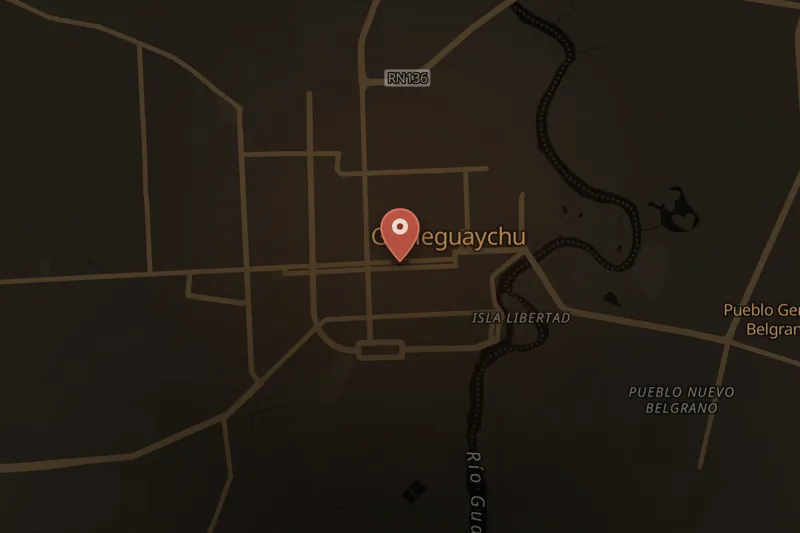
Fernando Gabriel Pastorizzo, 20, was found dead on 26 December 2017 in the Tomás de Rocamora neighbourhood of Gualeguaychú, Entre Ríos, Argentina, lying beside his motorcycle with two gunshot wounds. There were no signs of robbery. Shortly before his death, Pastorizzo had been driving his girlfriend, Nahir Mariana Galarza, then 19, on his motorcycle; she then walked roughly twenty blocks back to her home. Hours after the body was discovered, Galarza posted a photograph of herself and Pastorizzo on social media describing five years together "fighting, going forward and coming back, but always with the same love."
Galarza confessed her role in the killing, first to her parents and then to authorities, stating she had taken her father's 9mm handgun, shot Pastorizzo once in the back and once in the chest, and returned the weapon to its place without her father's knowledge. Private security camera footage showed a person resembling Galarza walking near the crime scene at approximately 5:22 a.m.; prosecutors described this footage as pivotal, though her family disputed the identification.
The nature of the relationship between Galarza and Pastorizzo, which began around 2012, became a central point of dispute. Galarza's defense argued the pair had only casual sexual encounters, while prosecutors maintained they were a couple, a position the court ultimately accepted based on text messages, photographs, and evidence of a 2016 trip to Brazil taken with Galarza's family. Evidence including messages and social media posts also indicated the relationship involved violence and repeated conflict; Galarza's family and defense argued she was the one subjected to abuse by Pastorizzo, but the court rejected this claim, finding no evidence that Pastorizzo had been the aggressor.
Galarza was charged with "bond-aggravated homicide" and held in preventive detention until her conviction. On 3 July 2018, she was found guilty of aggravated murder — aggravated by the existence of a stable romantic relationship with the victim — and sentenced to life imprisonment, effectively requiring her to serve at least 35 years. The court rejected additional aggravating factors proposed by the prosecution related to firearm use and infidelity. Forensic analysis concluded the shots were not accidental, finding the second shot in particular was fired deliberately from close range. At the time of sentencing, Galarza, aged 19 years and 7 months, became the youngest woman in Argentina to receive a life sentence.
Following conviction, Galarza was held at a police station before being transferred in September 2018 to Unidad Penal 6 de Paraná, the only women's penitentiary in Entre Ríos. Appeals filed by her defense were rejected by an appellate court in August 2019 and by the Supreme Justice Court of Entre Ríos in March 2020. In January 2022, with her mother's assistance, Galarza engaged new legal representation and reported her father for aggression; the accusation was rejected by authorities, though a restraining order was later issued preventing her father from approaching her mother or the penitentiary. The case has since been the subject of books, a documentary, and a feature film.


 Credit: DamiantorkoCC BY-SA 4.0SourceSOLVEDListen