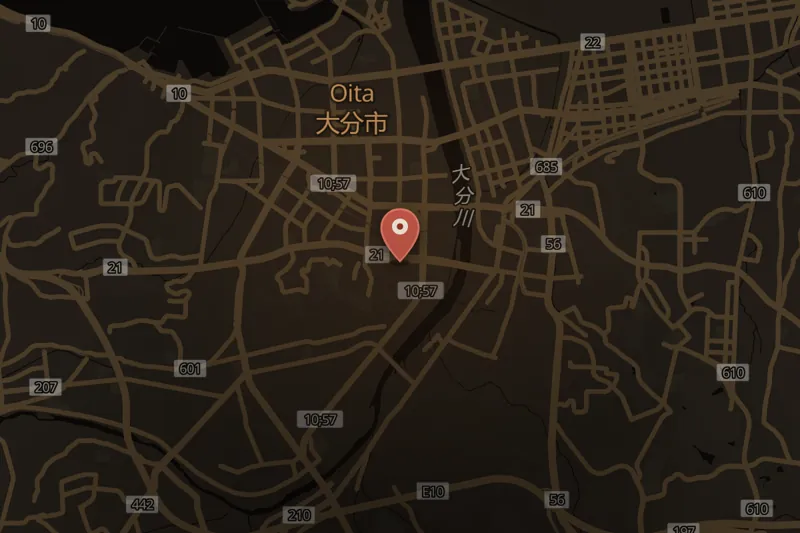
In the early hours of 27–28 June 1981, a female first-year student at a junior college, then 18 years old, was found dead in her apartment in the Midori-sō building in Rokubo-chō, Oita City, Oita Prefecture, Japan. She lived in room 203 with her older sister. On the night of the incident, the sisters had attended a concert and after-party with fellow students; the victim returned home early, declining to join a second gathering. Neighbors reported hearing screaming, sounds of struggle, and voices in the apartment around midnight. When her sister returned home around 12:30 a.m. on 28 June, she found the victim lying dead on the kitchen floor, naked apart from a T-shirt, with her overalls wrapped around her neck. Police were called at 12:51 a.m.
An autopsy determined the cause of death was asphyxiation from manual pressure on the neck followed by strangulation with the victim's overalls. Semen recovered from the body indicated a perpetrator with blood type B, and saliva evidence found in the room was also linked to a person with blood type B, differing from the victim's blood type A. Investigators noted signs of struggle but no indication of a search for valuables, no footprints, and no evidence of forced entry, leading local press coverage to suggest the perpetrator was known to the victim.
Ryoichi Kutsukake, who lived in the adjacent room 202 and had blood type B, became a suspect. He was arrested for an unrelated assault in December 1981 amid public pressure on police to resolve several unsolved local crimes, and was formally arrested for the murder on 14 January 1982 after a hair analysis by the National Research Institute of Police Science reportedly matched body hairs from the crime scene to Kutsukake. During the investigation and early trial he made statements about being in the victim's room but later asserted his innocence.
In March 1989, the first trial convicted Kutsukake based largely on his earlier statements and the hair analysis, sentencing him to life imprisonment. On appeal, the Fukuoka High Court ordered its own DNA analysis, and significant criticisms and inconsistencies emerged regarding both the hair analysis and DNA testing. Kutsukake was granted bail in August 1994, an unusual step in a Japanese murder case, and on 30 June 1995 he was acquitted. Prosecutors dropped their appeal on 13 July 1995, and the verdict became final on 14 July 1995. The appellate court's ruling suggested the existence of a perpetrator other than Kutsukake. Despite roughly a year remaining before the statute of limitations for murder expired, Oita Prefectural Police did not reopen the investigation, and the statute of limitations lapsed on 28 June 1996, leaving the case unsolved. The case is noted in Japan as the first in which DNA testing was used in a court of law and as a case that contributed to the establishment of the duty solicitor system.


 SOLVEDListen