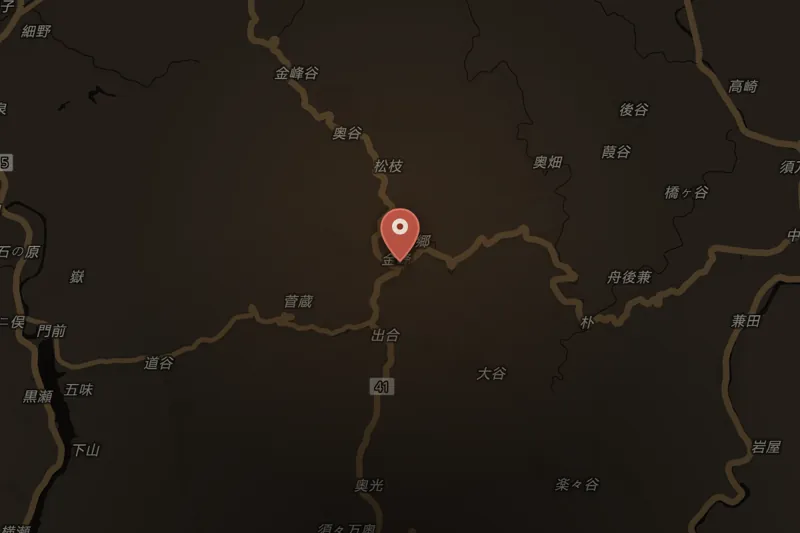
On July 21 and 22, 2013, five people died in a series of killings and fires in the hamlet of Mitake, part of Shūnan city in Yamaguchi Prefecture, Japan. On the first day, the bodies of a woman and a married couple, all in their 70s, were found inside two houses that had been destroyed by fire. Authorities determined the fires to be suspicious. The following morning, police discovered the bodies of two more elderly residents in homes that had not been burned, located several hundred meters from the destroyed houses. In total, the deaths accounted for roughly one third of the hamlet's small population.
During the investigation, police found a haiku posted in the window of a nearby house belonging to a 63-year-old man who had gone missing from the area following the killings. The poem read, "Setting a fire—smoke gives delight—to a country fellow." The man had left behind two cars and his dog. He had reportedly moved to Mitake around 1993 to care for his aging parents, who died around 2006, and was known to be a neighbor of the victims.
The disappearance triggered a manhunt in the wooded, rural area surrounding the hamlet. On July 26, 2013, the suspect, later identified as Kosei Homi, was located and arrested in a wooded area near Mitake and taken to a nearby police station for questioning.
On December 27, 2013, the Yamaguchi District Public Prosecutors Office formally charged Homi with five counts of murder and arson in connection with the deaths and the two house fires. The case proceeded to trial, and on July 28, 2015, Homi was found guilty on all counts and sentenced to death. He appealed the death sentence, but the Supreme Court of Japan denied the appeal on July 18, 2019, upholding the sentence.
The case drew international attention in part due to the unusual scale of the killings relative to the hamlet's small population and the haiku left at the suspect's residence. Coverage at the time noted the manhunt for the missing suspect in the days between the discovery of the bodies and his arrest.

 Credit: ちよ氏CC BY-SA 3.0SourceUNSOLVEDListen