Start here
Truly Barbaric: Teen Boys Kidnap, Torment & Murder 17-Year-Old Girl Junko Furuta

Annie Elise's 55-minute breakdown, the fullest single telling on file.
Watch on YouTubeBefore you continue
This case involves sexual violence. Casepin presents the record in neutral, non-graphic language. Choose whether to continue.
Solved case · 1980s
Also known as Concrete-Encased High School Girl Murder Case · Joshikōsei Konkurīto-zume Satsujin Jiken
 Junko FurutaCredit: Furuta family·Editorial use·Source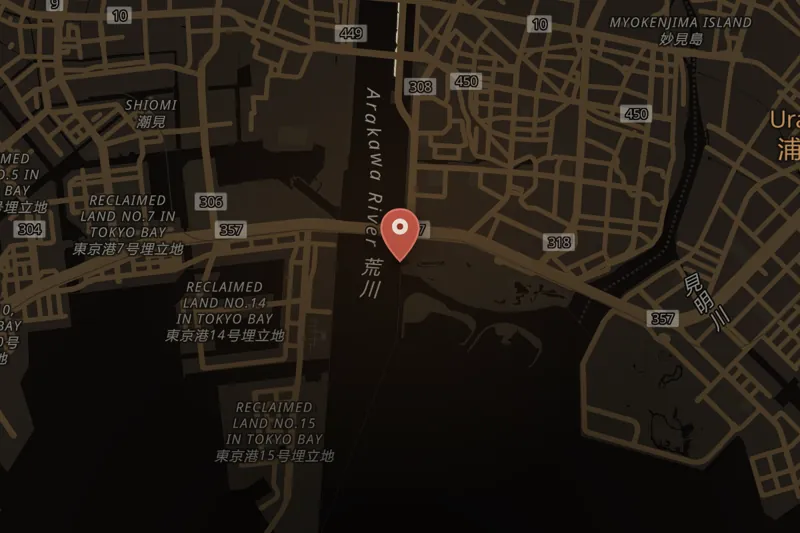
The short answer
Junko Furuta, a 17-year-old Japanese high school student, was abducted, held captive, and repeatedly raped and tortured over 40 days by a group of male teenagers before being killed in January 1989; her body was found encased in concrete inside a metal drum.
Start hereTruly Barbaric: Teen Boys Kidnap, Torment & Murder 17-Year-Old Girl Junko FurutaAnnie Elise · 55 minThe coverage index
2 pieces from 2 creators: ranked, with duplicates removed and short clips set aside.
Start here
Video · YouTube · 55 min · 2024
Annie Elise's 55-minute breakdown, the fullest single telling on file.
Watch on YouTube
Titles and descriptions are the creators’ own and may not reflect current legal status. The sourced facts are in the file below. Players load only when you press play. Suggest coverage we’re missing.
The case file
Junko Furuta was a 17-year-old senior at Yashio-Minami High School in Misato, Saitama Prefecture, Japan, who lived with her parents and two brothers. She worked a part-time job to save for a graduation trip and had accepted a post-graduation job at an electronics retailer. She was described by friends and teachers as well liked, with good grades and few absences.
On the evening of 25 November 1988, Furuta was approached and abducted by a group of male teenagers, including Hiroshi Miyano, Jō Ogura, Shinji Minato, and Yasushi Watanabe, after being knocked off her bicycle. Miyano, falsely claiming to be a yakuza member, coerced her into compliance through threats against her and her family. She was taken to a hotel where she was raped, and subsequently confined in a room at Minato's family home in Adachi, Tokyo, for 40 days. During this period, Furuta's parents reported her missing to police, but the group forced her to call her mother multiple times to claim she was safe. Two additional teenagers, identified in court documents as "E" and "F," participated in raping her but not in her killing.
Over the following weeks, Furuta was subjected to repeated physical and sexual assault, including burning, beatings, forced ingestion of alcohol and other substances, and insertion of objects causing injury. By late December 1988 she was severely malnourished and had sustained disfiguring injuries. On 4 January 1989, following an incident in which Miyano lost money gambling, the group subjected Furuta to a final, sustained assault lasting roughly two hours, during which she was burned and beaten; she died that morning. The group then encased her body in concrete inside a metal drum and dumped it at a vacant lot on Wakasu island in Kōtō, Tokyo.
Miyano and Ogura were arrested in early 1989 in connection with an unrelated gang rape; during police questioning, Miyano disclosed the location of Furuta's body. The drum was recovered on 29 March 1989, and Furuta was identified by fingerprints. Additional suspects, including Minato and Watanabe, were subsequently arrested.
Because all defendants were legal juveniles, the court initially sealed their identities, though a tabloid later published their names. In July 1990, the Tokyo District Court convicted all of abduction for sexual assault, confinement, rape, assault, murder, and abandonment of a corpse. Sentences ranged from a range of three to four years up to seventeen years. Following appeals, the Tokyo High Court re-sentenced three of the defendants to longer terms in July 1991, with sentences ultimately ranging from five years to twenty years. The case drew significant public criticism over the perceived leniency of sentencing relative to the severity of the crime, though legal professionals surveyed at the time generally considered the sentences consistent with judicial precedent for juvenile offenders. The case is widely described in Japanese public discourse as among the most severe instances of juvenile crime in the country's post-war history.
17 dated entries · 1971–2022
Junko Furuta is born.
Furuta begins a part-time job at a plastic molding factory to save money for a graduation trip.
The group abducts and gang-rapes a 19-year-old woman in Adachi, Tokyo.
Furuta is abducted in Misato, Saitama Prefecture, and coerced by Hiroshi Miyano.
Furuta is confined at Shinji Minato's family home in Adachi, Tokyo, beginning a 40-day captivity.
Furuta's parents report her disappearance to police.
Furuta is gang-raped by the group, including two additional teenagers; further torture follows.
The group abducts and gang-rapes a second 19-year-old woman in Adachi, during Furuta's captivity.
Furuta dies after a prolonged assault by the group.
The group encases Furuta's body in concrete inside a metal drum and dumps it at Wakasu, Kōtō, Tokyo.
The drum containing Furuta's body is recovered and she is identified via fingerprints.
Furuta's funeral is held.
The Tokyo District Court convicts and sentences all four main defendants.
The Tokyo High Court re-sentences three defendants to longer prison terms on appeal.
The Supreme Court of Japan denies Yasushi Watanabe's appeal.
Yasushi Watanabe dies at age 49.
Jō Ogura (later known as Kamisaku) dies in an accident at age 51.
5 named in this file
Victims first. Every legal label is set from public records and court outcomes, not from the prose.
17-year-old high school student who was abducted, raped, tortured, and killed over a 40-day period.[3]
Convicted of abduction, confinement, rape, assault, murder, and abandonment of a corpse; originally sentenced to 17 years, re-sentenced to 20 years on appeal.[3]
Convicted alongside co-defendants; sentenced to five to ten years in prison.[3]
Convicted alongside co-defendants; originally sentenced to five to six years, re-sentenced to five to nine years on appeal.[3]
Convicted alongside co-defendants; originally sentenced to three to four years, re-sentenced to five to seven years on appeal; final appeal to the Supreme Court denied in 1992.[3]
From the record
3 cited
Coverage is not a source: every fact in this file rests on the records below.
Pressnewsdig.tbs.co.jpAccessed Jul 5, 2026
Presstokyoreporter.comAccessed Jul 5, 2026
EncyclopedicWikipediaAccessed Jul 5, 2026
Trust
Are you family of someone named in this file? Corrections and removal requests from victims’ families are prioritized.
Near this case
 SOLVEDListen
Ichikawa, Chiba Prefecture, Japan · 2000s
English teacher Lindsay Hawker was murdered in Japan in 2007, and Tatsuya Ichihashi was convicted and sentenced to life imprisonment in 2011.
Mitsubishi Heavy Industries headquarters, Marunouchi, Tokyo, Japan · 1970s
On 30 August 1974, a bomb planted by the East Asia Anti-Japan Armed Front exploded at Mitsubishi Heavy Industries' Tokyo headquarters, killing eight people and injuring at least 376 others in what was then Japan's deadliest terrorist attack.
 Credit: Rs1421·CC BY-SA 3.0·SourceSOLVEDListen
Hotel Grand Palace, Tokyo, Japan · 1970s
On August 8, 1973, South Korean dissident leader Kim Dae-jung was abducted from a Tokyo hotel by agents linked to South Korea's Korean Central Intelligence Agency (KCIA); he was found alive at his home in Seoul five days later.
 Credit: Jgb23·CC BY-SA 4.0·SourceSOLVEDListen
Blacktown / Prospect, New South Wales, Australia · 1986
Anita Cobby, a 26-year-old nurse, was abducted while walking home from Blacktown railway station in Sydney on 2 February 1986, then raped, tortured and murdered by five men. Her body was found two days later; all five perpetrators were convicted in 1987 and sentenced to life imprisonment without parole.
 Credit: D4444n at en.wikipedia·CC BY-SA 3.0·SourceSOLVEDListen
Grand Hotel, Brighton, England · 1984
On 12 October 1984 the IRA detonated a long-delay bomb at the Grand Hotel in Brighton in an attempt to assassinate Prime Minister Margaret Thatcher and her cabinet during the Conservative Party Conference. Five people were killed and more than thirty injured; Thatcher was uninjured. IRA member Patrick Magee was convicted in 1986 and sentenced to eight concurrent life terms.
 Credit: English Wikipedia·Editorial use·SourceSOLVEDListen
Mercy Road offramp, Interstate 15, San Diego County, California · 1986
Cara Knott, a 20-year-old San Diego State University student, disappeared on December 27, 1986, while driving home from her boyfriend's house. Her body was found the next day below a bridge near an isolated freeway offramp. California Highway Patrol officer Craig Alan Peyer was convicted of her murder in 1988 after a second trial.
Also covered by
 Credit: Family/Instagram photograph, widely distributed in press coverage·Editorial use·SourceSOLVEDListen
Moscow, Idaho · 2022
Four University of Idaho students—Madison Mogen, Kaylee Goncalves, Ethan Chapin, and Xana Kernodle—were fatally stabbed inside an off-campus house in Moscow, Idaho, in the early morning hours of November 13, 2022. Bryan Kohberger, a criminology PhD student at nearby Washington State University, was arrested that December and pleaded guilty in 2025, receiving four consecutive life sentences.
 Credit: Wfsa 12 News·Editorial use·SourceSOLVEDListen
Auburn, Alabama · 2019
Aniah Blanchard, a 19-year-old Alabama college student, disappeared from Auburn in October 2019 and was later found dead of a gunshot wound; the man convicted of her murder was sentenced to life in prison in 2026.
 Credit: Instagram/@gabspetito, widely distributed in press coverage·Editorial use·SourceSOLVEDListen
Bridger–Teton National Forest, Wyoming · 2021
Gabby Petito, a 22-year-old travel vlogger, was killed by strangulation and blunt-force trauma in August 2021 while on a cross-country van trip with her fiancé, Brian Laundrie. Laundrie returned to Florida alone, was named a person of interest, and later died by suicide, leaving a note admitting he had killed her.
 Credit: Disability Day of Mourning memorial (disability-memorial.org)·Editorial use·SourceSOLVEDListen
Pleasant Prairie, Wisconsin · 2008
Julie Jensen was found dead in her Pleasant Prairie, Wisconsin home on December 3, 1998, after being poisoned with antifreeze. A letter she wrote before her death naming her husband, Mark Jensen, as a suspect became central evidence. Mark Jensen was convicted in 2008, had that conviction overturned on appeal in 2015, and was convicted again at a second trial in 2023.