Skip to content
Casepin

Solved case · 1973

Kidnapping of Kim Dae-jung

SOLVED
Updated
Updated Jul 7, 2026
Palace-Hotel-Tokyo-03Palace-Hotel-Tokyo-03Credit: Rs1421CC BY-SA 3.0Source

The short answer

Kidnapping of Kim Dae-jung in brief

On August 8, 1973, South Korean dissident leader Kim Dae-jung was abducted from a Tokyo hotel by agents linked to South Korea's Korean Central Intelligence Agency (KCIA); he was found alive at his home in Seoul five days later.

Key facts

Year
1973
Place
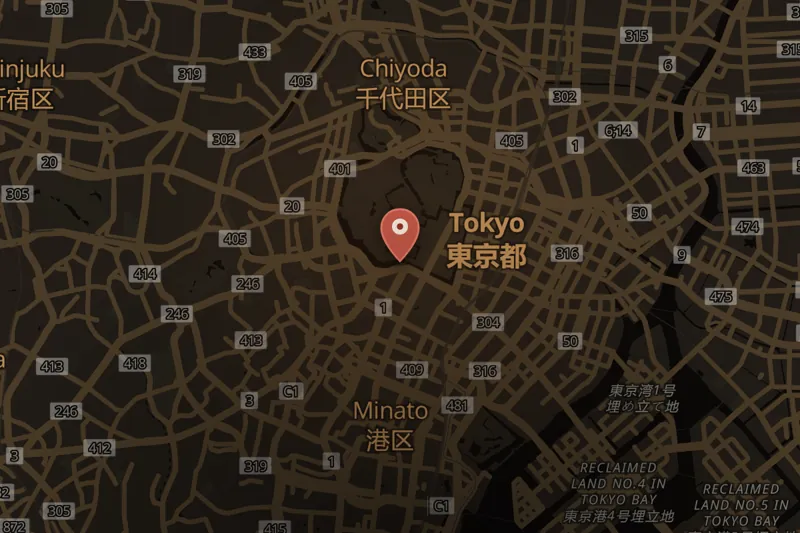
Hotel Grand Palace, Tokyo, Japan
Status
SOLVEDSolved
Victim
Kim Dae-jung
Outcome
No conviction on file

The coverage index

Where to watch & listen

No one's coverage is attached to this file yet.

Know great coverage of this case?

A documentary, a podcast episode, a careful long-form video. Suggest it and an editor will review it before it appears here.

Suggest coverage for Kidnapping of Kim Dae-jung

The case file

What happened

On August 8, 1973, South Korean opposition politician Kim Dae-jung was kidnapped in Tokyo, Japan, by a group of unidentified men. Kim, a leading dissident against the government of President Park Chung Hee, had run against Park in the 1971 South Korean presidential election as the New Democratic Party candidate, winning 45.3% of the vote to Park's 53.2%. After the election, Kim was involved in a car accident that left him with a permanent hip injury, which he believed to be an assassination attempt. He subsequently went into exile in Japan, where he began organizing a pro-democracy movement following Seoul's declaration of the Yushin Constitution in October 1972.

On the day of the kidnapping, Kim was attending a meeting with the leader of the Democratic Unification Party in Room 2211 of the Hotel Grand Palace in Tokyo. At around 1:19 pm, as he left the room, he was abducted. The rest of the hotel floor was reportedly rented out by a yakuza syndicate run by South Korean national Machii Hisayuki, who was known to have extensive ties to the KCIA. Kim was taken to the adjacent Room 2210, drugged, and rendered unconscious. He was then moved to Osaka and subsequently to Seoul.

While aboard a boat bound for Korea, Kim's hands and feet were tied with weights, indicating the kidnappers intended to drown him in the Sea of Japan. This plan was reportedly abandoned when the Japan Coast Guard began pursuing the kidnappers' boat and fired an illuminating shell as Kim was being brought onto the deck. Kim was later released in Busan and was found alive at his house in Seoul five days after the kidnapping.

Some reports indicate that Kim's life was saved through the intervention of U.S. Ambassador Philip Habib, who learned of the KCIA's involvement and mobilized senior embassy personnel to inquire about Kim's whereabouts among prominent Koreans, acting without waiting for authorization from Washington due to the urgency of the situation.

Decades later, on October 24, 2007, South Korea's National Intelligence Service (NIS), the successor agency to the KCIA, admitted following an internal inquiry that the KCIA had carried out the kidnapping, and stated that the operation had at least tacit backing from then-President Park Chung Hee.

Kim Dae-jung went on to survive further threats to his life and was later elected President of South Korea. The 2007 NIS admission remains the primary official acknowledgment of state involvement in the case.

5 dated entries · 1971–2007

Timeline

  1. Kim Dae-jung runs against incumbent President Park Chung Hee in the South Korean presidential election, losing narrowly.

  2. Seoul declares the Yushin Constitution; Kim Dae-jung, in Japan for medical treatment, begins an exile pro-democracy movement.

  3. Kim Dae-jung is abducted from the Hotel Grand Palace in Tokyo by unidentified men linked to the KCIA.

  4. Kim Dae-jung is found alive at his house in Seoul, five days after the kidnapping.

  5. South Korea's National Intelligence Service admits the KCIA carried out the kidnapping with at least tacit backing from President Park Chung Hee.

1 named in this file

People

Victims first. Every legal label is set from public records and court outcomes, not from the prose.

  • Kim Dae-jung

    VICTIM

    South Korean dissident leader and future president, abducted from Tokyo on August 8, 1973 and later found alive in Seoul.[3]

3 cited

Sources

Coverage is not a source: every fact in this file rests on the records below.

  • 2 Press
  • 1 Encyclopedic
  1. Kim Dae-jung's Close Call: A Tale of Three Dissidents

    PressThe Washington PostAccessed Jul 7, 2026

  2. Kim Dae-jung: A Leader's Profile

    PressCNNAccessed Jul 7, 2026

  3. Kidnapping of Kim Dae-jung

    EncyclopedicWikipediaAccessed Jul 7, 2026

Trust

Record history

First published
Jul 7, 2026
Last verified against sources
Jul 7, 2026
Corrections
None

Are you family of someone named in this file? Corrections and removal requests from victims’ families are prioritized.