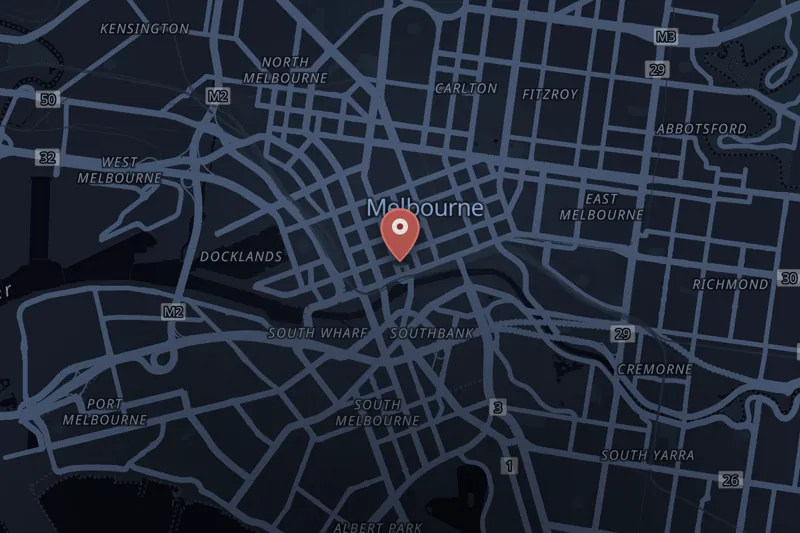
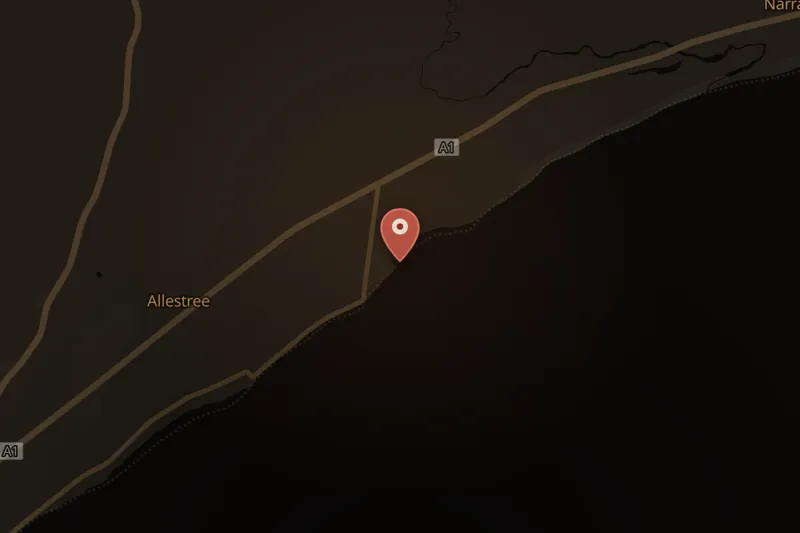
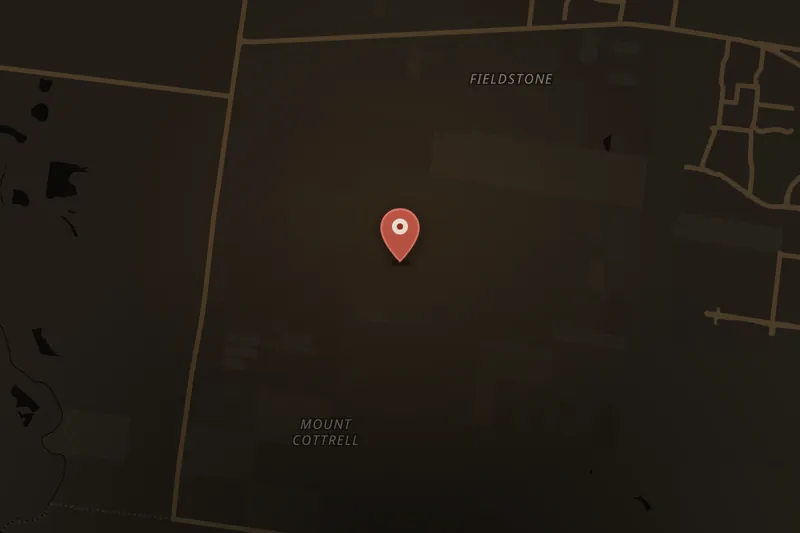
In 1836, in the Port Phillip District of the colony of New South Wales (present-day Victoria), squatter Charles Franks was employed by farmer George Armytage to secure land from Indigenous Australians. Franks had used lead as a poison against Indigenous Australians. Franks arrived at Point Gellibrand (modern Williamstown) on 23 June 1836 with 500 sheep and reached the Mount Cottrell area by 2 July. He and a partner, George Smith, pitched a tent near thick bushland, roughly eight miles from the nearest station. After Smith left camp to gather supplies, a newspaper report of the time stated that Franks and convict shepherd Thomas Flinders were visited by five Aboriginal people — two men, two women, and a boy. Franks and Flinders were later found dead near their hut by Armytage and a squatter named Malcolm Malcolm, their bodies mutilated. Both men had been speared to death by a member of the Wathaurung tribe.
A group of men gathered at Franks's station to search for those responsible, assisted by Aboriginal trackers including a Bunorong man, Derrimut. A few days later, the search party located a group of about 80 Indigenous Australians. The pursuing party of 17 — including Henry Batman, Mr Guy, George Hollins, Michael Leonard, David Pitcairn, Alexander Thomson, William Winberry, John Wood, Aboriginal men Benbow, Derrimut, Baitlange (Ben Benger) and Ballyan, and Sydney Aboriginal men Bullett, Stewart and Joe the marine — tracked the group to a location not far from where Franks and Flinders had been killed and observed them overnight. At dawn on 16 July 1836, the party opened fire from approximately 91 metres (100 yards) away, resulting in the deaths of a number of Aboriginal people.
Accounts of the death toll vary. Early media reports stated five Aboriginal people were killed, while the Cornwall Chronicle, published in Tasmania, reported days later that the group had been "annihilated." Aboriginal oral history holds that there were 35 victims. Research published in 2021 by the University of Newcastle suggests ten people were killed.
Contemporary press coverage of the massacre was divided. Some outlets described the killings as deserved retaliation and a "warning to the natives," while others, including Tasmania's Colonial Times, condemned the killings as unlawful and warned they would provoke further conflict, questioning whether "a whole community" should be "murdered in cold blood for the offence of three."
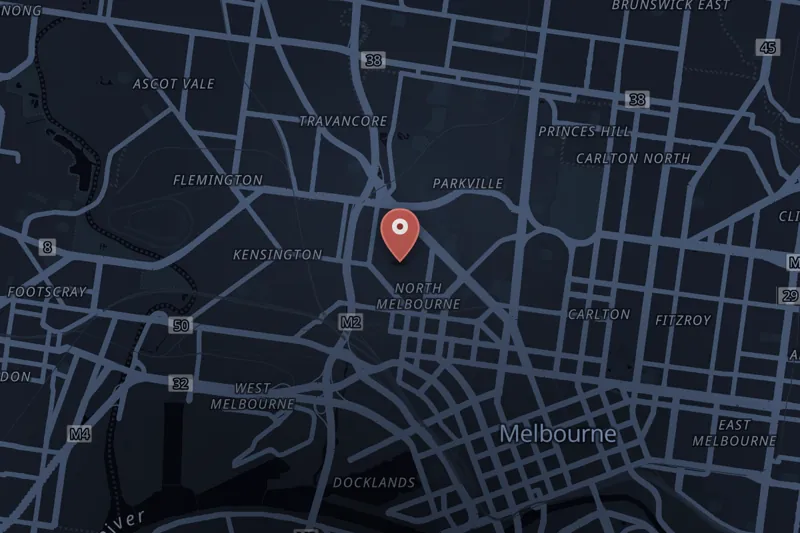
Newly appointed Port Phillip Magistrate William Lonsdale arrived at Point Gellibrand around late September 1836 to formalise the settlement of Melbourne and subsequently investigated the incident. Members of the raiding party were interviewed and acknowledged firing on the Aboriginal group but stated they did not know whether anyone had been wounded. The killing of Franks — noted as the first free settler killed in frontier violence in the Port Phillip District — and the subsequent reprisal are described as foreshadowing further conflict across Victoria's western district.

 COLDListen