Skip to content
Casepin

Solved case · 2008

Murder of Andrew Burns

Also known as Killing of Andrew Burns · Andrew Burns's murder

SOLVEDCONVICTED
Updated
Updated Jul 6, 2026
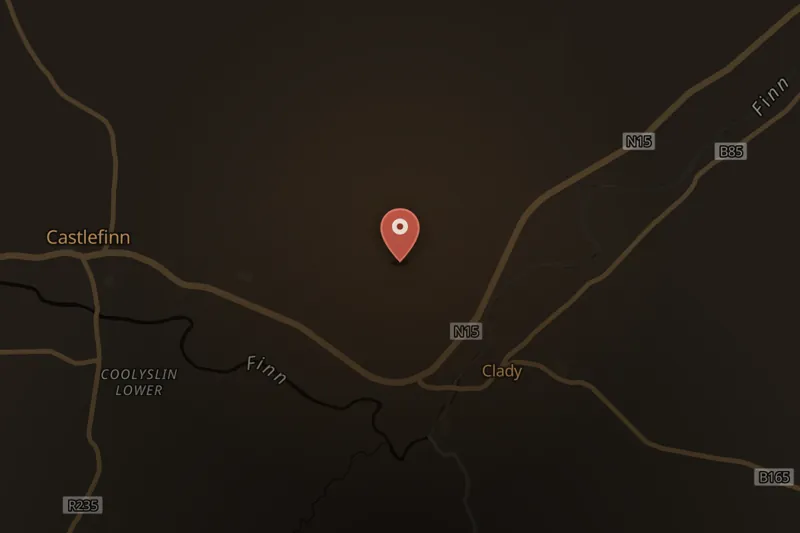
Chapel carpark, Doneyloop, County Donegal, IrelandView on the map

The short answer

Murder of Andrew Burns in brief

Andrew Burns, a man from Strabane, County Tyrone, was shot dead in a chapel carpark at Doneyloop, County Donegal, in February 2008, and one man was later convicted of his murder.

Key facts

Year
2008
Place
Chapel carpark, Doneyloop, County Donegal, Ireland
Status
SOLVEDSolved
Victim
Andrew Burns
Outcome
Convicted: Martin Kelly

The coverage index

Where to watch & listen

No one's coverage is attached to this file yet.

Know great coverage of this case?

A documentary, a podcast episode, a careful long-form video. Suggest it and an editor will review it before it appears here.

Suggest coverage for Murder of Andrew Burns

The case file

What happened

Andrew Burns, born around 1980, was a native of Strabane, a town in the north-west of County Tyrone, and a member of the Real IRA. On 12 February 2008, he was shot dead in East Donegal. At the time of his death, Burns was regarded as the first victim of a Republican terrorist murder in Northern Ireland in six years.

Burns was killed by Óglaigh na hÉireann, a Continuity IRA splinter group. He died in the carpark beside the chapel at Doneyloop, a small hamlet in the east of County Donegal that lies between Clady and Castlefin and is sometimes rendered as Donnyloop. Before the killing, Burns had been told that he was required to take part in an IRA operation whose stated intention was to target a Police Service of Northern Ireland (PSNI) officer said to be in a relationship with a woman in the area. When he arrived at Doneyloop, however, Burns was met not by fellow operatives but by members of Óglaigh na hÉireann, the rival faction that had drawn him there under a false pretext.

Martin Kelly drove Burns the short distance from Strabane to the Doneyloop carpark. Once there, a gunman approached Burns, but the weapon initially jammed. Burns attempted to run toward the church and was shot as he fled. He died at the scene.

The killing was investigated as a murder, and the inquiry led to the prosecution of Martin Kelly. Kelly, who was then aged 37 and lived on Barrack Street in Strabane, worked as a bus driver. In December 2011 he was found guilty of Burns's murder and sentenced to life in prison, having driven Burns from Strabane to nearby Doneyloop, where Burns was shot dead.

The investigation continued in the years that followed. In May 2026, a woman in her 60s was arrested in connection with the murder.

3 dated entries · 2008–2026

Timeline

  1. Andrew Burns is shot dead in the carpark beside the chapel at Doneyloop, County Donegal.

  2. Martin Kelly is found guilty of Burns's murder and sentenced to life in prison.

  3. A woman in her 60s is arrested in connection with the murder.

2 named in this file

People

Victims first. Every legal label is set from public records and court outcomes, not from the prose.

  • Andrew Burns

    VICTIM

    Member of the Real IRA from Strabane, County Tyrone; shot dead at Doneyloop, County Donegal, on 12 February 2008.[3]

  • Martin Kelly

    CONVICTED

    Bus driver of Barrack Street, Strabane; found guilty of Andrew Burns's murder in December 2011 and sentenced to life imprisonment; drove Burns from Strabane to Doneyloop.[3]

From the record

Quick answers

Who was convicted?
Martin Kelly: Bus driver of Barrack Street, Strabane; found guilty of Andrew Burns's murder in December 2011 and sentenced to life imprisonment; drove Burns from Strabane to Doneyloop.

3 cited

Sources

Coverage is not a source: every fact in this file rests on the records below.

  • 2 Press
  • 1 Encyclopedic
  1. Murder of Andrew Burns

    EncyclopedicWikipediaAccessed Jul 5, 2026

Trust

Record history

First published
Jul 6, 2026
Last verified against sources
Jul 6, 2026
Corrections
None

Are you family of someone named in this file? Corrections and removal requests from victims’ families are prioritized.