Start here
Omagh Bombing - How the World Reacted to Northern Ireland's Bloodiest Bombing (1998)
The creator's telling of the case, the strongest entry point on file.
Watch on YouTubeBefore you continue
This case involves crimes against children. Casepin presents the record in neutral, non-graphic language. Choose whether to continue.
Unsolved case · 1998
 File:Lower Market Street, Omagh County Tyrone.jpgCredit: Jeanne Boleyn ( talk )·Public domain·Source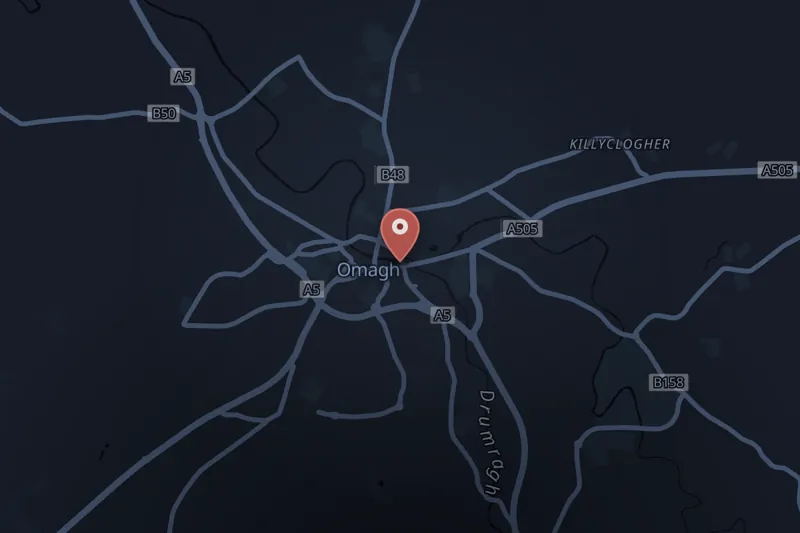
The short answer
A car bomb planted by the Real IRA exploded in Omagh, County Tyrone, on 15 August 1998, killing 29 people and injuring about 220, the deadliest single incident of the Troubles.
Start hereOmagh Bombing - How the World Reacted to Northern Ireland's Bloodiest Bombing (1998)The coverage index
1 piece from 1 creator: ranked, with duplicates removed and short clips set aside.
Start here
Video · YouTube
The creator's telling of the case, the strongest entry point on file.
Watch on YouTubeTitles and descriptions are the creators’ own and may not reflect current legal status. The sourced facts are in the file below. Players load only when you press play. Suggest coverage we’re missing.
The case file
On 15 August 1998, a car bomb containing roughly 500 pounds of fertiliser-based explosives detonated on Market Street in Omagh, County Tyrone, Northern Ireland. The bombing was carried out by the Real Irish Republican Army (Real IRA), a splinter group that had broken from the Provisional IRA in 1997 in opposition to the peace process and the Good Friday Agreement signed earlier in 1998. Telephoned warnings using the codeword "Martha Pope" were sent roughly forty minutes before the explosion but did not specify an accurate location; police, believing the device was near the courthouse, evacuated people toward the actual bomb site rather than away from it. Twenty-one people were killed outright and eight more died later, including a final victim, Seán McGrath, who died on 5 September after three weeks in hospital. Around 220 people were injured. Victims included Protestants and Catholics, six teenagers, six children, two Spanish tourists, and a woman pregnant with twins.
The bombing caused widespread condemnation locally and internationally, including from Prime Minister Tony Blair, Queen Elizabeth II, Pope John Paul II, and President Bill Clinton. The Real IRA claimed responsibility three days later, denied intending to kill civilians, apologised, and subsequently declared a ceasefire on 7 September 1998. In response, the UK and Irish parliaments swiftly passed new anti-terrorism legislation.
Investigations and prosecutions produced limited results. Colm Murphy was convicted in January 2002 of conspiracy related to the bombing, but his conviction was quashed in 2005 after it emerged that Garda Síochána officers had falsified interview notes. His nephew, Sean Hoey, was tried on 56 charges including murder and was acquitted of all counts in December 2007. A civil action brought by victims' families concluded in June 2009, with the court finding Michael McKevitt, Liam Campbell, Colm Murphy, and Seamus Daly liable for the bombing and awarding £1.6 million in damages; a co-defendant, Seamus McKenna, was cleared of involvement. Murphy and Daly's appeal resulted in a retrial that again found them liable. In 2014, Seamus Daly was charged with the murder of the 29 victims, but the Public Prosecution Service withdrew the case in February 2016, citing no reasonable prospect of conviction.
A 2001 Police Ombudsman report by Nuala O'Loan found that the RUC Special Branch had failed to act on prior warnings and criticised the force's handling of the investigation. Separate allegations, including from double agents and informants, suggested that British, Irish and US intelligence agencies held information that might have helped prevent the bombing but that was not passed to the RUC. In 2008, BBC reporting indicated that GCHQ had recorded phone conversations between the bombers as the car was driven into Omagh. A 2021 High Court ruling by Mr Justice Mark Horner found there had been "a real prospect of preventing the Omagh bombing," leading to the announcement of an independent statutory inquiry in 2023 and the establishment of a full public inquiry in February 2024, chaired by Lord Turnbull, examining whether UK state authorities could have prevented the attack. The inquiry began full hearings in January 2025 and has continued taking evidence into 2025, including testimony from bereaved families and procedural disputes over disclosure and special advocates.
34 dated entries · 1997–2025
Dissident members break from the Provisional IRA to form the Real IRA.
Real IRA's first attempted car bombing, in Banbridge, County Down, is defused.
Good Friday Agreement signed.
Real IRA car bombing in Banbridge injures 35 people.
A Vauxhall Cavalier later used in the Omagh bombing is stolen in Carrickmacross, County Monaghan.
Car bomb explodes on Market Street, Omagh, at 15:04 BST, killing 21 people outright and injuring about 220.
Real IRA claims responsibility for the bombing, apologises, and announces suspension of military operations.
Nationwide minute of silence observed across the Republic of Ireland; INLA declares ceasefire.
UK parliament passes the Criminal Justice (Terrorism and Conspiracy) Act 1998; Irish parliament passes the Offences Against The State (Amendment) Bill.
Seán McGrath, the last victim, dies of his injuries, bringing the death toll to 29.
Real IRA declares a ceasefire.
RUC and Gardaí arrest twelve men in connection with the bombing; all later released without charge.
Police question and arrest at least seven suspects; Colm Murphy charged three days later.
BBC Panorama airs "Who Bombed Omagh?", naming four prime suspects.
Families of four child victims launch a civil action against named suspects.
Families of all 29 victims launch a £2 million civil action against Real IRA suspects.
Police Ombudsman Nuala O'Loan publishes report criticising RUC handling of the investigation.
Colm Murphy convicted of conspiracy by the Special Criminal Court and sentenced to 14 years.
Five Real IRA members convicted for the 2001 BBC Television Centre bombing, believed a revenge attack for the Panorama broadcast.
Murphy's conviction quashed and retrial ordered after Garda note-forgery revealed.
Sean Hoey goes on trial on 29 counts of murder and other charges.
Hoey found not guilty on all 56 charges.
Former RUC Chief Constable Ronnie Flanagan apologises to victims' families for lack of convictions.
Northern Ireland Policing Board decides to appoint an independent panel to review the police investigation.
BBC Panorama documentary reveals GCHQ monitored bombers' phone calls in real time.
Civil case concludes; McKevitt, Campbell, Murphy and Daly found liable for £1.6 million in damages; McKenna cleared.
Independent report commissioned by victims' families concludes intelligence agencies withheld information that could have prevented the bombing.
Seamus Daly charged with murdering the 29 bombing victims after crossing the border into Northern Ireland.
Case against Seamus Daly withdrawn by the Public Prosecution Service.
Belfast High Court, in a case brought by Michael Gallagher, rules there was a real prospect of preventing the bombing.
Northern Ireland Secretary Chris Heaton-Harris announces an independent statutory inquiry.
Statutory public inquiry into the Omagh bombing formally established under the Inquiries Act 2005, chaired by Lord Turnbull.
Full hearings of the public inquiry begin.
Inquiry hears opening statements including testimony from bereaved families.
15 named in this file
Victims first. Every legal label is set from public records and court outcomes, not from the prose.
21-year-old killed in the bombing; his father Michael Gallagher went on to lead the Omagh Support and Self Help Group and later brought the 2021 High Court case.[3]
16-year-old killed in the bombing; his mother, survivor Marion Radford, described searching for him after the blast.[3]
20-month-old killed in the bombing; among four children whose families launched an early civil action against named suspects.[3]
Killed in the bombing; her husband Lawrence Rush campaigned publicly regarding the police investigation and the Panorama broadcast.[3]
Killed in the bombing; her uncle, DUP assembly member Oliver Gibson, welcomed the 2000 Panorama programme.[3]
12-year-old killed in the bombing; among four children whose families launched an early civil action against named suspects.[3]
15-year-old killed in the bombing; among four children whose families launched an early civil action against named suspects.[3]
Killed in the bombing; her husband Kevin Skelton responded publicly to the 2001 Police Ombudsman report.[3]
17-year-old killed in the bombing; among four children whose families launched an early civil action against named suspects.[3]
Last of the 29 fatalities; died on 5 September 1998 after three weeks in critical condition following the bombing.[3]
Charged in April 2014 with the murder of the 29 people killed in the Omagh bombing and held on remand without bail; the Public Prosecution Service withdrew all charges against him in March 2016 after its key witness contradicted himself in a pre-trial hearing. He has never been criminally convicted. He was separately found civilly liable for the bombing (with three other Real IRA figures) in a 2009 Belfast civil action.[3]
Convicted in January 2002 of conspiracy to cause the Omagh bombing and sentenced to 14 years; the conviction was quashed in January 2005 over altered Garda interview notes and a retrial was ordered. At the 2010 retrial, the Special Criminal Court acquitted him on 24 February 2010 after ruling the prosecution's interview evidence inadmissible. He was never criminally convicted of the bombing. He was separately found civilly liable for the bombing in a 2009 Belfast civil action and again in a 2013 civil retrial. He died in April 2023.[3]
Tried on 29 counts of murder and other terrorism/explosives charges; acquitted of all 56 charges in December 2007.[3]
Police Ombudsman who published the December 2001 report criticising the RUC's handling of the bombing investigation.[3]
RUC Chief Constable at the time of the bombing; publicly disputed the 2001 Police Ombudsman report and apologised to victims' families in 2008 over the lack of convictions.[3]
3 cited
Coverage is not a source: every fact in this file rests on the records below.
PressBBC NewsAccessed Jul 10, 2026
PressThe GuardianAccessed Jul 10, 2026
EncyclopedicWikipediaAccessed Jul 10, 2026
Trust
Are you family of someone named in this file? Corrections and removal requests from victims’ families are prioritized.
Near this case
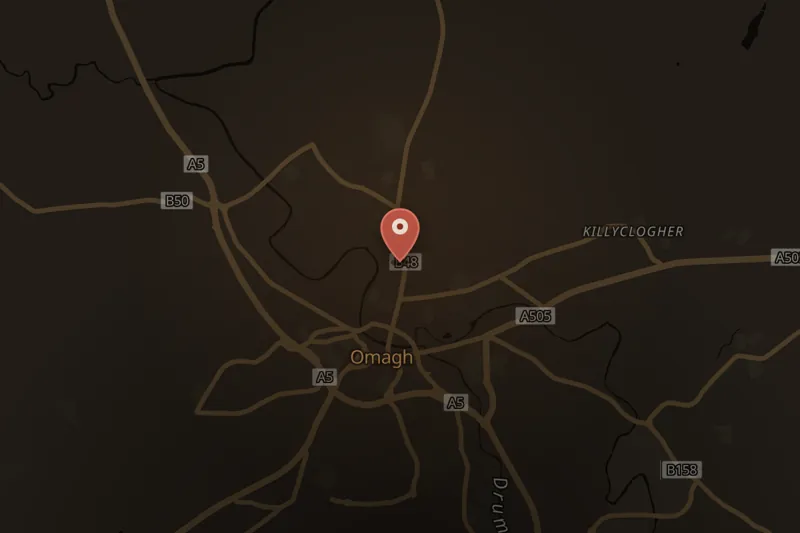 UNSOLVEDListen
Killyclogher, near Omagh, County Tyrone, Northern Ireland · 2010s
On 2 April 2011, 25-year-old PSNI constable Ronan Kerr was killed by a booby-trap car bomb outside his home near Omagh, County Tyrone. A dissident republican group claimed responsibility. Despite multiple arrests over several years, no one has been convicted.
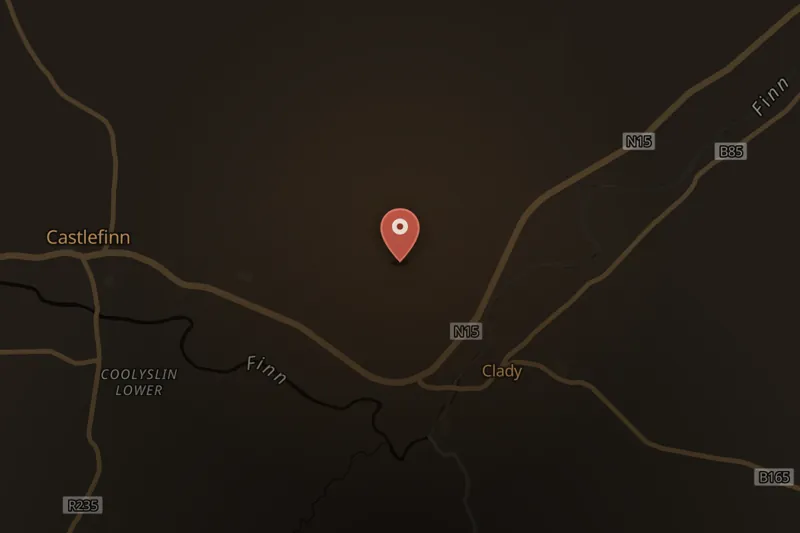 SOLVEDListen
Chapel carpark, Doneyloop, County Donegal, Ireland · 2000s
Andrew Burns, a man from Strabane, County Tyrone, was shot dead in a chapel carpark at Doneyloop, County Donegal, in February 2008, and one man was later convicted of his murder.
 Credit: Kenneth Allen·CC BY-SA 2.0·SourceSOLVEDListen
Claudy, County Londonderry, Northern Ireland · 1970s
On 31 July 1972, three car bombs exploded in the village of Claudy, County Londonderry, Northern Ireland, killing nine civilians and injuring thirty. A 2010 Police Ombudsman report found that the RUC, British government and Catholic Church covered up the suspected involvement of a local priest, Fr James Chesney, in the attack.
 Credit: Leonard Brakebill, Oklahoma Air National Guard·Public domain·SourceSOLVEDListen
Alfred P. Murrah Federal Building, Oklahoma City, Oklahoma · 1995
On April 19, 1995, Timothy McVeigh detonated a truck bomb outside the Alfred P. Murrah Federal Building in Oklahoma City, killing 168 people and injuring more than 680 others in the deadliest act of domestic terrorism in U.S. history. McVeigh and accomplice Terry Nichols were convicted in 1997; McVeigh was executed in 2001, and Nichols was sentenced to life without parole.
 Credit: евгений измайлов·CC BY-SA 3.0·SourceSOLVEDListen
Apartment buildings in Buynaksk, Moscow, and Volgodonsk, Russia · 1999
A series of explosions struck apartment blocks in Buynaksk, Moscow, and Volgodonsk in September 1999, killing more than 300 people and helping trigger the Second Chechen War amid disputed accounts of who was responsible.
 Credit: Bureau of ATF 1993 Explosives Incident Report·Public domain·SourceSOLVEDListen
World Trade Center, New York City · 1993
On February 26, 1993, a truck bomb detonated in the parking garage beneath the North Tower of the World Trade Center, killing six people and injuring over a thousand in a failed attempt to topple both towers.