
Start here
The Case of Graham Dwyer

That Chapter's 24-minute breakdown, the fullest single telling on file.
Watch on YouTubeBefore you continue
This case involves sexual violence. Casepin presents the record in neutral, non-graphic language. Choose whether to continue.
Solved case · 2012
Also known as The Graham Dwyer case · Graham Dwyer murder trial
The short answer
Elaine O'Hara, a 36-year-old Dublin childcare worker, disappeared in August 2012; her remains were found in 2013, and architect Graham Dwyer was convicted of her murder in 2015.
Start hereThe Case of Graham DwyerThat Chapter · 24 minThe coverage index
1 piece from 1 creator: ranked, with duplicates removed and short clips set aside.
Start here
Video · YouTube · 24 min · 2020
That Chapter's 24-minute breakdown, the fullest single telling on file.
Watch on YouTubeTitles and descriptions are the creators’ own and may not reflect current legal status. The sourced facts are in the file below. Players load only when you press play. Suggest coverage we’re missing.
The case file
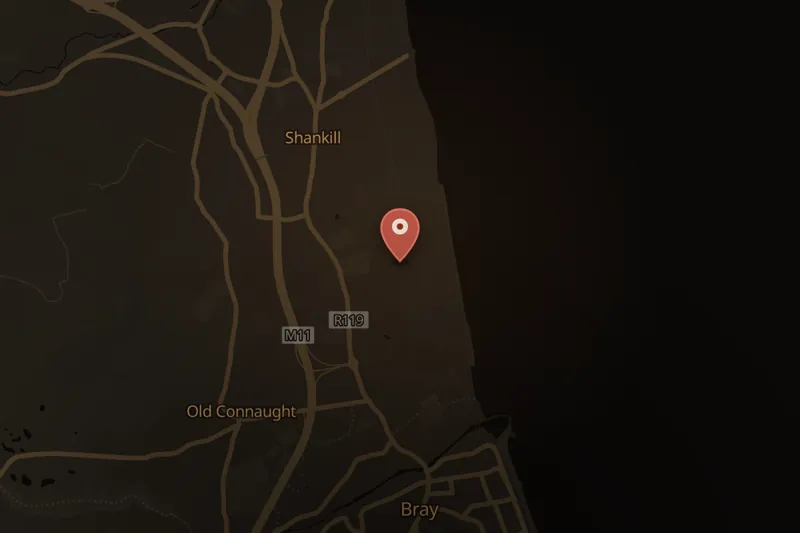
Elaine O'Hara was a 36-year-old childcare worker from Dublin, Ireland. She had a history of mental-health difficulties. On 22 August 2012 she was last seen at Shanganagh Park in Shankill, south of Dublin; her car was found nearby, and because of her history she was initially presumed to have taken her own life. No trace of her was found for more than a year.
In the summer of 2013, an unusually dry spell lowered the water level at Vartry Reservoir in County Wicklow. Items recovered there — including handcuffs, restraints, a knife, an inhaler and two mobile phones — were later linked to O'Hara. In September 2013, skeletal remains were discovered in a forested area at Killakee in the Dublin Mountains and were identified as O'Hara through dental records. Only part of her skeleton was recovered.
Investigators reconstructed a hidden relationship between O'Hara and Graham Dwyer, a Dublin-based architect. Data recovered from the phones and computers showed years of messages in which Dwyer expressed violent sexual fantasies, including explicit statements about a desire to stab a woman to death. Prosecutors argued that the two mobile phones found in the reservoir had been used almost exclusively to contact one another, and that a message sent on 22 August 2012 directed O'Hara to the shore where she was last seen alive.
Dwyer was arrested and charged with murder. His trial opened in January 2015 and became one of the most closely followed criminal cases in Irish history. The prosecution presented the digital messages, videos, forensic findings and mobile-phone location evidence as proof of a deliberate plan to kill. The defence argued that the cause of death could not be established and that the case was circumstantial. On 27 March 2015, a jury unanimously found Dwyer guilty of murder, and he was sentenced to life imprisonment.
Dwyer pursued a lengthy series of appeals, focused largely on the legality of the mobile-phone metadata used against him. While the Court of Justice of the European Union found that Ireland's indiscriminate retention of such data was inconsistent with EU law, the Irish courts held that the evidence had been properly admitted. The Court of Appeal rejected his challenge in March 2023, and on 31 July 2024 the Supreme Court unanimously dismissed his final appeal, ruling that the evidence he had met O'Hara on the evening of 22 August 2012 in order to kill her was overwhelming. The decision exhausted his options within the Irish legal system, and he continues to serve his life sentence.
9 dated entries · 1976–2024
Elaine O'Hara is born in Dublin, Ireland.
O'Hara is last seen at Shanganagh Park in Shankill, south of Dublin; she is reported missing and initially presumed to have died by suicide.
A bag containing restraints and other items is recovered from Vartry Reservoir in County Wicklow after drought lowers the water level.
Skeletal remains are discovered in woodland at Killakee in the Dublin Mountains and identified as O'Hara through dental records.
Graham Dwyer is taken into custody in connection with the murder.
Dwyer's murder trial opens in Dublin.
A jury unanimously finds Dwyer guilty of murder; he is sentenced to life imprisonment.
The Court of Appeal dismisses Dwyer's appeal against his conviction.
The Supreme Court unanimously dismisses Dwyer's final appeal, upholding the conviction.
2 named in this file
Victims first. Every legal label is set from public records and court outcomes, not from the prose.
Childcare worker from Dublin who disappeared on 22 August 2012; her remains were found in the Dublin Mountains in September 2013.[3]
Dublin-based architect convicted of O'Hara's murder on 27 March 2015 and sentenced to life imprisonment; his final appeal was dismissed by the Supreme Court on 31 July 2024.[1]
From the record
3 cited
Coverage is not a source: every fact in this file rests on the records below.
PressThe Irish TimesAccessed Jul 5, 2026
PressIrish ExaminerAccessed Jul 5, 2026
EncyclopedicWikipediaAccessed Jul 5, 2026
Trust
Are you family of someone named in this file? Corrections and removal requests from victims’ families are prioritized.
Near this case
 UNSOLVEDListen
Glenageary, County Dublin, Ireland · 1990s
Raonaid Murray, 17, was stabbed to death while walking home from a night out in Glenageary, County Dublin, in the early hours of 4 September 1999; despite a large-scale Garda investigation and a 2008 cold-case review, the case remains unsolved and no one has been convicted.
 UNSOLVEDListen
Ballsbridge, Dublin, Ireland · 2000s
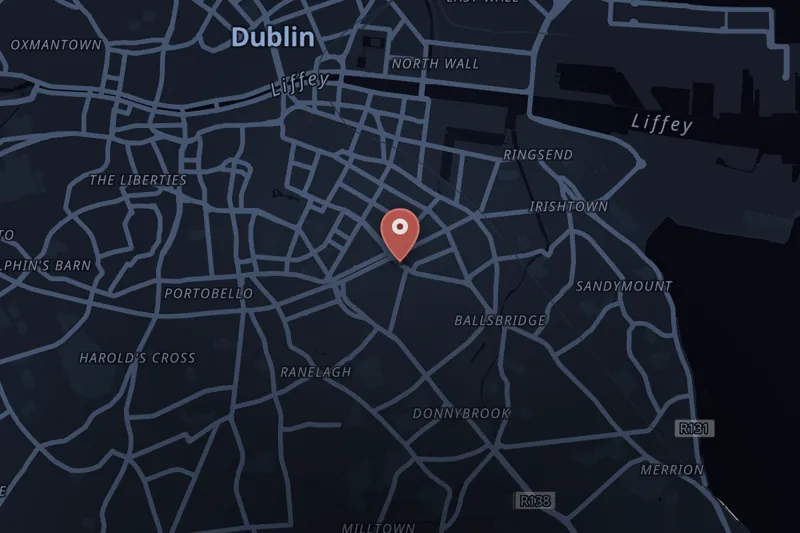
Trevor Deely, a 22-year-old Dublin IT worker, vanished on foot in the early hours of 8 December 2000 after leaving his office Christmas party during a storm; CCTV captured an unidentified man near his last known sighting, and despite a reopened Garda investigation, a €100,000 reward, and renewed public appeals, he has never been found.
 Credit: Peter Winterbach·Public domain·SourceUNSOLVEDListen
Dublin and Monaghan, Ireland · 1970s
On 17 May 1974, the loyalist Ulster Volunteer Force detonated four car bombs without warning in Dublin and Monaghan, Ireland, killing 33 people and injuring almost 300 in the deadliest attack of the Troubles. The UVF publicly claimed responsibility in 1993; no one has ever been charged, and a 2003 Irish government inquiry concluded it was likely that British security force personnel had assisted the attack.
 Credit: English Wikipedia·Editorial use·SourceSOLVEDListen
Delta, Fulton County, Ohio · 2016
Sierah Joughin, a 20-year-old Ohio college student, was abducted while bicycling home in Fulton County on July 19, 2016, and found dead three days later. James Dean Worley, a neighbor with a 1990 abduction conviction who was not listed in any offender database, was convicted of her murder in 2018 and sentenced to death, prompting Ohio's Sierah's Law, which created a searchable violent-offender registry.
 Credit: Via Wikipedia·Editorial use·SourceSOLVEDListen
Monon High Bridge Trail, Delphi Historic Trails, Delphi, Indiana · 2010s
Abigail Williams, 13, and Liberty German, 14, were murdered on February 13, 2017, while hiking the Monon High Bridge Trail in Delphi, Indiana. The case went unsolved for over five years until Richard M. Allen was arrested in October 2022, convicted in November 2024, and sentenced to 130 years in prison.
 Credit: English Wikipedia·Editorial use·SourceSOLVEDListen
Star City, West Virginia (disappearance site); body found in Wayne Township, Greene County, Pennsylvania · 2012
Sixteen-year-old Skylar Neese disappeared from her Star City, West Virginia home in July 2012 and was found murdered months later. Two of her high school best friends, Rachel Shoaf and Shelia Eddy, pleaded guilty to killing her in a premeditated stabbing attack.
Also covered by
 Credit: English Wikipedia·Editorial use·SourceSOLVEDListen
Modesto, California · 2002
Laci Peterson, 27 and eight months pregnant, disappeared from her Modesto, California home on December 24, 2002; her body and that of her unborn son Conner were found in San Francisco Bay in April 2003, and her husband Scott Peterson was convicted in 2004 of murdering both.
 Credit: CBS News / Travis Alexander (personal photo)·Editorial use·SourceSOLVEDListen
Mesa, Arizona, United States · 2000s
Travis Alexander, 30, was stabbed, slashed, and shot to death in his Mesa, Arizona home on June 4, 2008. His ex-girlfriend, Jodi Arias, was convicted of first-degree murder in 2013 and sentenced to life without parole in 2015 after two juries deadlocked on the death penalty.
 Credit: Family/Instagram photograph, widely distributed in press coverage·Editorial use·SourceSOLVEDListen
Moscow, Idaho · 2022
Four University of Idaho students—Madison Mogen, Kaylee Goncalves, Ethan Chapin, and Xana Kernodle—were fatally stabbed inside an off-campus house in Moscow, Idaho, in the early morning hours of November 13, 2022. Bryan Kohberger, a criminology PhD student at nearby Washington State University, was arrested that December and pleaded guilty in 2025, receiving four consecutive life sentences.
 Image record·Editorial use·SourceSOLVEDListen
Austin, Texas · 2022
Moriah Wilson, a 25-year-old professional cyclist, was shot and killed at a friend's residence in Austin, Texas, on May 11, 2022, and Kaitlin Armstrong was later convicted and sentenced to 90 years in prison for the killing.
 Image record·Editorial use·SourceSOLVEDListen
New Canaan, Connecticut, United States · 2019
Jennifer Dulos, a mother of five in New Canaan, Connecticut, disappeared on May 24, 2019, after being attacked at her home; her body has never been found, and she was declared legally dead in 2023. Her estranged husband, Fotis Dulos, was charged with her murder but died by suicide in January 2020 before trial, while his girlfriend, Michelle Troconis, was convicted in 2024 of related charges.
Credit: English Wikipedia·Editorial use·SourceSOLVEDListenStar City, West Virginia (disappearance site); body found in Wayne Township, Greene County, Pennsylvania · 2012
Sixteen-year-old Skylar Neese disappeared from her Star City, West Virginia home in July 2012 and was found murdered months later. Two of her high school best friends, Rachel Shoaf and Shelia Eddy, pleaded guilty to killing her in a premeditated stabbing attack.