
Unsolved case
Dublin and Monaghan bombings
On 17 May 1974, the loyalist Ulster Volunteer Force detonated four car bombs without warning in Dublin and Monaghan, Ireland, killing 33 people and injuring almost 300 in the deadliest attack of the Troubles. The UVF publicly claimed responsibility in 1993; no one has ever been charged, and a 2003 Irish government inquiry concluded it was likely that British security force personnel had assisted the attack.

On the evening of 17 May 1974, the loyalist Ulster Volunteer Force (UVF) detonated four car bombs without warning in Dublin and Monaghan, Ireland, killing 33 civilians and injuring almost 300. It was the deadliest attack of the conflict known as the Troubles and the deadliest attack in the history of the Republic of Ireland. Most of the dead were young women; victims' ages ranged from four and a half months to 80 years. The bombings occurred during the Ulster Workers' Council strike, a general strike called by loyalists and unionists opposed to the Sunningdale Agreement's plan for a role for the Republic of Ireland in governing Northern Ireland and for power-sharing with Irish nationalists.
Three of the bombs exploded within about four minutes of one another during Friday evening rush hour: on Parnell Street at roughly 17:28, on Talbot Street at roughly 17:30, and at the junction of Nassau Street and South Leinster Street at roughly 17:32. Twenty-three people were killed in the Dublin blasts and three more died later of their injuries, including an entire family of four on Parnell Street. Almost ninety minutes later, at roughly 18:58, a fourth car bomb exploded outside a pub in Monaghan, killing five people outright and two more in the following weeks. Among the named dead were Antonio Magliocco and Simone Chetrit, both foreign nationals; Colette Doherty, who was nine months pregnant; Edward O'Neill, killed on Parnell Street; and Thomas Campbell, killed in Monaghan.
No one has ever been charged in connection with the bombings. The UVF, a loyalist paramilitary group that had carried out attacks in the Republic since 1969, publicly claimed responsibility in July 1993, a week after the broadcast of a Yorkshire Television documentary, Hidden Hand: The Forgotten Massacre, which named the UVF as responsible and alleged that elements of the British security forces had assisted. In its statement, issued 15 July 1993, the UVF denied any state involvement and said the operation had been planned and carried out solely by its own members.
Following a campaign by bereaved families, the Irish government appointed Mr Justice Henry Barron to investigate. His report, published on 10 December 2003, concluded it was likely that British military personnel had helped the UVF carry out the attacks, including members of a group known as the Glenanne gang, though it found insufficient evidence that senior security force figures had been involved. The report also criticised the Garda Síochána's investigation, finding that the specially appointed Garda team had been disbanded roughly two months after the bombings and had stopped its work prematurely, and it criticised the Fine Gael/Labour government of the time for showing little interest in the bombings. Ireland's parliamentary Joint Committee on Justice later described the attacks as an act of international terrorism involving British state forces.
The inquiry said its work was hindered throughout by the British government's refusal to release relevant intelligence documents, a refusal that has persisted despite parliamentary motions calling for their release and a threatened Irish case before the European Court of Justice. In May 2024, Iain Livingstone, the head of a separate British review of Troubles-era killings called Operation Denton, said there was no doubt that the Glenanne gang had colluded with British authorities in carrying out the bombings. Victims' families, organised as the group Justice for the Forgotten, continue to campaign for the release of the withheld documents.
Key facts
- Victims
- Antonio Magliocco, Simone Chetrit, Colette Doherty, Thomas Campbell, Edward O'Neill
- Date
- 1974
- Location
- Dublin and Monaghan, Ireland
- Case status
- unsolved
Case timeline
1974-05-17
Members of the loyalist Ulster Volunteer Force detonate three car bombs without warning in Dublin during evening rush hour, on Parnell Street, Talbot Street and South Leinster Street, and a fourth car bomb in Monaghan roughly ninety minutes later. The four explosions kill 33 people and injure almost 300.
1993-07-07
Yorkshire Television broadcasts the documentary Hidden Hand: The Forgotten Massacre, which names the UVF as responsible for the bombings and alleges that elements of the British security forces assisted the attack.
1993-07-15
The UVF publicly confirms responsibility for the bombings, while denying that British security force personnel took part.
1996
Relatives of the victims form the campaign group Justice for the Forgotten and begin lobbying for a public inquiry into the bombings.
1999-12
Taoiseach Bertie Ahern appoints Mr Justice Liam Hamilton to conduct a private inquiry into the bombings.
2000-10
Mr Justice Henry Barron is appointed to succeed Mr Justice Hamilton as head of the inquiry.
2003-12-10
Mr Justice Henry Barron's report is published, concluding it is likely British military personnel helped the UVF carry out the bombings and criticising both the Garda Síochána investigation and the Irish government of the time for its handling of the case.
2005-05
The Irish Government establishes a further commission of investigation, led by Patrick McEntee, to examine why the original Garda investigation was wound down.
2007-03
The McEntee commission's report on the Garda investigation is handed to the Irish government.
2014-05
Victims' families announce a civil action against British government agencies, including the Ministry of Defence, the Northern Ireland Office and the Police Service of Northern Ireland.
2024-05
Iain Livingstone, head of the British Operation Denton review into Troubles-era killings, says there is no doubt that the Glenanne gang colluded with British authorities in the bombings.
Best coverage
No coverage has been attached to this file yet.
People
Antonio Magliocco
VICTIMItalian national killed in the Dublin bombings.
Simone Chetrit
VICTIMFrench Jewish woman, from a family that survived the Holocaust, killed in the Dublin bombings.
Colette Doherty
VICTIMNine-months-pregnant woman killed in the Talbot Street bombing in Dublin; some casualty counts add her unborn child as a separate death.
Thomas Campbell
VICTIMKilled in the Monaghan bombing.
Edward O'Neill
VICTIMKilled in the Parnell Street bombing in Dublin.
Roles reflect public records and court outcomes at the time of writing — supporting citations are on file under Sources.
Archival records
archival location
File:Firemen and police walk through Dublin bombing aftermath.jpg
Credit: Peter Winterbach · Public domain · Source
Places
Common questions
- What happened to the victim?
- On 17 May 1974, the loyalist Ulster Volunteer Force detonated four car bombs without warning in Dublin and Monaghan, Ireland, killing 33 people and injuring almost 300 in the deadliest attack of the Troubles. The UVF publicly claimed responsibility in 1993; no one has ever been charged, and a 2003 Irish government inquiry concluded it was likely that British security force personnel had assisted the attack.
- Where did the crime happen?
- Dublin and Monaghan, Ireland.
- What is the current status of the case?
- Status: unsolved.
Related cases
View all cases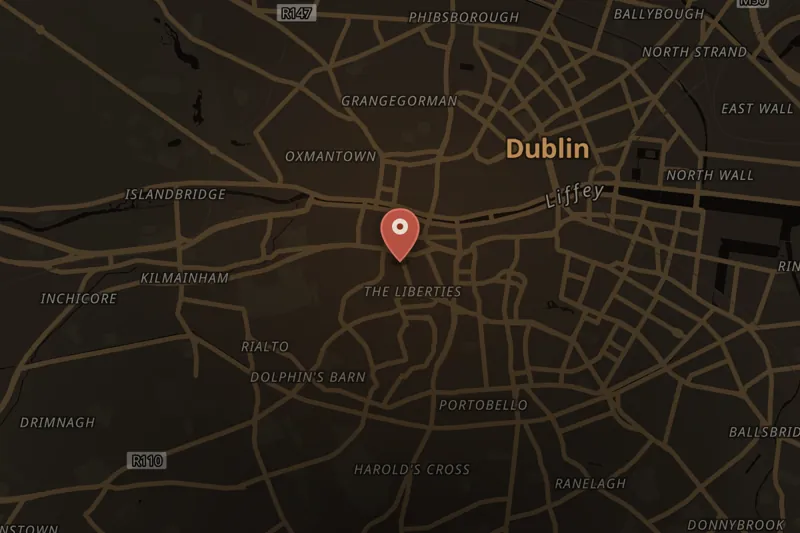
Murder of James Curran
The Liberties, Dublin

Grangegorman killings
Orchard View, Grangegorman (former St Brendan's Hospital grounds)
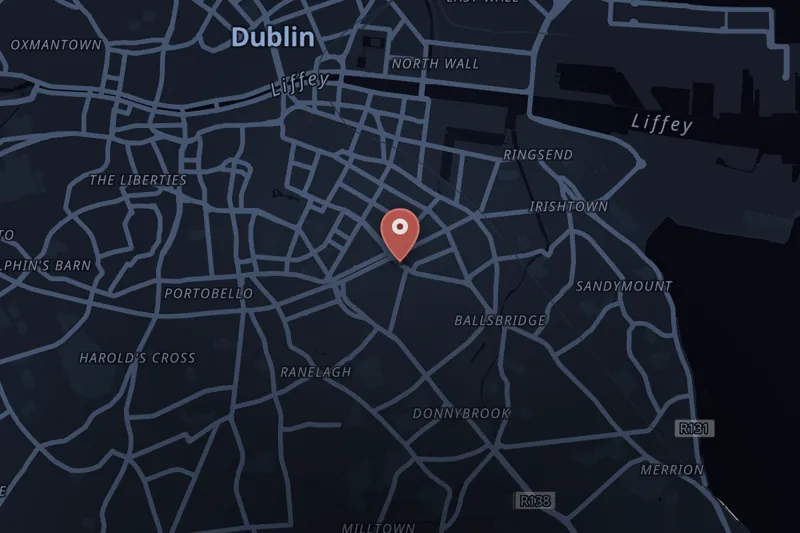
Disappearance of Trevor Deely
Ballsbridge, Dublin, Ireland

Claudy bombing
Claudy, County Londonderry, Northern Ireland
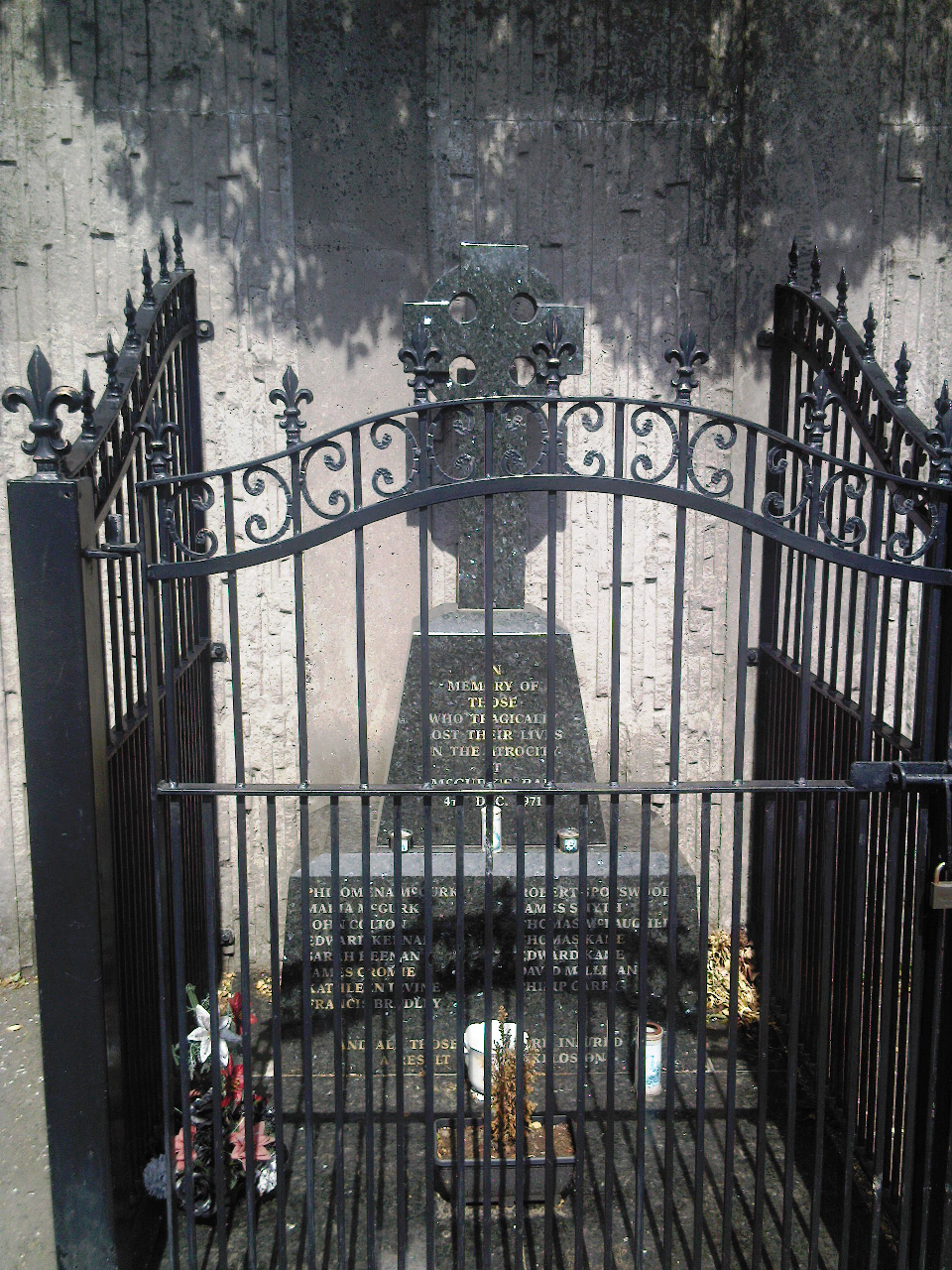
McGurk's Bar bombing
McGurk's Bar (Tramore Bar), corner of North Queen Street and Great George's Street, New Lodge, Belfast
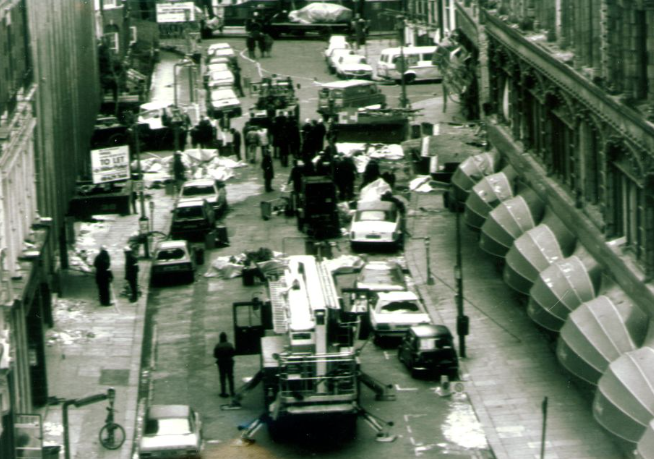
1983 Harrods bombing
Harrods, Hans Crescent, Knightsbridge, London
Sources
- ENCYCLOPEDICDublin and Monaghan bombingsWikipedia · 2026-07-12
- PRESSContemporaneous coverage — The GuardianThe Guardian · 2026-07-12
- PRESSContemporaneous coverage — BBC NewsBBC News · 2026-07-12
Record history
- First published
- JUL 13, 2026
JUL 13, 2026Correction
Catalog QA: moved to the archive tier without removing the public dossier.
When a file you follow changes — a new development, a correction, fresh coverage — the Dispatch is how you hear about it.
The Casepin Dispatch
A calm weekly briefing from the archive — one case worth understanding, meaningful updates to files you follow, and the best new coverage. You’ll also get the one-time note when the apps land. No gore, no rumor, no drip.