Start here
1983: IRA Bomb Attack on Harrods
The creator's telling of the case, the strongest entry point on file.
Watch on YouTubeUnsolved case · 1983
 Police In Scene After 1983 Harrods BombingCredit: Unknown authorCC BY-SA 2.5Source
The short answer
A Provisional IRA car bomb exploded outside Harrods department store in Knightsbridge, London, on 17 December 1983, killing three police officers and three civilians and injuring 86 people after a warning call failed to result in evacuation.
1983: IRA Bomb Attack on Harrods1 piece from 1 creator: ranked, with duplicates removed and short clips set aside.
Start here
The creator's telling of the case, the strongest entry point on file.
Watch on YouTubeTitles and descriptions are the creators’ own and may not reflect current legal status. The sourced facts are in the file below. Players load only when you press play. Suggest coverage we’re missing.
On the afternoon of 17 December 1983, members of the Provisional Irish Republican Army (IRA) parked a car bomb near the side entrance of Harrods department store, on Hans Crescent in Knightsbridge, central London. The device, containing 25 to 30 lb (11 to 14 kg) of explosives, was hidden in a 1972 blue Austin 1300 GT saloon and set to detonate by timer. At 12:44, a man using an IRA codeword telephoned the central London branch of the Samaritans charity, stating there was a car bomb outside Harrods and another inside the store, and gave the car's registration plate, but according to police he provided no other description of the vehicle. The warning came 37 minutes before detonation, but the area was not evacuated in time.
The bomb exploded at about 13:21 as four police officers in a car, an officer on foot, and a police dog-handler approached the suspect vehicle. Six people were killed — three police officers and three civilian bystanders — and 86 others were injured, including 14 police officers. The civilians who died were journalist Philip Geddes, 24, who had gone to the scene after hearing about the alert; Jasmine Cochrane-Patrick, 25; and US citizen Kenneth Salvesen, 28. The Metropolitan Police officers killed were Sergeant Noel Lane, 28, and Constable Jane Arbuthnot, 22; a third officer, Inspector Stephen Dodd, 34, died in hospital on 24 December from his injuries. Constable Jon Gordon survived but lost both legs and part of his right hand. The blast damaged 24 cars and all five floors on that side of Harrods.
At the time of the explosion, the IRA made a second warning call claiming a bomb had been left in the C&A department store at the east end of Oxford Street; police cleared and cordoned the area, but the claim proved false. Harrods reported an estimated £1 million loss in turnover but reopened three days later. Denis Thatcher, husband of the Prime Minister, visited the store afterward.
The day after the bombing, the IRA Army Council issued a statement saying its members had planted the device but that the operation had not been authorised by the organisation, citing failures by police to act on the warning and expressing regret for the civilian casualties while affirming continued operations in Britain. Home Secretary Leon Brittan responded that terrorist organisations by nature lack disciplined control over their members. Author Gary McGladdery, in his book on the Provisional IRA in England, wrote that the bombing exposed problems with the IRA's cell system, under which units could become largely autonomous. Following the attack, the IRA shifted its emphasis toward military targets in England. Harrods was targeted by the IRA on other occasions, in 1973, 1974, and again in January 1993. A memorial exists at the bomb site, and an annual journalism prize and lecture in memory of Philip Geddes are held at the University of Oxford.
Two fire bombs exploded at Harrods causing slight damage, an earlier IRA attack on the store.
A fire bomb placed by the Balcombe Street Gang exploded on the first floor of Harrods during a partial evacuation.
A bomb exploded at the Royal Artillery Barracks in London, injuring three British soldiers, in the IRA's first London attack in some time.
An IRA car bomb exploded outside Harrods on Hans Crescent at about 13:21, killing three police officers and three civilians and injuring 86 people, after a warning call 37 minutes earlier failed to result in evacuation.
Inspector Stephen Dodd died in hospital from injuries sustained in the bombing, becoming the sixth fatality.
A smaller IRA bomb targeted Harrods again, injuring four people.
Victims first. Every legal label is set from public records and court outcomes, not from the prose.
22-year-old Metropolitan Police constable killed in the bombing.[3]
25-year-old civilian killed in the bombing.[3]
Metropolitan Police constable who survived the bombing but lost both legs and part of his right hand.[3]
28-year-old US citizen killed in the bombing.[3]
28-year-old Metropolitan Police sergeant killed in the bombing.[3]
24-year-old journalist killed in the bombing after going to the scene upon hearing about the warning alert.[3]
34-year-old Metropolitan Police inspector who died in hospital on 24 December 1983 from injuries sustained in the bombing.[3]
Coverage is not a source: every fact in this file rests on the records below.
Are you family of someone named in this file? Corrections and removal requests from victims’ families are prioritized.
 UNSOLVEDListen
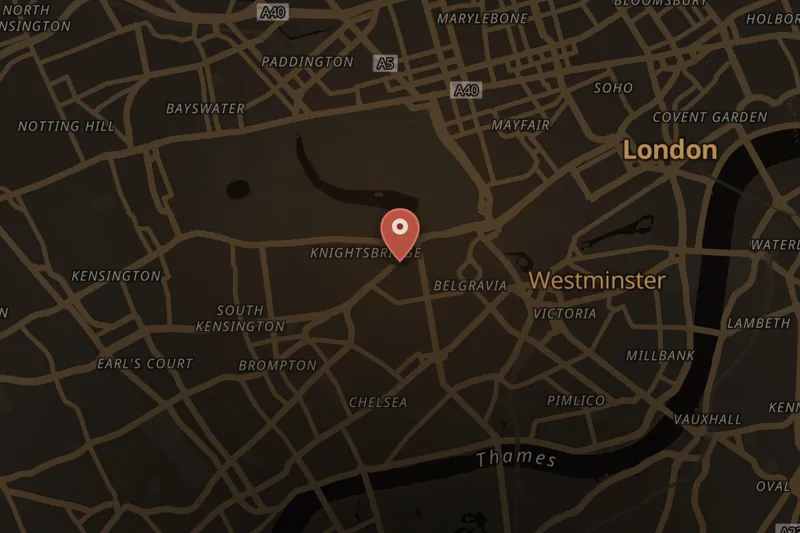
46 Lower Belgrave Street, Belgravia, London · 1970s
Sandra Rivett, nanny to the children of the Earl and Countess of Lucan, was beaten to death in the basement of the family's Belgravia home on 7 November 1974. An inquest jury named Lord Lucan as her killer, but he disappeared the same night and was never found.
 SOLVEDListen
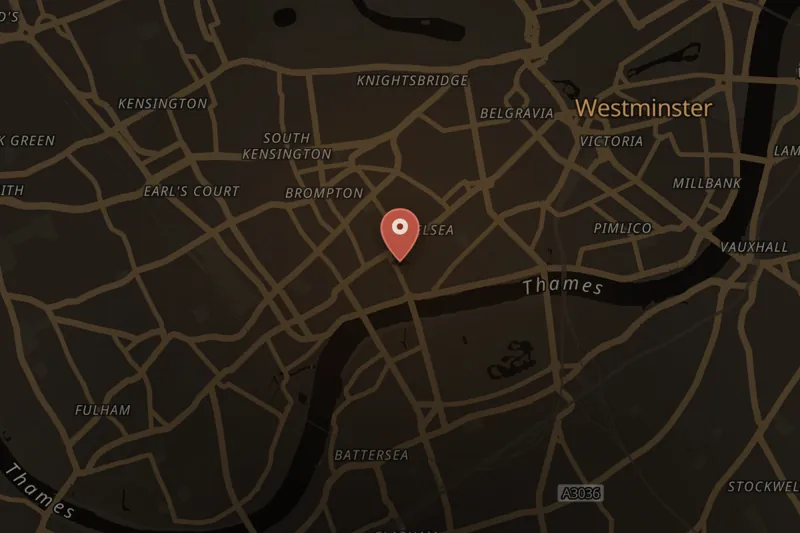
Upper Cheyne Row, Chelsea, Royal Borough of Kensington and Chelsea, London · 2000s
Financier John Monckton was murdered and his wife severely assaulted during a home invasion at their Chelsea house in November 2004; Damien Hanson, who was on probation after serving half of a 12-year sentence for attempted murder, was convicted of the murder alongside accomplice Elliot White.
 Credit: UnknownEditorial useSourceUNSOLVEDListen
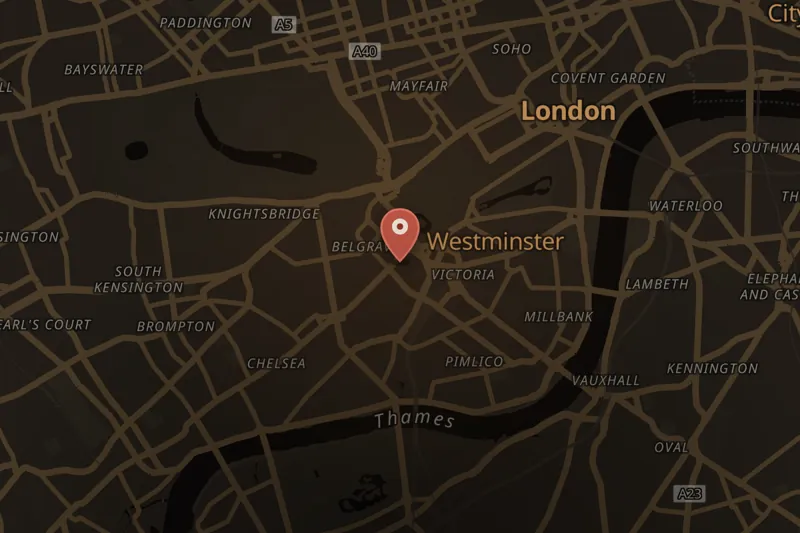
Pimlico, London, England · 2010s
Gareth Williams, a GCHQ mathematician on secondment to MI6, was found dead padlocked inside a bag in his London flat in August 2010; a coroner ruled the death unnatural and likely criminally mediated, but no one has been charged and a Metropolitan Police re-investigation later called it probably an accident.
 Credit: Original uploader was Dpbsmith at en.wikipediaCC BY-SA 3.0SourceSOLVEDListen
Sterling Hall, University of Wisconsin–Madison · 1970
A pre-dawn truck bombing at the University of Wisconsin–Madison on August 24, 1970, aimed at a military-funded research center, killed physics researcher Robert Fassnacht and injured three others.
 Credit: KeresaspaCC BY-SA 3.0SourceSOLVEDListen
McGurk's Bar (Tramore Bar), corner of North Queen Street and Great George's Street, New Lodge, Belfast · 1971
On 4 December 1971, the Ulster Volunteer Force detonated a bomb at McGurk's Bar in Belfast, killing fifteen Catholic civilians and wounding seventeen more, in what became the deadliest attack in Belfast during the Troubles.
 Credit: Kenneth AllenCC BY-SA 2.0SourceSOLVEDListen
Claudy, County Londonderry, Northern Ireland · 1972
On 31 July 1972, three car bombs exploded in the village of Claudy, County Londonderry, Northern Ireland, killing nine civilians and injuring thirty. A 2010 Police Ombudsman report found that the RUC, British government and Catholic Church covered up the suspected involvement of a local priest, Fr James Chesney, in the attack.