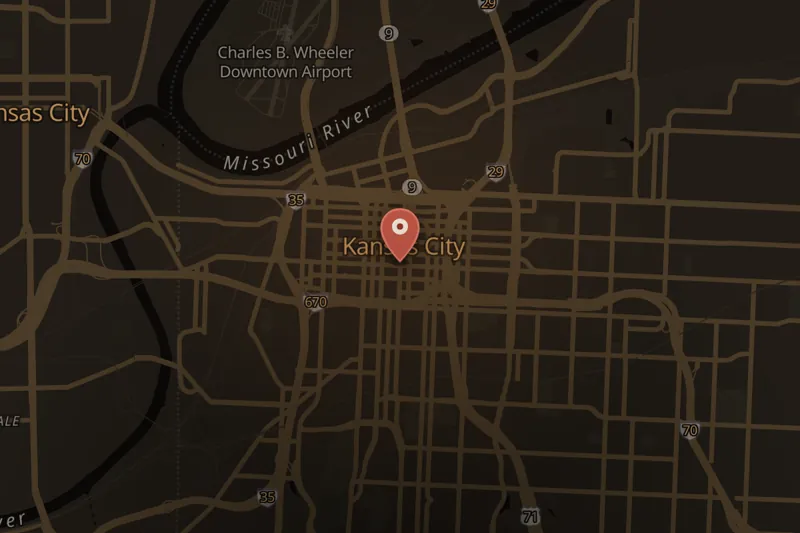
On October 12, 1999, ten-year-old Pamela Irene Butler, a fifth-grade student at Fiske Elementary, was rollerblading in front of her home in Kansas City, Kansas, after returning from buying cookies. Keith Dwayne Nelson, then 24, kidnapped her in front of her 11-year-old sister, who screamed as Nelson drove off in a white pick-up truck. Several witnesses saw the abduction and recorded the truck's registration number, and the case drew nationwide news coverage. Nelson drove to a forest near Grain Valley, Missouri, where he raped Butler before strangling her to death with a piece of wire, then left her body in a wooded area near a church.
A police manhunt followed. A church custodian and his wife, who had seen Nelson's truck near the site, contacted police after recognizing the vehicle from news reports; the truck was later found abandoned in Kansas City, Missouri. Two days after the abduction, on October 14, 1999, Nelson was found hiding under a bridge by a civilian police department employee. He fled into a nearby river before being held by railroad workers until officers arrived; his arrest was broadcast live on television. The next day, police found Butler's body in a wooded area behind Grain Valley Christian Church. Investigators determined she had been raped and strangled with wire, and DNA from seminal fluid in her underwear matched Nelson's. Hundreds of people attended Butler's funeral.
Because Nelson kidnapped Butler in Kansas and took her across state lines into Missouri, where she was killed, the case was prosecuted federally under the Federal Kidnapping Act. He was charged on October 21, 1999, and in April 2000 prosecutors announced they would seek the death penalty. His trial was postponed at one point after he was hospitalized in what was later revealed to be a suicide attempt by antidepressant overdose. On October 25, 2001, in the U.S. District Court for the Western District of Missouri, Nelson pleaded guilty to a single charge of interstate kidnapping resulting in murder; under the plea agreement, prosecutors dropped a separate sexual-assault charge. On November 28, 2001, a federal jury unanimously recommended a death sentence, and on March 11, 2002, the court formally sentenced Nelson to death. His appeals were rejected between 2003 and 2018.
Nelson was held on federal death row at USP Terre Haute, Indiana, for nearly 21 years. In 2020 the U.S. Department of Justice scheduled his execution as part of the federal government's resumption of executions after a 17-year moratorium. His lawyers sought a last-minute stay, arguing the lethal-injection protocol was unlawful and that his original sentencing had not adequately weighed his history of childhood abuse and the possible effects of a premature birth; a federal judge granted a stay on August 27, 2020, but it was overturned on appeal. Nelson was executed by lethal injection at USP Terre Haute on August 28, 2020, and was pronounced dead nine minutes after being administered pentobarbital; he was the fifth person executed by the federal government since the moratorium ended that July.
Butler's mother said after the execution that she did not expect Nelson to show remorse. In April 2017, Butler's eldest sister was fatally shot by her former boyfriend near a memorial site for Butler; he was later convicted of manslaughter and, in April 2018, sentenced to 20 years and seven months in prison. Butler's mother spoke publicly about grieving a second child lost to homicide.

 ONGOINGListen