Start here
Qandeel Baloch Murder: One year on (FULL DOCUMENTARY) - BBC Stories
A documentary telling from The creator.
Watch on YouTubeSolved case · 2016
Also known as Qandeel Baloch · Fouzia Azeem
 Qandeel Baloch (3x4 cropped)Credit: Kamran HayatPublic domainSource
The short answer
Pakistani social media celebrity and feminist activist Qandeel Baloch was drugged and asphyxiated at her parents' home in Multan on 15 July 2016 by her brother, who said he killed her for "bringing disrepute" to the family. He was convicted and sentenced to life imprisonment in 2019 but was released by an appeals court in 2022.
Qandeel Baloch Murder: One year on (FULL DOCUMENTARY) - BBC Stories1 piece from 1 creator: ranked, with duplicates removed and short clips set aside.
Start here
A documentary telling from The creator.
Watch on YouTubeTitles and descriptions are the creators’ own and may not reflect current legal status. The sourced facts are in the file below. Players load only when you press play. Suggest coverage we’re missing.
Qandeel Baloch, born Fouzia Azeem on 1 March 1990 in Shah Sadar Din, Dera Ghazi Khan District, Punjab, Pakistan, was Pakistan's first major social media celebrity. She rose to prominence in 2013 after a widely shared audition for Pakistan Idol and became known for bold, often controversial videos and social media posts discussing her daily life and women's rights in Pakistani society. By 2014 she was a regular guest on Pakistani talk shows, and in June 2016 a meeting with senior cleric Mufti Abdul Qawi generated significant media controversy, leading to his suspension from a religious committee and increased public scrutiny of Baloch. The week before her death, she released a music video, "Ban," criticizing restrictions placed on women in Pakistan.
Following the controversy with Mufti Qawi, Baloch reported receiving death threats and held a press conference demanding police protection. At the end of June 2016, her passport and national identity card details, including her hometown and father's name, were broadcast in the media. Around 14 July 2016, she told a reporter from the Express Tribune that she feared for her life and planned to move abroad with her parents after the Eid al-Fitr holidays, having received no response to her requests for police protection.
On the night of 15–16 July 2016, at approximately 11:15 to 11:30 p.m., Baloch was drugged and then asphyxiated while asleep at her parents' home in Multan. Her death was initially reported as a shooting, but an autopsy determined she had been asphyxiated, with marks showing her mouth and nose had been pinned shut. Her father, Muhammad Azeem, reported her death and named her brothers Waseem and Aslam Shaheen in a First Information Report (FIR), stating they killed her over money. Waseem was arrested on 16 July 2016 and confessed, stating he killed his sister because she was "bringing disrepute to our family's honour" and that his brother was not involved.
Because the state was named as complainant in the case — a legal mechanism intended to prevent families from pardoning perpetrators of honour killings under Pakistan's diyya law — the case proceeded despite her parents' willingness to forgive their son. Mufti Abdul Qawi was named as an abettor in the FIR by Baloch's father. In September 2019, Waseem was sentenced to life imprisonment for the murder. In February 2022, his lawyer confirmed that a Pakistani appeals court had ordered his release, three years after his conviction, reportedly on the basis that Baloch's parents had agreed to pardon him under laws in effect at the time of the killing. Months after Baloch's murder, Pakistan's parliament passed legislation mandating imprisonment for perpetrators of honour killings regardless of family pardons.
Baloch's murder drew international condemnation from public figures and was cited by activists as emblematic of violence against women in Pakistan. Vigils were held in Lahore and Karachi. In November 2017, her father alleged to police that his life was in danger from those connected to his daughter's murder.
Qandeel Baloch (born Fouzia Azeem) is born in Shah Sadar Din, Dera Ghazi Khan District, Punjab, Pakistan.
Baloch's promised strip-dance dedication tied to a cricket match becomes a viral social media controversy.
Baloch meets cleric Mufti Abdul Qawi; the encounter sparks national controversy and his suspension from a religious committee.
Baloch reports death threats and demands police protection after the controversy; her passport and ID details are later broadcast in media.
Baloch tells a reporter she fears for her life and plans to move abroad with her parents after Eid al-Fitr.
Baloch releases music video "Ban," criticizing restrictions on women in Pakistan, days before her death.
Baloch is drugged and asphyxiated at her parents' home in Multan, between approximately 11:15 and 11:30 p.m.
Her brother Waseem is arrested and confesses to the killing, citing family honour.
Baloch's father submits an application to police alleging his life is in danger over his daughter's murder.
Waseem is sentenced to life imprisonment for Baloch's murder.
Waseem's lawyer confirms a Pakistani appeals court has ordered his release.
Victims first. Every legal label is set from public records and court outcomes, not from the prose.
Pakistani model, actress, and social media personality killed on 15 July 2016.[3]
Brother of the victim; confessed to and was sentenced to life imprisonment in September 2019 for her murder, later released on appeal in February 2022.[3]
Acquitted in 2019 of allegations that he persuaded Waseem to kill their sister Qandeel Baloch; the court found insufficient evidence against him.[3]
Acquitted in 2019 of allegations that he abetted the killing of Qandeel Baloch; the court found insufficient evidence against him.[3]
From the record
Coverage is not a source: every fact in this file rests on the records below.
Jul 11, 2026Coverage added
Coverage added: Qandeel Baloch Murder: One year on (FULL DOCUMENTARY) - BBC Stories (BBC Stories).
SourceAre you family of someone named in this file? Corrections and removal requests from victims’ families are prioritized.
 Credit: Hamid MirCC BY-SA 3.0SourceSOLVEDListen
Abbottabad compound (Waziristan Haveli), Abbottabad, Pakistan · 2011
On May 2, 2011, U.S. Navy SEAL Team Six killed Osama bin Laden, founder of al-Qaeda and orchestrator of the September 11 attacks, during a CIA-led raid on his compound in Abbottabad, Pakistan. Three other people in the compound were also killed, and bin Laden's body was buried at sea.
 Credit: Oliver MarkCC BY-SA 4.0SourceSOLVEDListen
Liaquat National Bagh, Rawalpindi, Pakistan · 2007
Former Pakistani Prime Minister Benazir Bhutto was killed on 27 December 2007 in Rawalpindi following a shooting and suicide bombing after a political rally, an attack that also killed 23 other people. A UN inquiry found her security had been fatally insufficient and the crime scene mishandled; two police officers were later convicted, five Taliban-linked suspects were acquitted, and Pervez Musharraf was indicted but declared a fugitive before being separately sentenced in absentia on unrelated treason charges.
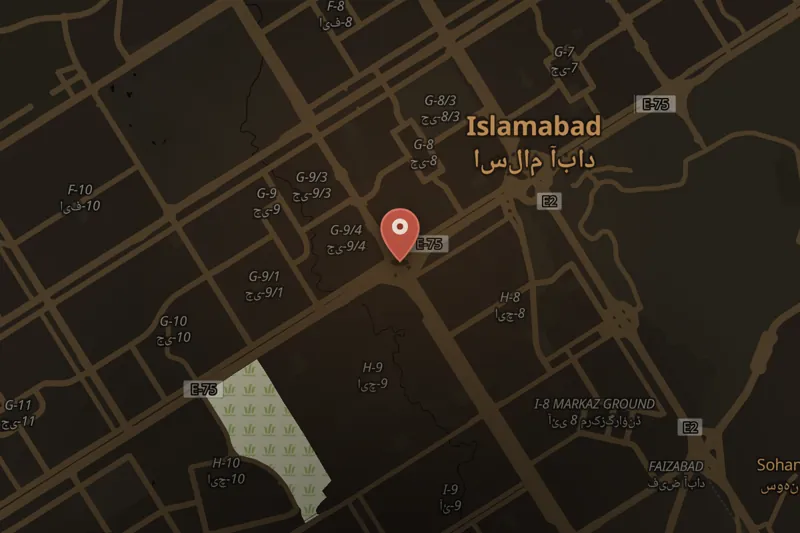 SOLVEDListen
Sector F-7/4, Islamabad, Pakistan · 2021
Noor Mukadam, 27, was tortured, raped, and killed at a residence in Islamabad, Pakistan, in July 2021. Zahir Jaffer was convicted of her murder and sentenced to death, a verdict upheld by Pakistan's Supreme Court in 2025.
 Credit: SohaibTahirSTCC BY-SA 3.0SourceSOLVEDListen
Mall Road, Charing Cross, Lahore, Pakistan · 2017
A suicide bomber killed at least 18 people, including several police officers, and wounded more than 87 at a pharmacists' and chemists' protest on Mall Road in Lahore, Pakistan, on 13 February 2017. Jamaat-ul-Ahrar, a faction of the banned Tehrik-i-Taliban Pakistan, claimed responsibility.
 Credit: From the Imperial Gazetteer of India, Hunter, William Wilson, Sir, (1840-1900), Cotton…Public domainSourceUNSOLVEDListen
Rawalpindi Division, Punjab Province, British India (present-day Punjab, Pakistan) · 1947
In March 1947, Muslim League-affiliated mobs carried out large-scale massacres, rapes, and forced conversions against Hindus and Sikhs across the Rawalpindi Division of Punjab, killing an estimated 7,000–8,000 people and triggering the mass exodus of 80,000 residents by the end of April.
 Credit: Jawad ZakariyaCC BY 2.0SourceUNSOLVEDListen
Marriott Hotel, Islamabad, Pakistan · 2008
On the night of 20 September 2008, a truck bomb detonated outside the Marriott Hotel in Islamabad, Pakistan, killing at least 54 people and injuring at least 266 in one of the deadliest terrorist attacks in the country's history.