
Start here
College Student Abducted After Leaving Work… The Murder Of Reagan Tokes

Kendall Rae's 45-minute breakdown, the fullest single telling on file.
Watch on YouTubeBefore you continue
This case involves sexual violence. Casepin presents the record in neutral, non-graphic language. Choose whether to continue.
Solved case · 2017
Also known as Reagan Tokes
The short answer
Reagan Tokes, a 21-year-old Ohio State University student, was abducted, raped, and murdered by Brian Golsby after leaving her job in downtown Columbus on the night of February 8, 2017. Golsby, recently released from prison and unmonitored despite a violent criminal history, was convicted in 2018 and sentenced to life in prison; the case prompted the Reagan Tokes Act, an Ohio sentencing and supervision reform law.
Start hereCollege Student Abducted After Leaving Work… The Murder Of Reagan TokesKendall Rae · 45 minThe coverage index
1 piece from 1 creator: ranked, with duplicates removed and short clips set aside.
Start here
Video · YouTube · 45 min · 2026
Kendall Rae's 45-minute breakdown, the fullest single telling on file.
Watch on YouTubeTitles and descriptions are the creators’ own and may not reflect current legal status. The sourced facts are in the file below. Players load only when you press play. Suggest coverage we’re missing.
The case file
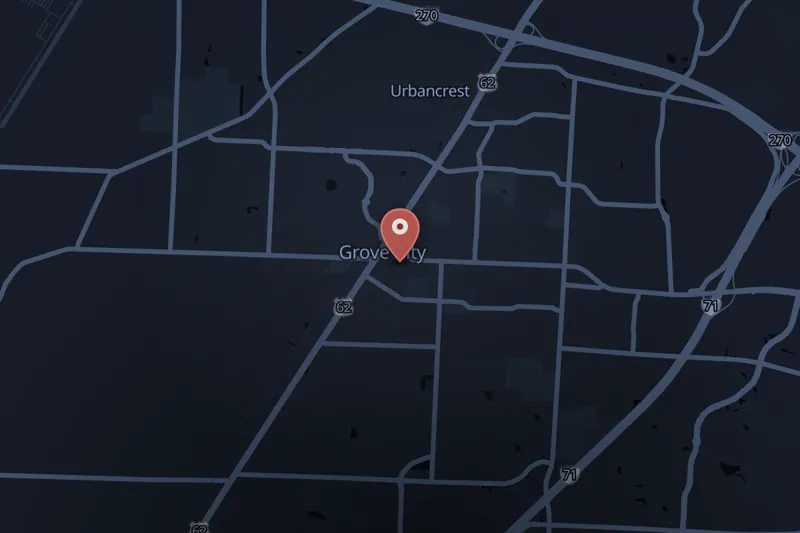
On the night of February 8, 2017, Reagan Tokes, a 21-year-old psychology student at The Ohio State University, was abducted at gunpoint by Brian Golsby as she walked to her car after leaving her job at Bodega, a restaurant in downtown Columbus, Ohio. Golsby forced Tokes to drive him to multiple ATMs and gas stations, raped her in an alley, and eventually forced her to drive to Scioto Grove Metro Park in Grove City, Ohio. There, he made her undress and marched her into a field, where he shot her twice in the head, killing her shortly before midnight. Her body was discovered by a park visitor the following morning.
Golsby had been released from prison in November 2016 after serving roughly six years for a 2010 abduction and rape case in which he had pleaded down to robbery and attempted rape. Following his release, he was placed at a temporary housing program run by the EXIT Program (operated by NISRE Inc.) and was fitted with a GPS monitor, but officials at the housing program and his parole officer did not actively monitor him. Between January 24 and February 7, 2017, Golsby committed six armed robberies without being arrested or returned to custody, despite parole violations that were deemed "non-severe."
Investigators identified Golsby through GPS tracking data, a license-plate reader that captured Tokes's abandoned car, DNA from cigarette butts and a rape kit, and surveillance photos of him purchasing a gas can. He was arrested on February 11, 2017, and confessed to detectives, initially inventing a fictitious accomplice before later confessing to the murder to a friend and to the mother of his child while in jail.
Golsby's trial began March 5, 2018, in Franklin County, Ohio. Prosecutors presented forensic evidence, including DNA matches and testimony from a forensic pathologist describing the close-range gunshot wounds. He was convicted on all counts on March 13, 2018. The jury deadlocked on the death penalty, with four votes for life and eight for death, and Judge Mark Serrott sentenced Golsby to life in prison on March 21, 2018. Prosecutors later cross-appealed, arguing a jury-instruction error had improperly prevented a death sentence; Ohio's Tenth District Court of Appeals ruled against the state in September 2020, and the Ohio Supreme Court accepted a further appeal before it was withdrawn under a newly elected prosecutor.
The Tokes family filed a civil lawsuit against the Ohio Department of Rehabilitation and Correction (ODRC) and NISRE Inc., alleging negligent failure to monitor Golsby. Courts dismissed the claims against the ODRC, a decision the Ohio Supreme Court declined to review in 2019. The lawsuit against NISRE Inc. was later settled.
The case received extensive local and national media coverage, including segments on Dateline NBC, On the Case with Paula Zahn, and Criminal Confessions. It also led to the Reagan Tokes Act, an Ohio sentencing reform law signed by Governor John Kasich in December 2018, which introduced indefinite sentencing ranges for certain felonies and later prompted additional legislation addressing offender monitoring after release.
29 dated entries · 1988–2023
Brian Golsby is born.
Reagan Tokes is born in Edgewood, Kentucky.
Golsby abducts and rapes a pregnant woman and her two-year-old son; he later pleads down to robbery and attempted rape.
Golsby is sentenced to six years in prison for robbery and attempted rape.
Golsby is released from prison and required to register as a Tier III sex offender.
Golsby robs a woman at knifepoint, the first of six robberies before Tokes's murder.
Golsby commits his sixth pre-murder robbery.
Reagan Tokes is abducted, robbed, raped, and fatally shot after leaving work in downtown Columbus; her body is left in Scioto Grove Metro Park.
Tokes's body is discovered by a park visitor.
Brian Golsby is arrested by SWAT officers and confesses during interrogation.
Tokes's funeral is held at Maumee United Methodist Church.
Golsby's trial begins in Franklin County, Ohio.
Golsby is convicted on all counts.
Judge Mark Serrott sentences Golsby to life in prison.
The Tokes family files a civil lawsuit against the ODRC and NISRE Inc.
Judge Patrick McGrath dismisses the lawsuit against the ODRC.
Governor John Kasich signs part of the Reagan Tokes Act into law.
Ohio's Tenth District Court of Appeals grants the state authority to appeal the death-penalty ruling.
The Tokes family appeals the dismissal of the ODRC lawsuit to the Ohio Supreme Court.
Dateline NBC airs an episode on the case.
The Ohio Supreme Court declines to hear the Tokes family's case against the ODRC.
The Reagan Tokes Act goes into effect.
A tranquility garden memorial for Tokes is dedicated at Scioto Grove Metro Park.
A Hamilton County judge rules parts of the Reagan Tokes Act unconstitutional in a separate case.
Oral arguments on the state's death-penalty appeal are heard before Ohio's Tenth District Court of Appeals.
The Tenth District Court of Appeals rules that Judge Serrott's jury instructions were proper, rejecting the state's appeal.
The Ohio Supreme Court accepts the state's further appeal in the Golsby case.
House Bill 166, addressing offender monitoring, passes the Ohio House.
The Ohio Supreme Court upholds the Reagan Tokes Act in a 5-2 decision.
2 named in this file
Victims first. Every legal label is set from public records and court outcomes, not from the prose.
From the record
3 cited
Coverage is not a source: every fact in this file rests on the records below.
Official / agencyopd.ohio.govAccessed Jul 18, 2026
Official / agencylegislature.ohio.govAccessed Jul 18, 2026
EncyclopedicWikipediaAccessed Jul 18, 2026
Trust
Are you family of someone named in this file? Corrections and removal requests from victims’ families are prioritized.
Near this case
 Credit: FBI·Public domain·SourceUNSOLVEDListen
South Campus Gateway complex, High Street, Columbus, Ohio · 1990s
Brian Shaffer, a 27-year-old Ohio State medical student, vanished after a night of bar-hopping in Columbus, Ohio in the early hours of April 1, 2006. Security footage showed him talking to two women outside a bar just before 2 a.m., but no camera recorded him leaving the building, and he has never been found.
 SOLVEDListen
Alrosa Villa nightclub, Columbus, Ohio · 2000s
On December 8, 2004, a gunman opened fire during a Damageplan concert at the Alrosa Villa nightclub in Columbus, Ohio, killing guitarist "Dimebag" Darrell Abbott and three others before being shot dead by a responding police officer.
 SOLVEDListen
Walmart, Beavercreek, Ohio · 2010s
John Crawford III, a 22-year-old Black man, was fatally shot by a Beavercreek, Ohio police officer inside a Walmart in 2014 while holding a BB gun taken from a store shelf. A grand jury declined to indict, and the DOJ later closed its federal review without charges.
 Credit: English Wikipedia·Editorial use·SourceSOLVEDListen
Delta, Fulton County, Ohio · 2016
Sierah Joughin, a 20-year-old Ohio college student, was abducted while bicycling home in Fulton County on July 19, 2016, and found dead three days later. James Dean Worley, a neighbor with a 1990 abduction conviction who was not listed in any offender database, was convicted of her murder in 2018 and sentenced to death, prompting Ohio's Sierah's Law, which created a searchable violent-offender registry.
 Credit: Wisconsin Department Of Justice·Public domain·SourceSOLVEDListen
Barron, Wisconsin · 2018
A 13-year-old Wisconsin girl was abducted from her home after her parents were fatally shot in October 2018 and was found safe 88 days later after escaping her captor's rural cabin in January 2019.
 Credit: Wfsa 12 News·Editorial use·SourceSOLVEDListen
Auburn, Alabama · 2019
Aniah Blanchard, a 19-year-old Alabama college student, disappeared from Auburn in October 2019 and was later found dead of a gunshot wound; the man convicted of her murder was sentenced to life in prison in 2026.
Also covered by
 Credit: English Wikipedia·Editorial use·SourceSOLVEDListen
Modesto, California · 2002
Laci Peterson, 27 and eight months pregnant, disappeared from her Modesto, California home on December 24, 2002; her body and that of her unborn son Conner were found in San Francisco Bay in April 2003, and her husband Scott Peterson was convicted in 2004 of murdering both.
 Credit: Family/Instagram photograph, widely distributed in press coverage·Editorial use·SourceSOLVEDListen
Moscow, Idaho · 2022
Four University of Idaho students—Madison Mogen, Kaylee Goncalves, Ethan Chapin, and Xana Kernodle—were fatally stabbed inside an off-campus house in Moscow, Idaho, in the early morning hours of November 13, 2022. Bryan Kohberger, a criminology PhD student at nearby Washington State University, was arrested that December and pleaded guilty in 2025, receiving four consecutive life sentences.
Credit: English Wikipedia·Editorial use·SourceSOLVEDListenDelta, Fulton County, Ohio · 2016
Sierah Joughin, a 20-year-old Ohio college student, was abducted while bicycling home in Fulton County on July 19, 2016, and found dead three days later. James Dean Worley, a neighbor with a 1990 abduction conviction who was not listed in any offender database, was convicted of her murder in 2018 and sentenced to death, prompting Ohio's Sierah's Law, which created a searchable violent-offender registry.
 Credit: CBS News / Travis Alexander (personal photo)·Editorial use·SourceSOLVEDListen
Mesa, Arizona, United States · 2000s
Travis Alexander, 30, was stabbed, slashed, and shot to death in his Mesa, Arizona home on June 4, 2008. His ex-girlfriend, Jodi Arias, was convicted of first-degree murder in 2013 and sentenced to life without parole in 2015 after two juries deadlocked on the death penalty.
 Image record·Editorial use·SourceSOLVEDListen
Austin, Texas · 2022
Moriah Wilson, a 25-year-old professional cyclist, was shot and killed at a friend's residence in Austin, Texas, on May 11, 2022, and Kaitlin Armstrong was later convicted and sentenced to 90 years in prison for the killing.
 Credit: Instagram/@gabspetito, widely distributed in press coverage·Editorial use·SourceSOLVEDListen
Bridger–Teton National Forest, Wyoming · 2021
Gabby Petito, a 22-year-old travel vlogger, was killed by strangulation and blunt-force trauma in August 2021 while on a cross-country van trip with her fiancé, Brian Laundrie. Laundrie returned to Florida alone, was named a person of interest, and later died by suicide, leaving a note admitting he had killed her.