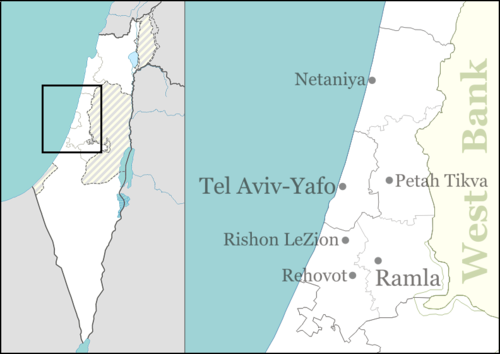
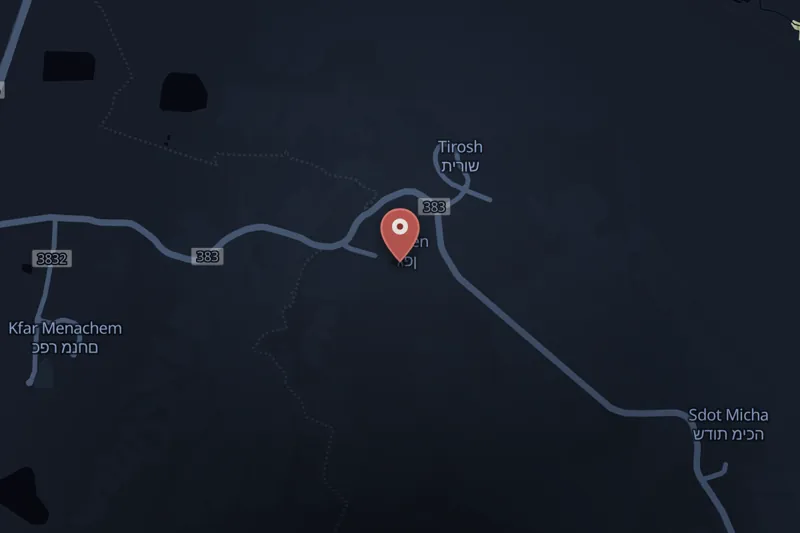
On June 9, 1996, Yaron and Efrat Ungar, a married Israeli couple, were shot and killed while driving on the Kiryat Malachi-Beit Shemesh road (Route 383) near moshav Gefen, in central Israel. Two Palestinian gunmen pulled alongside the couple's moving car in a Mitsubishi van and fired twenty bullets into the front seat. Yaron, 25, and Efrat, 24, both of Kiryat Arba, were killed. Their one-year-old son, Yishai, who was strapped into a car seat in the back, survived. The couple had been returning from a wedding held that night and were on their way to collect their two-year-old son, Dvir, from his grandmother's home.
The Ungars lived in Kiryat Arba, an Israeli settlement on the outskirts of Hebron in the West Bank, a region whose sovereignty was disputed in 1996 and which had been the site of repeated attacks. Investigators later determined that one of the weapons used, a Kalashnikov assault rifle, had also been used in a January 1996 attack in which two Israeli soldiers were killed. The attack was attributed to a Palestinian militant cell affiliated with the Izz ad-Din al-Qassam Brigades and based in the West Bank village of Surif.
Rahman Ghanimat was sentenced to five life sentences for his part in the killings. On 18 October 2011, he was among the prisoners released to Gaza under the Gilad Shalit prisoner exchange between Israel and Hamas.
In March 2000, the Ungar estate filed a wrongful-death lawsuit in the U.S. federal court in Providence, Rhode Island, naming the Palestine Liberation Organization and Hamas among the defendants and alleging that they had encouraged terrorism in the region. The suit was filed in Providence because the couple's estate held dual U.S. and Israeli citizenship (Yaron had been born in New York City) and the estate's court-appointed executor was based there. In January 2004, the court entered a $116 million judgment against Hamas, and in July 2004 the estate obtained a default judgment against the Palestinian Authority and the PLO. In 2010, an appeals court overturned the ruling and returned the case to the district court so the PLO and the Palestinian Authority could present a defense. In February 2011, the estate and the Palestinian defendants reached a confidential settlement that ended the case.


 SOLVEDListen