Skip to content
Casepin

Solved case · 1848

Murders at Stanfield Hall

SOLVEDCONVICTED
Updated
Updated Jul 7, 2026
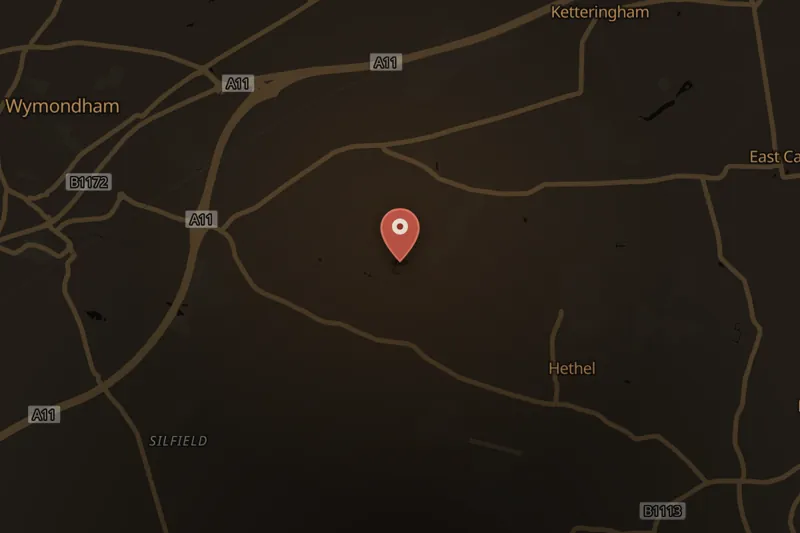
Stanfield Hall, Wymondham, near Norwich, EnglandView on the map

The short answer

Murders at Stanfield Hall in brief

On 28 November 1848, tenant-farmer James Bloomfield Rush shot and killed Isaac Jermy and his son Isaac Jermy Jermy at their mansion, Stanfield Hall, near Norwich, as part of a scheme to defraud them of the estate. Rush was convicted in 1849 and hanged at Norwich Castle.

Key facts

Year
1848
Place
Stanfield Hall, Wymondham, near Norwich, England
Status
SOLVEDSolved
Victims
Isaac Jermy Jermy and Isaac Jermy
Outcome
Convicted: James Bloomfield Rush

The coverage index

Where to watch & listen

No one's coverage is attached to this file yet.

Know great coverage of this case?

A documentary, a podcast episode, a careful long-form video. Suggest it and an editor will review it before it appears here.

Suggest coverage for Murders at Stanfield Hall

The case file

What happened

On the evening of 28 November 1848, Isaac Jermy and his son, also named Isaac Jermy, were shot and killed at Stanfield Hall, their family mansion near Wymondham, close to Norwich. The elder Jermy was shot on the porch of the house and his son in the hallway. Two other people present, the younger Jermy's wife and the household's servant, Elizabeth Chestney, were also shot but survived their wounds.

The perpetrator was James Bloomfield Rush, who had been the Jermys' tenant farmer for nearly a decade. Rush had mortgaged and remortgaged his farm repeatedly, ostensibly to fund improvements, but the farm's output had not improved and the debts remained unpaid. As the deadline to settle these mortgages approached, Rush faced foreclosure and eviction, an outcome that would also have affected his children and his pregnant mistress, Emily Sandford, who worked as governess to his family.

The Jermy family had an existing dispute with relatives over the title to the Stanfield Hall estate. Isaac Jermy, the elder victim, held the position of Recorder of Norwich and had strong legal connections, making it unlikely that rival claimants could successfully take the property from him through legal means. Rush's plan was to kill both Jermys, the household servant, and the younger Jermy's pregnant wife while disguised, in order to place suspicion on the rival claimants to the estate rather than on himself.

Rush intended for Emily Sandford to provide him with an alibi, stating that he had been at his farm during the period when the killings occurred. He wore a false wig and whiskers to disguise himself but did not sufficiently conceal his body, allowing the wounded Mrs. Jermy and the servant Elizabeth Chestney, both of whom survived, to later identify him. Sandford ultimately refused to support the alibi Rush had planned for her.

At trial in 1849, evidence relating to forgeries connected to the case was given by Alfred Smee, who had created the Bank of England's official "Bank Black" ink used to detect forged documents. Rush defended himself at trial and was convicted of the killings. He was hanged at Norwich Castle on 21 April 1849 and buried within the castle grounds.

The case attracted significant public attention in Victorian Britain and was commemorated in various forms of popular media, including Staffordshire Potteries figurines of Rush, Sandford, and the case's key locations, and a life-size waxwork of Rush displayed in the Chamber of Horrors at Madame Tussauds in London from 1849 until 1971. It later inspired a novel by Joseph Shearing and the 1948 film Blanche Fury.

5 dated entries · 1839–1849

Timeline

  1. James Bloomfield Rush becomes tenant farmer to the Jermy family, a tenancy that lasts nearly a decade before the murders.

  2. Isaac Jermy and his son Isaac Jermy Jermy are shot and killed at Stanfield Hall by James Bloomfield Rush; the younger Jermy's wife and servant Elizabeth Chestney are shot and survive.

  3. James Bloomfield Rush is tried, defends himself, and is convicted of the murders.

  4. Rush is hanged at Norwich Castle and buried in the castle grounds.

  5. A life-size waxwork of Rush goes on display in the Chamber of Horrors at Madame Tussauds, London, remaining until 1971.

3 named in this file

People

Victims first. Every legal label is set from public records and court outcomes, not from the prose.

  • Isaac Jermy

    VICTIM

    Recorder of Norwich and owner of Stanfield Hall; shot and killed on the porch of the house on 28 November 1848.[3]

  • Isaac Jermy Jermy

    VICTIM

    Son of Isaac Jermy; shot and killed in the hallway of Stanfield Hall on 28 November 1848.[3]

  • James Bloomfield Rush

    CONVICTED

    Tenant farmer of the Jermys; convicted in 1849 of murdering Isaac Jermy and his son as part of a scheme to defraud them of Stanfield Hall; hanged on 21 April 1849.[3]

From the record

Quick answers

Who was convicted?
James Bloomfield Rush: Tenant farmer of the Jermys; convicted in 1849 of murdering Isaac Jermy and his son as part of a scheme to defraud them of Stanfield Hall; hanged on 21 April 1849.

3 cited

Sources

Coverage is not a source: every fact in this file rests on the records below.

  • 2 Press
  • 1 Encyclopedic
  1. Contemporaneous coverage — jermy.org

    Pressjermy.orgAccessed Jul 7, 2026

  2. Contemporaneous coverage — myweb.tiscali.co.uk

    Pressmyweb.tiscali.co.ukAccessed Jul 7, 2026

  3. Murders at Stanfield Hall

    EncyclopedicWikipediaAccessed Jul 7, 2026

Trust

Record history

First published
Jul 7, 2026
Last verified against sources
Jul 7, 2026
Corrections
None

Are you family of someone named in this file? Corrections and removal requests from victims’ families are prioritized.