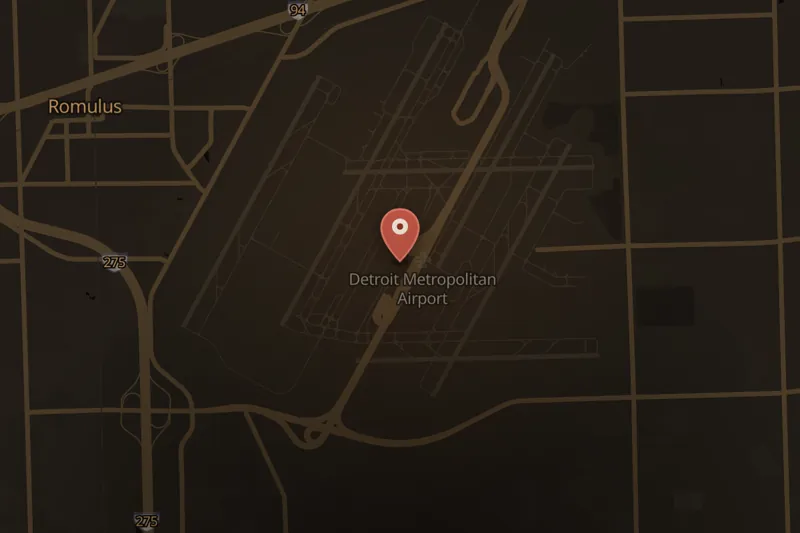
On December 25, 2009, Northwest Airlines Flight 253, an Airbus A330 traveling from Amsterdam to Detroit, was the target of an attempted bombing carried out by 23-year-old Nigerian national Umar Farouk Abdulmutallab. As the plane approached Detroit Metropolitan Airport, Abdulmutallab attempted to detonate plastic explosive powder sewn into his underwear by injecting it with acid from a syringe. A small explosion and fire occurred, but the device failed to fully detonate. Passengers reported popping noises, an odor, and flames on Abdulmutallab's clothing and the cabin wall.
Dutch passenger Jasper Schuringa, seated in the same row, tackled Abdulmutallab, extinguished the fire with his hands (sustaining burns), and helped restrain him using plastic handcuffs. Flight attendants also used a fire extinguisher and blankets to douse the flames. Abdulmutallab sustained first- and second-degree burns to his hands, thigh, and genitalia. The plane made an emergency landing in Romulus, Michigan, where Abdulmutallab was handed over to U.S. Customs and Border Protection.
Investigators determined the device contained more than 80 grams of PETN along with TATP. Abdulmutallab told authorities he had obtained the device in Yemen and had been directed by al-Qaeda to detonate it over the United States. Al-Qaeda in the Arabian Peninsula (AQAP) claimed responsibility for the attack on December 28, 2009. U.S. and Yemeni officials investigated ties between Abdulmutallab and AQAP figure Anwar al-Awlaki, who was later killed in a U.S. drone strike in Yemen on September 30, 2011.
A criminal complaint was filed against Abdulmutallab on December 26, 2009, in the U.S. District Court for the Eastern District of Michigan. A federal grand jury indicted him on six counts, including attempted use of a weapon of mass destruction and attempted murder, on January 6, 2010. He initially pleaded not guilty but later changed his plea. On February 16, 2012, Abdulmutallab was sentenced to life imprisonment without the possibility of parole. He is incarcerated at ADX Florence in Colorado.
The incident prompted significant policy changes, including expanded deployment of full-body scanners at U.S. and international airports, new screening requirements for passengers from 14 designated countries, and Congressional hearings examining intelligence failures that allowed Abdulmutallab to board the flight despite prior warnings from his father to U.S. officials and other intelligence indicators. U.S. officials, including President Obama and Homeland Security Secretary Janet Napolitano, publicly acknowledged systemic failures in information-sharing that preceded the attack.
Jasper Schuringa received public recognition for his actions, including the Honorary Medal of the City of Amsterdam and the Silver Carnegie Medal from the Dutch division of the Carnegie Hero Fund.


 SOLVEDListen