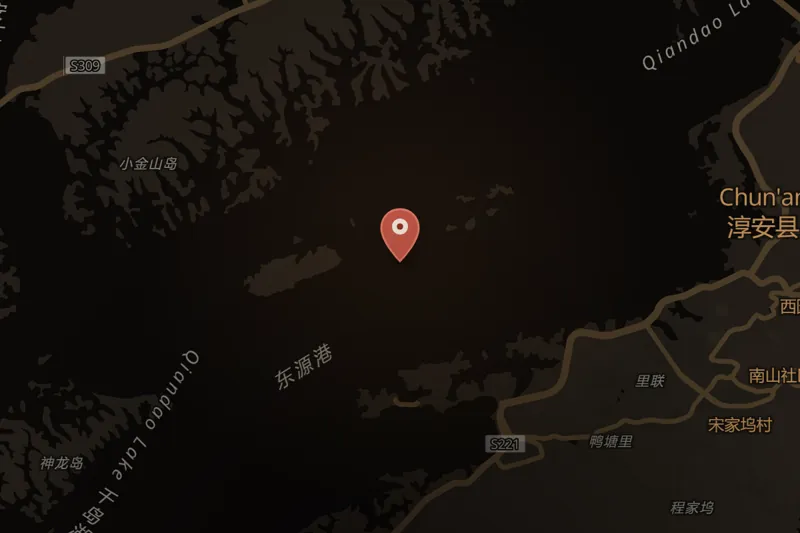
On March 31, 1994, the tour ferry Hai Rui was hijacked by three men on Qiandao Lake, in Chun'an County, Hangzhou, Zhejiang Province, China. The vessel caught fire, and all 32 people aboard were killed: 24 Taiwanese tourists, six Chinese crew members, and two Chinese tour guides. The ferry had been due to return on the night of March 31; it was found ablaze on the morning of April 1, and local civilians alerted police. Authorities organized a search involving police, on-duty troops, and civilians but initially found no passengers or crew. After the fire was extinguished, 32 bodies were discovered in the ship's lower cabin.
During the investigation, local police did not provide the public with updates, which fostered a belief among victims' families and the Taiwanese public that the government was concealing information and controlling media coverage. Hangzhou police brought in medical experts to examine the bodies on April 2, and victims' families arrived from Taiwan on April 4. China's Association for Relations Across the Taiwan Straits (ARATS) arranged receptions for the families, but declined a request from Taiwan's Straits Exchange Foundation (SEF) to assist the families at the scene. Zhejiang's provincial police joined the investigation on April 6. Authorities denied families access to view the remains or review the autopsy report; the remains were cremated in Tonglu County following protests from the families.
Chinese officials initially described the incident as a ship fire, a characterization disputed by victims' families and the Taiwanese public. On April 9, Taiwanese President Lee Teng-hui publicly criticized the Chinese Communist Party and stated that Taiwanese intelligence had claimed the case involved robbery by People's Liberation Army soldiers. On April 12, ARATS vice president Tang Shubei reiterated to SEF officials that the incident was a ship fire. Taiwan responded by suspending cross-strait exchanges and halting group tours to China starting May 1, along with pausing trade and cultural discussions.
On April 15, three suspects were arraigned. On April 17, Zhejiang provincial police announced the case was solved as a "major robbery, arson and murder case," naming three suspects, two of whom had military connections. Victims' families questioned how three men could have subdued 32 people. Public prosecution was announced June 3, and on June 12 the court convicted Wu Lihong, Hu Zhihan, and Yu Aijun of robbery and murder, sentencing all three to death; they were executed on June 19.
The incident significantly damaged Taiwan-China relations, contributing to a reported 20-point drop in Taiwanese support for unification and a 10-point rise in support for independence, alongside lasting setbacks to Taiwanese tourism in China.

 Credit: Woodlawn High SchoolEditorial useSourceSOLVEDListen