Casepin
Back to cases

Case file

Rangoon bombing

SOLVED1983Martyrs' Mausoleum, Rangoon (Yangon), Burma (Myanmar)3 SOURCESUPDATED JUL 2026

Documents violence — written to inform, not to shock.

Illustrative

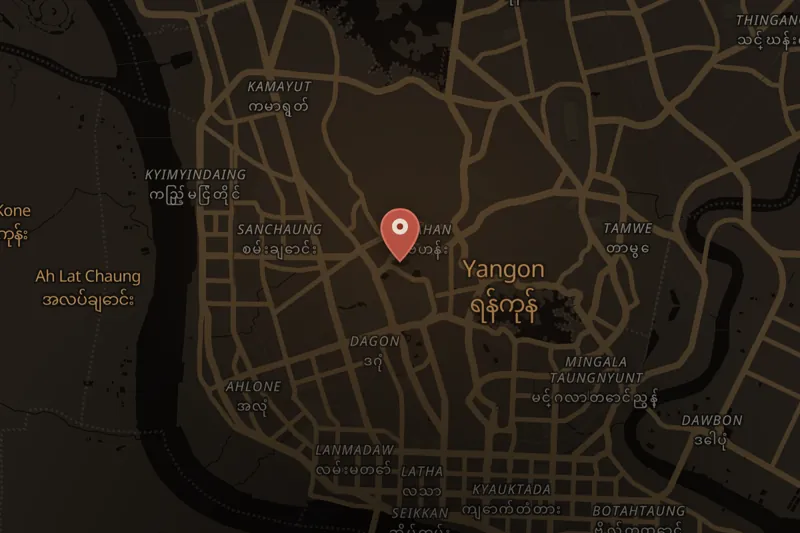
On 9 October 1983, South Korean President Chun Doo-hwan traveled to Rangoon (now Yangon), Burma, on an official state visit. He had planned to lay a wreath at the Martyrs' Mausoleum to honor Aung San, a founding figure of independent Burma who was assassinated in 1947. As members of the presidential delegation gathered at the mausoleum ahead of Chun's arrival, one of three bombs concealed in the roof detonated. The explosion tore through the assembled crowd, killing 21 people and injuring 46 others. Among the dead were four senior South Korean officials: Foreign Minister Lee Bum Suk, Minister of Power Resources Suh Sang-chul, Deputy Prime Minister and Economic Planning Minister Suh Suk-joon, and Minister of Commerce and Industry Kim Dong-hwi. Fourteen additional South Korean presidential advisers, journalists, and security officials were killed, along with four Burmese nationals, including three journalists. President Chun himself was not present at the mausoleum at the time of the blast; his car had been delayed in traffic, and the bomb is reported to have detonated prematurely after a ceremonial bugle signaling his arrival sounded ahead of schedule.

Burmese police investigation identified three suspects, described as a major and two captains of the Korean People's Army. Investigators determined the men had disembarked from a ship docked in Rangoon's port and received explosives through a North Korean diplomatic mission in the city. On the day of the bombing, two of the suspects, Kang Min-chul and Kim Jin-su, attempted suicide by detonating a hand grenade; both survived but sustained serious injuries, with Kang losing his right arm and Kim losing an eye and an arm. Both men were subsequently captured, with Kim Jin-su apprehended by a Burmese civilian, Darr Sann Ye, along with several other men, including Bo Gyi and Shwe Min Thar. A third suspect, Shin Ki-chul, evaded capture, killed three soldiers, and was ultimately shot dead. Kang Min-chul confessed to the operation and his links to North Korea, which allowed him to avoid a death sentence in favor of life imprisonment. Kim Jin-su refused to cooperate with investigators and was executed by hanging. North Korea denied any connection to Kang.

In the aftermath, Burma severed diplomatic relations with North Korea, and China — which had recently relayed a North Korean diplomatic request for trilateral talks — publicly reprimanded North Korea and avoided official contact with its representatives for months. The United States provided quiet military and logistical support to help repatriate survivors and the bodies of the deceased. In 1994, South Korea's representative to the United Nations linked the bombing to the later downing of Korean Air Flight 858, contributing to North Korea's continued designation as a state sponsor of terrorism.

Kang Min-chul remained imprisoned in Burma's Insein Prison for the rest of his life, becoming the country's longest-serving prisoner. He learned Burmese, converted to Christianity, and died of liver cancer on 18 May 2008 while being transferred to a hospital.

Key facts

Victims
Suh Sang-chul, Kim Dong-hwi, Lee Bum Suk, Suh Suk-joon, Chun Doo-hwan
Date
1983
Location
Martyrs' Mausoleum, Rangoon (Yangon), Burma (Myanmar)
Case status
solved

Case timeline

  1. 1947

    Aung San, a founder of independent Burma whom the memorial ceremony was intended to honor, was assassinated.

  2. 1983-10-09

    A bomb concealed in the roof of the Martyrs' Mausoleum in Rangoon exploded during preparations for President Chun Doo-hwan's wreath-laying ceremony, killing 21 people and wounding 46.

  3. 1983-10-09

    Suspects Kang Min-chul and Kim Jin-su attempted suicide with a hand grenade and were subsequently captured; suspect Shin Ki-chul killed three soldiers before being shot dead.

  4. 1994

    South Korea's UN representative publicly linked the bombing to the downing of Korean Air Flight 858, citing both as North Korean state-sponsored terrorism.

  5. 2006

    South Korean lawmaker Chung Hyung-keun sponsored a bill aimed at bringing Kang Min-chul to South Korea.

  6. 2008-05-18

    Kang Min-chul died of liver cancer at age 53 while being transferred from Insein Prison to a hospital in Rangoon.

Best coverage

No approved coverage links are attached yet.

People

  • Shin Ki-chul

    CHARGED

    Third suspected bomber, identified by Burmese police; killed three soldiers while evading capture and was shot dead.

    citation on file

  • Suh Sang-chul

    VICTIM

    South Korean Minister of Power Resources, killed in the bombing.

    citation on file

  • Kim Dong-hwi

    VICTIM

    South Korean Minister of Commerce and Industry, killed in the bombing.

    citation on file

  • Lee Bum Suk

    VICTIM

    South Korean Minister of Foreign Affairs, killed in the bombing.

    citation on file

  • Suh Suk-joon

    VICTIM

    South Korean Deputy Prime Minister and Economic Planning Minister, killed in the bombing.

    citation on file

  • Kang Min-chul

    CONVICTED

    North Korean Korean People's Army officer who confessed to involvement in the bombing; received life imprisonment in Burma and died in custody in 2008.

    citation on file

  • Kim Jin-su

    CONVICTED

    Suspected North Korean bomber who refused to confess or cooperate; was executed by hanging.

    citation on file

  • Chun Doo-hwan

    VICTIM

    Intended assassination target; President of South Korea, survived the bombing after his arrival at the memorial site was delayed.

    citation on file

Places

Common questions

What happened to the victim?
On 9 October 1983, a bomb hidden in the roof of the Martyrs' Mausoleum in Rangoon, Burma, exploded during an official visit by South Korean President Chun Doo-hwan, killing 21 people, including four South Korean cabinet ministers, and wounding 46. Burmese investigators identified North Korean military officers as the perpetrators; one was killed, one was executed, and one was convicted and imprisoned for life.
Where did the bombing happen?
Martyrs' Mausoleum, Rangoon (Yangon), Burma (Myanmar).
Who was convicted?
Kang Min-chul (North Korean Korean People's Army officer who confessed to involvement in the bombing; received life imprisonment in Burma and died in custody in 2008.) and Kim Jin-su (Suspected North Korean bomber who refused to confess or cooperate; was executed by hanging.).
What is the current status of the case?
Status: solved.

Sources

  1. Rangoon bombingwikipedia · Wikipedia · 2026-07-07
  2. Contemporaneous coverage — The New York Timesnews · The New York Times · 2026-07-07
  3. Contemporaneous coverage — TIMEnews · TIME · 2026-07-07