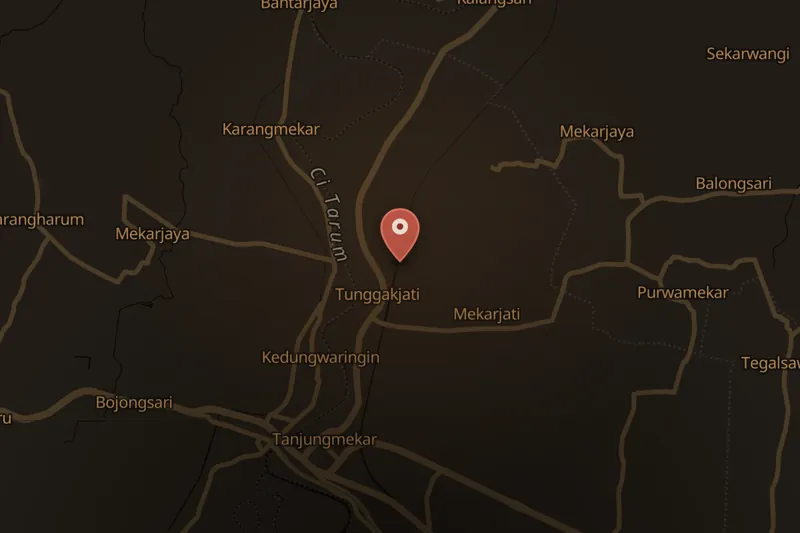
On 9 December 1947, during the Indonesian National Revolution, a unit of the Royal Netherlands East Indies Army, numbering about 100 conscripts and commanded by Major Alphons Wijnen, attacked the village of Rawagede (now Balongsari, Rawamerta district, Karawang Regency, West Java). The attack occurred one day after the start of negotiations between Dutch and Indonesian forces aboard the USS Renville, mediated by the Committee of Good Offices (CGO), a panel including representatives from Australia, Belgium, and the United States. Despite the ongoing talks, the Dutch continued military operations against Indonesian Republican forces.
The unit had been ordered to "clean up" the village but failed to locate members of the Indonesian army, including the independence fighter Lukas Kustaryo. Soldiers then forced villagers from their homes into a field, ordering men above the age of 15 to stand in a line for interrogation about the presence of Republican fighters. When villagers did not disclose the fighters' whereabouts, the soldiers executed 431 people without legal inquiry, trial, or defense. According to most estimates, this amounted to almost all males in the village. The killings have been characterized as summary executions and as war crimes involving the killing of non-combatants.
The massacre was reported to the CGO, whose response was limited to describing the action as "deliberate and ruthless," without imposing sanctions or formally treating it as a war crime. A United Nations report published on 12 January 1948 similarly called the killings "deliberate and merciless." Dutch Army General Simon Hendrik Spoor recommended prosecuting Major Wijnen, but no criminal investigation followed; the Dutch Attorney General cited waning foreign interest as justification for inaction.
Decades later, in 2006, Jeffry Pondaag of the Komite Utang Kehormatan Belanda worked with lawyer Liesbeth Zegveld to represent Rawagede widows seeking acknowledgment, apology, and compensation from the Netherlands. On 8 September 2008, ten widows formally requested Dutch acknowledgment of responsibility. The Dutch state expressed "deep regret" in November 2008 but argued the statute of limitations for prosecution had expired, a position criticized by members of the States-General and Dutch newspapers such as NRC Handelsblad.
In December 2009, the ten widows sued the Dutch state. On 14 September 2011, a Dutch court ruled that the extraordinary nature of the crime exempted it from any statute of limitations and held the Dutch state fully accountable for damages. Following settlement, plaintiffs were awarded €20,000 each, and the Dutch state issued a formal apology. On 9 December 2011, the Dutch ambassador to Indonesia delivered an apology on behalf of the Dutch government; by that time only nine relatives remained alive, each receiving €20,000, with payments completed by 2013. In 2012, de Volkskrant published the only known photographs documenting an execution during the massacre. In 2016, Dutch Foreign Minister Bert Koenders visited Rawagede to apologize in person.

 UNSOLVEDListen


