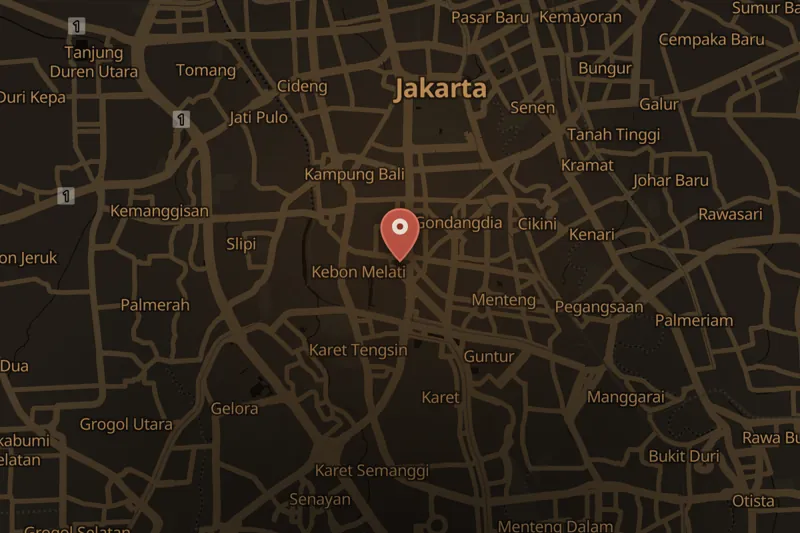
The Rengat massacre occurred on 5 January 1949 in Rengat, Riau, on the island of Sumatra, during the Dutch military campaign known as Operation Kraai, part of the broader conflict following Indonesia's declaration of independence. After Royal Netherlands East Indies Army (KNIL) forces captured the town, paratroopers of the Korps Speciale Troepen, under the command of Lieutenant Rudy de Mey, subjected confirmed and suspected members of the Indonesian National Armed Forces (TNI), civil servants, and ordinary townspeople to looting, rape, and summary execution. Bodies were disposed of in the Indragiri River. The operation was the unit's third engagement in three weeks, and its commander had issued paratroopers benzedrine tablets, a stimulant, to "eliminate fatigue."
An investigation was later opened under the High Commissioner of the Crown in the Dutch East Indies, Tony Lovink, who succeeded Louis Beel in May 1949. While Lovink generally defended Dutch army conduct in terms used by General Simon Spoor, describing incidents as "excesses" rather than systemic, he characterized the Rengat paratroopers' actions specifically as a "slaughter," comparing its cruelty to the Peniwen affair and warning it should not be considered normative for Dutch troop conduct.
Death toll estimates have varied widely across sources and time. In 1968, veteran Joop Hueting publicly described war crimes committed by the Dutch army in Indonesia, including his own participation, prompting calls in the Dutch House of Representatives for a parliamentary inquiry led by Labour Party leader Joop den Uyl. Subsequent archival research by historian Cees Fasseur produced a 1969 memorandum ("excessennota") that estimated approximately 80 civilian deaths and 30 combatant deaths at Rengat, a figure that became the standard official Dutch estimate for decades. In 2013, the Dutch Honorary Debts Committee Foundation (KUKB) presented a far higher estimate of 2,600 victims. In 2016, Dutch historian Anne-Lot Hoek conducted further research at the site and in the National Archives, uncovering a previously unknown list of 120 named victims and testimony from Dutch Resident M.D. Voors describing the army's conduct as "more than criminal," with reports of hundreds killed indiscriminately. Hoek's comparison of monument names and archival records substantiated a minimum of at least 270 individual victims. Other estimates from contemporaneous and later sources have ranged from 500 to over 1,000.
Legal efforts for compensation followed this renewed research. Human rights lawyer Liesbeth Zegveld and the KUKB filed a case against the Dutch state at the end of 2016 on behalf of relatives, including the sister of poet Chairil Anwar, whose father was among those killed; this claim was dismissed on statute-of-limitations grounds. In May 2017, a widow from Rengat whose police-officer husband was executed received 20,000 euros in compensation from the Dutch state, one of only two such payments made since 2013.


 Credit: Unknown authorPublic domainSourceSOLVEDListen