In late July 1877, San Francisco experienced three consecutive nights of ethnic violence directed at the city's Chinese immigrant population. The riot occurred against a backdrop of severe economic hardship known as the Long Depression, which had pushed San Francisco's unemployment among adult men to roughly 20 percent by 1877. Chinese immigrants, who made up about 10 percent of the city's roughly 200,000 residents, were frequently blamed by white workers for depressing wages, a tension that intensified after many Chinese laborers who had worked on the transcontinental railroad sought other employment following its completion in 1869.
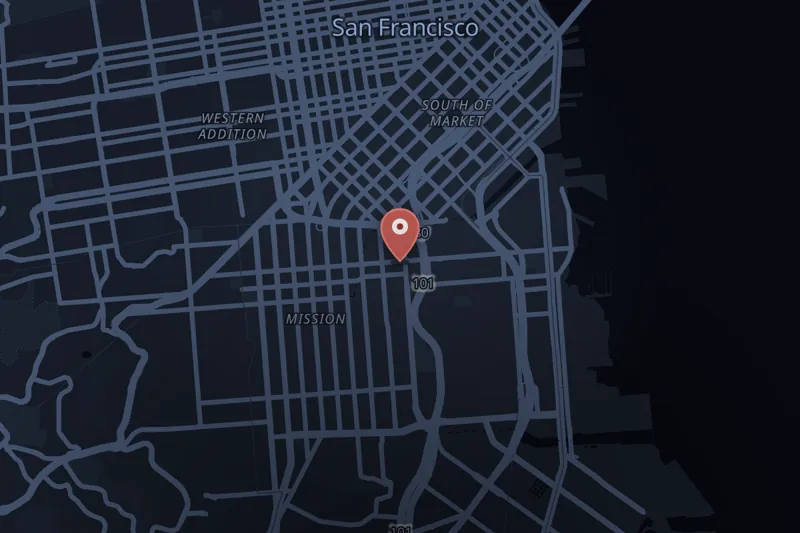
The immediate trigger was a July 23, 1877 rally organized by the Workingmen's Party of the United States on vacant lots near San Francisco City Hall, intended to express solidarity with striking railroad workers in Pittsburgh. Although rally organizers explicitly stated the meeting was not an "anti-Coolie meeting," the roughly 8,000 attendees repeatedly shouted for speakers to address the "Chinamen." As the rally dispersed, a crowd rushed toward Chinatown, attacking a Chinese passer-by and igniting the first night of rioting. Rioters destroyed a Chinese-owned laundry at Leavenworth and Geary, set it on fire, cut firefighters' hoses, and damaged the Gibson Chinese Mission before police stopped the mob's advance near California and Dupont (now Grant) streets.
On July 24, city leaders including Mayor Andrew Jackson Bryant formed the "Committee of Safety" under W.T. Coleman, mobilizing thousands of armed civilian volunteers, colloquially called the "Pick-Handle Brigade," to support police and the California state militia. That night rioters sacked several more laundries south of Market Street and threatened, unsuccessfully, to burn the Mission Woolen Mills.
The violence peaked on July 25. In the Western Addition, a Chinese laundry was surrounded by a white mob that fired into it, robbed it, and set it ablaze; a coroner's inquest found that one man killed there, Wong Go, died of suffocation. That night, rioters also set fire to a lumberyard at the Beale Street Wharf, causing an estimated $200,000 in damage, and in the confrontation that followed, others were killed or wounded. In all, four people died and fourteen were wounded over the three days of rioting. Police and Committee of Safety volunteers dispersed a crowd bound for Chinatown near Kearny and Post streets, and the U.S. Navy dispatched gunboats to San Francisco as a precaution. By July 26–27, the unrest had largely subsided.
In total, twenty Chinese-owned laundries were destroyed and the San Francisco Chinese Methodist Mission's windows were smashed. The riot contributed to the political rise of Denis Kearney, who founded the Workingmen's Party of California on an explicitly anti-Chinese platform, and is cited as part of a broader wave of anti-Chinese sentiment that culminated in the 1882 Chinese Exclusion Act.


 Credit: California Department of CorrectionsPublic domainSourceSOLVEDListen