
Solved case
Santa María School massacre
On December 21, 1907, Chilean Army troops opened fire on striking nitrate workers and their families gathered at the Domingo Santa María School in Iquique; the death toll remains disputed, with contemporary official figures below 200 and later estimates much higher.

The Santa María School massacre took place in Iquique, in Chile's Tarapacá Province, on December 21, 1907. The victims were striking saltpeter (nitrate) miners, along with their wives and children, who had gathered at the Domingo Santa María School after converging on Iquique to press the national government for improved living and working conditions in the nitrate mining camps of the Norte Grande.
The strike, known as the 18 Pence Strike, began on December 10, 1907, when nitrate workers demanded a fixed daily wage of 18 pence for certain occupations, the abolition of company-token payment systems, safety improvements at the works, and other reforms. Thousands of workers traveled to Iquique and camped at the Manuel Montt plaza and the Santa María School, appealing to authorities to mediate with the foreign-owned nitrate firms. The mine owners refused to negotiate unless the workers returned to work first, and the national government, then under President Pedro Montt and Interior Minister Rafael Sotomayor Gaete, resolved to end the strike by force if necessary.
General Roberto Silva Renard, commander of the Chilean Army's First Military Zone, arrived in Iquique on December 19, 1907, along with the newly appointed intendant, Carlos Eastman Quiroga. On December 20, a state of siege was declared, suspending constitutional rights, and troops opened fire on a group of workers and family members near the Buenaventura nitrate works, killing six. On the afternoon of December 21, following the funerals of those killed the previous day, Silva Renard gave the strikers' leaders one hour to disband and return to work. When the deadline passed and the leaders and the assembled crowd remained, Silva Renard ordered troops to open fire, first killing the workers' leaders positioned on the school roof, then firing with rifles and machine guns into the crowd of strikers and their families, including inside the school's playgrounds and classrooms. Survivors were forced at saber point to the Club Hípico and subsequently sent back to work under continued repression.
The exact death toll remains disputed. Silva Renard's official report initially cited 140 dead, later revised to 195, a figure also given by physician and witness Nicolás Palacios; this number is regarded by later assessments as unrealistically low given the size of the crowd present. Higher estimates reach as high as 3,600, though this figure is considered speculative. The government did not issue death certificates for the dead, who were buried in a mass grave in the Iquique cemetery; the remains were not exhumed until 1940 and were reinterred at the city's Legal Medical Service.
The massacre broke the strike and suppressed the nascent Chilean workers' movement for over a decade; substantive labor reforms, including mandatory payment in legal tender, did not come until 1920. Official acknowledgment of the massacre was long suppressed, but in 2007 the Chilean government, under President Michelle Bachelet, held a highly publicized centenary commemoration, including a national day of mourning and reinterment of victims' and a survivor's remains in a newly inaugurated mausoleum.
Key facts
- Victims
- Manuel Vaca
- Date
- 1907
- Location
- Domingo Santa María School, Iquique, Chile
- Case status
- solved
Case timeline
1907-12-10
General strike begins among Tarapacá Province nitrate workers, starting the 18 Pence Strike.
1907-12-16
Strikers publish their list of demands; thousands of additional workers arrive in Iquique in support.
1907-12-19
Intendant Carlos Eastman Quiroga and General Roberto Silva Renard arrive in Iquique.
1907-12-20
A state of siege is declared; troops open fire on workers near the Buenaventura nitrate works, killing six.
1907-12-21
Chilean Army troops under General Silva Renard open fire on strikers and their families gathered at the Santa María School and Manuel Montt plaza, killing an undetermined number of people.
1914
General Silva Renard is seriously wounded in an assassination attempt by an anarchist whose brother had been killed in the massacre; he later dies of these injuries.
1940
Remains of victims, buried in a mass grave since 1907, are exhumed and reinterred at the Legal Medical Service in Iquique.
2007-12-21
Chile holds a centenary commemoration of the massacre, including an official national day of mourning decreed by President Michelle Bachelet and reinterment of a victim's and a survivor's remains in a newly inaugurated mausoleum.
Best coverage
No coverage has been attached to this file yet.
People
Manuel Vaca
VICTIMWorker killed in the massacre; his death was later cited as the motive for a 1914 assassination attempt against General Silva Renard.
Roberto Silva Renard
LAW ENFORCEMENTGeneral and commander of the Chilean Army's First Military Zone who ordered troops to open fire on the strikers.
Roles reflect public records and court outcomes at the time of writing — supporting citations are on file under Sources.
Places
Common questions
- What happened to the victim?
- On December 21, 1907, Chilean Army troops opened fire on striking nitrate workers and their families gathered at the Domingo Santa María School in Iquique; the death toll remains disputed, with contemporary official figures below 200 and later estimates much higher.
- Where did the massacre happen?
- Domingo Santa María School, Iquique, Chile.
- What is the current status of the case?
- Status: solved.
Related cases
View all cases
Marusia massacre
Marusia nitrate oficina, near Huara, Tarapacá Region, Chile

Leliefontein massacre
Leliefontein, Namaqualand, Northern Cape, South Africa

Arnhem Land: Colonial-era Massacres of Aboriginal People
Arnhem Land, Northern Territory, Australia

Murder of Daniel Zamudio
San Borja Park, Santiago, Chile

Death of Francisco Martínez
Panguipulli, Chile
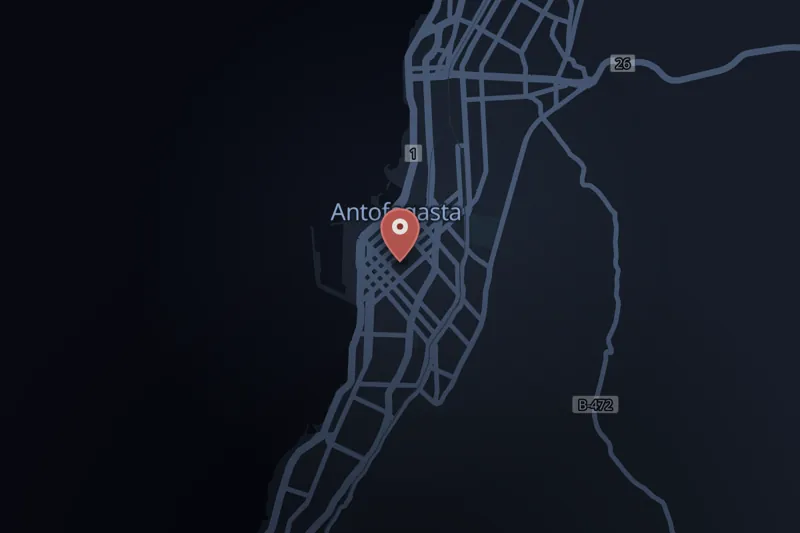
Caravan of Death
Antofagasta, Chile (route spanned multiple garrisons from southern to northern Chile)
Sources
- PRESSMasacre de la Escuela Santa María de IquiqueMemoria Chilena, Biblioteca Nacional de Chile · 2026-07-11
- ENCYCLOPEDICSanta María School massacreWikipedia · 2026-07-10
When a file you follow changes — a new development, a correction, fresh coverage — the Dispatch is how you hear about it.
The Casepin Dispatch
A calm weekly briefing from the archive — one case worth understanding, meaningful updates to files you follow, and the best new coverage. You’ll also get the one-time note when the apps land. No gore, no rumor, no drip.