Casepin
Back to cases

Case file

Death of José Gallardo Díaz (Sleepy Lagoon murder)

OVERTURNED1942Sleepy Lagoon reservoir, near Maywood/Commerce/Bell, California3 SOURCESUPDATED JUL 2026

Documents violence · ongoing investigation — written to inform, not to shock.

Illustrative

Overview

The Sleepy Lagoon murder refers to the 1942 death of José Gallardo Díaz, a young Mexican-American man found dying near a reservoir in what is now Commerce/Bell, California, on August 2, 1942. The case, named by Los Angeles newspapers after the reservoir known as "Sleepy Lagoon," became a flashpoint for racial tension and questions of due process in wartime Los Angeles.

The death

On the night of the incident, Díaz had attended a party hosted for Eleanor Delgadillo Coronado. After leaving with two friends, he was reportedly confronted by a group of young men from the 38th Street neighborhood who were said to be seeking revenge for an earlier beating of associates. Díaz was found unconscious the following morning and taken to Los Angeles County General Hospital, where he died without regaining consciousness. The hospital autopsy found he was intoxicated and had suffered a fracture at the base of the skull, possibly from repeated falls or an automobile accident; other accounts describe blunt head trauma along with multiple stab wounds. The exact cause of death remained disputed, and the autopsy could not conclusively determine it.

Arrests and trial

Despite the unclear cause of death, the LAPD arrested seventeen Mexican-American youths, including Henry Leyvas, Jose Ruiz, Robert Telles, Ysmael Parra, and others, on murder charges; the group was held without bail amid heavy press coverage that had already cast Mexican-American "zoot suiter" youth as part of an alleged crime wave. A related police roundup on August 10, 1942, brought in roughly 600 Latinos, of whom about 175 were held on various charges.

The criminal trial, presided over by Judge Charles W. Fricke, concluded on January 13, 1943. Twelve defendants were convicted of second-degree murder and sent to San Quentin Prison; others received lesser assault-related convictions and were held in the Los Angeles County Jail. The trial has since been characterized as lacking fundamental due process: defendants were barred from sitting near or communicating with their attorneys, were denied changes of clothing so the jury would see them in zoot suits, and were required to stand whenever named by a witness or prosecutor. A sheriff's department official was permitted to testify as an "expert" that Mexican-Americans had an inherent biological predisposition toward violence.

Activism and reversal

The Sleepy Lagoon Defense Committee, a coalition of community members and activists, organized to support the defendants and challenge the fairness of the proceedings, drawing support from figures including actor Anthony Quinn. In October 1944, the California District Court of Appeals unanimously ruled the evidence insufficient to sustain the convictions in People v. Zammora, reversing all twelve convictions and criticizing the trial judge's bias and mishandling of the case. The case is widely viewed as a precursor to the Zoot Suit Riots later in 1943.

Key facts

Victims
José Gallardo Díaz
Date
1942
Location
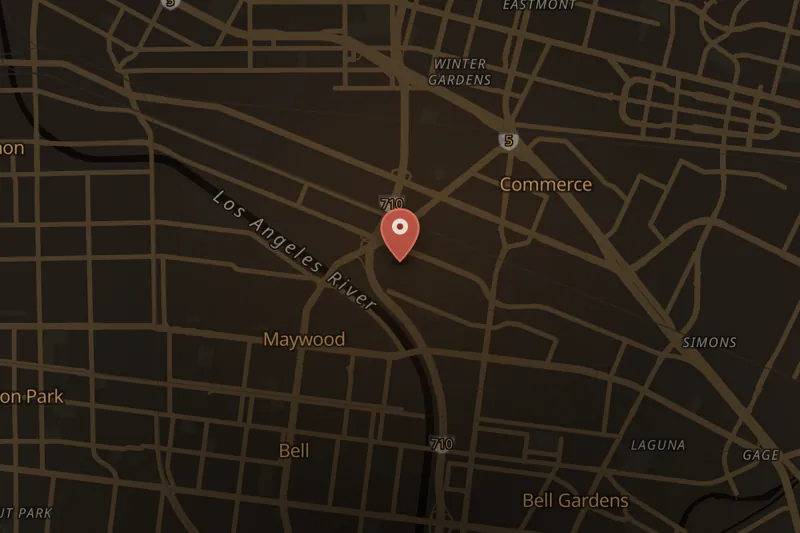
Sleepy Lagoon reservoir, near Maywood/Commerce/Bell, California
Case status
overturned

Case timeline

  1. 1941-12-08

    The United States enters World War II following the attack on Pearl Harbor, accelerating wartime social changes in Southern California.

  2. 1942-02

    President Franklin D. Roosevelt signs Executive Order 9066, leading to internment of Japanese Americans and contributing to agricultural labor shortages.

  3. 1942-08-02

    José Gallardo Díaz is found gravely injured near the Sleepy Lagoon reservoir and later dies at Los Angeles County General Hospital without regaining consciousness.

  4. 1942-08-10

    LAPD conducts a roundup of roughly 600 Latinos on suspicion of assault, armed robbery, and related offenses; about 175 are held.

  5. 1943-01-13

    The criminal trial concludes under Judge Charles W. Fricke; twelve defendants are convicted of second-degree murder and others of lesser charges.

  6. 1944-10

    The California District Court of Appeals unanimously reverses the twelve convictions in People v. Zammora, citing insufficient evidence and criticizing the trial judge's bias.

Best coverage

No approved coverage links are attached yet.

People

  • Robert Telles

    CONVICTED

    Convicted defendant sentenced to life in prison for first-degree murder; conviction later reversed on appeal in 1944.

    citation on file

  • Jose Ruiz

    CONVICTED

    Convicted defendant sentenced to life in prison for first-degree murder; conviction later reversed on appeal in 1944.

    citation on file

  • Ysmael Parra

    CONVICTED

    Convicted defendant sentenced to five years to life in prison; conviction later reversed on appeal in 1944.

    citation on file

  • John Matuz

    CONVICTED

    Convicted defendant sentenced to five years to life in prison; conviction later reversed on appeal in 1944.

    citation on file

  • Jack Melendez

    CONVICTED

    Convicted defendant sentenced to five years to life in prison; conviction later reversed on appeal in 1944.

    citation on file

  • Angel Padilla

    CONVICTED

    Convicted defendant sentenced to five years to life in prison; conviction later reversed on appeal in 1944.

    citation on file

  • Victor Thompson

    CONVICTED

    Convicted defendant sentenced to five years to life in prison; conviction later reversed on appeal in 1944.

    citation on file

  • Manuel Delgado

    CONVICTED

    Convicted defendant sentenced to five years to life in prison; conviction later reversed on appeal in 1944.

    citation on file

  • Henry Leyvas

    CONVICTED

    One of the defendants convicted; sentenced to life in prison for first-degree murder; conviction later reversed on appeal in 1944.

    citation on file

  • Gus Zamora

    CONVICTED

    Convicted defendant sentenced to five years to life in prison; conviction later reversed on appeal in 1944.

    citation on file

  • Charles W. Fricke

    LAW ENFORCEMENT

    Trial judge who presided over the case; later criticized on appeal for bias and mishandling of the case.

    citation on file

  • José Gallardo Díaz

    VICTIM

    Young Mexican-American man found dying near the Sleepy Lagoon reservoir on August 2, 1942; died at Los Angeles County General Hospital without regaining consciousness.

    citation on file

  • Henry Ynostroza

    CONVICTED

    Convicted defendant sentenced to five years to life in prison; conviction later reversed on appeal in 1944.

    citation on file

  • Manuel Reyes

    CONVICTED

    Convicted defendant sentenced to five years to life in prison; conviction later reversed on appeal in 1944.

    citation on file

Places

Common questions

What happened to the victim?
José Gallardo Díaz, a young Mexican-American man, was found gravely injured near a reservoir in the Los Angeles area on August 2, 1942, and died without regaining consciousness; seventeen Mexican-American youths were arrested and tried, with twelve convicted, before an appeals court overturned all convictions in 1944 for insufficient evidence and judicial bias.
Where did the murder happen?
Sleepy Lagoon reservoir, near Maywood/Commerce/Bell, California.
Who was convicted?
Robert Telles (Convicted defendant sentenced to life in prison for first-degree murder; conviction later reversed on appeal in 1944.), Jose Ruiz (Convicted defendant sentenced to life in prison for first-degree murder; conviction later reversed on appeal in 1944.), Ysmael Parra (Convicted defendant sentenced to five years to life in prison; conviction later reversed on appeal in 1944.), John Matuz (Convicted defendant sentenced to five years to life in prison; conviction later reversed on appeal in 1944.), Jack Melendez (Convicted defendant sentenced to five years to life in prison; conviction later reversed on appeal in 1944.), Angel Padilla (Convicted defendant sentenced to five years to life in prison; conviction later reversed on appeal in 1944.), Victor Thompson (Convicted defendant sentenced to five years to life in prison; conviction later reversed on appeal in 1944.), Manuel Delgado (Convicted defendant sentenced to five years to life in prison; conviction later reversed on appeal in 1944.), Henry Leyvas (One of the defendants convicted; sentenced to life in prison for first-degree murder; conviction later reversed on appeal in 1944.), Gus Zamora (Convicted defendant sentenced to five years to life in prison; conviction later reversed on appeal in 1944.), Henry Ynostroza (Convicted defendant sentenced to five years to life in prison; conviction later reversed on appeal in 1944.), and Manuel Reyes (Convicted defendant sentenced to five years to life in prison; conviction later reversed on appeal in 1944.).
What is the current status of the case?
Status: overturned. Last verified July 2026.

Sources

  1. Sleepy Lagoon murderwikipedia · Wikipedia · 2026-07-07
  2. Contemporaneous coverage — Los Angeles Timesnews · Los Angeles Times · 2026-07-07
  3. Contemporaneous coverage — Historynews · History · 2026-07-07

Last verified JUL 2026